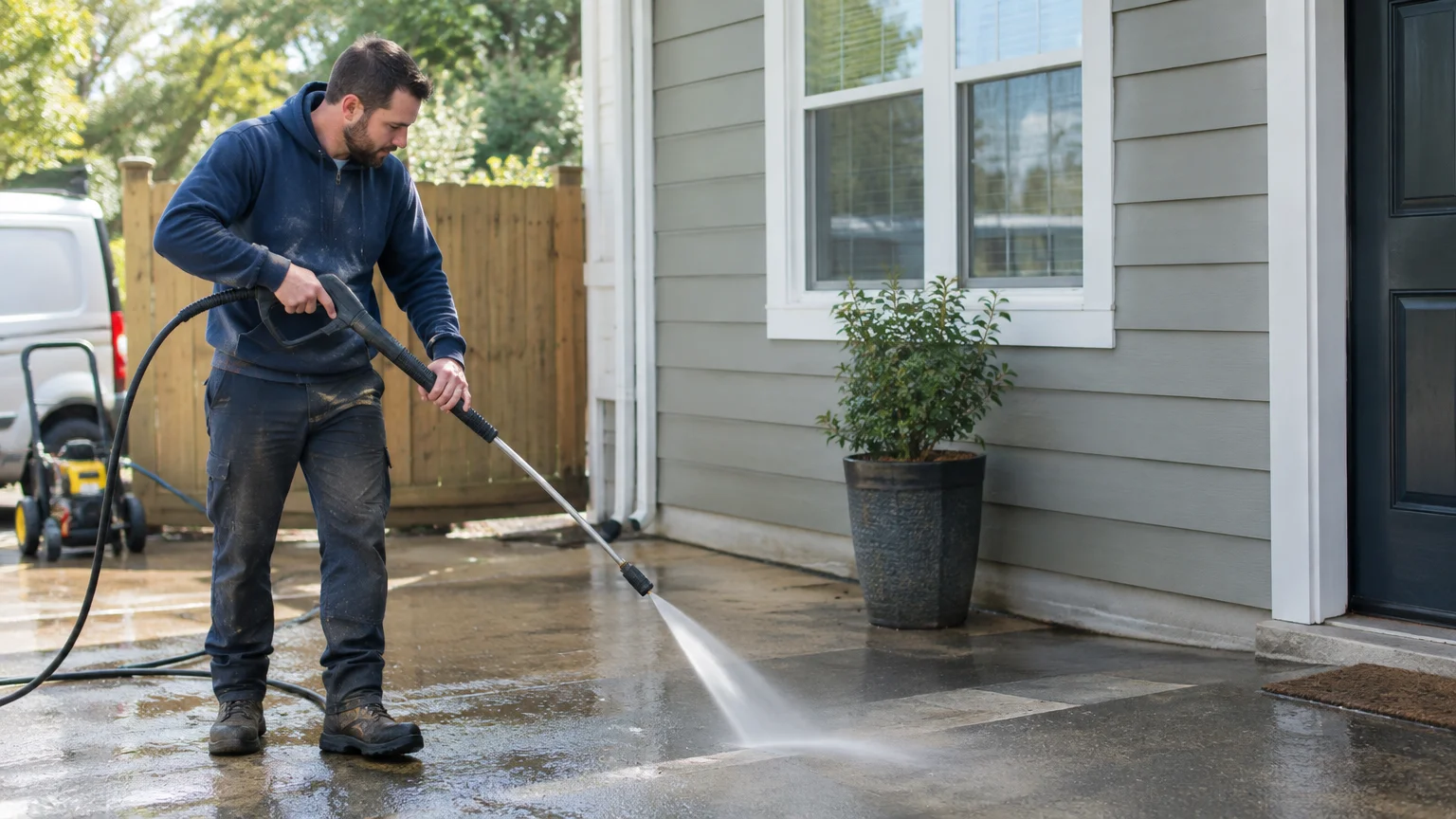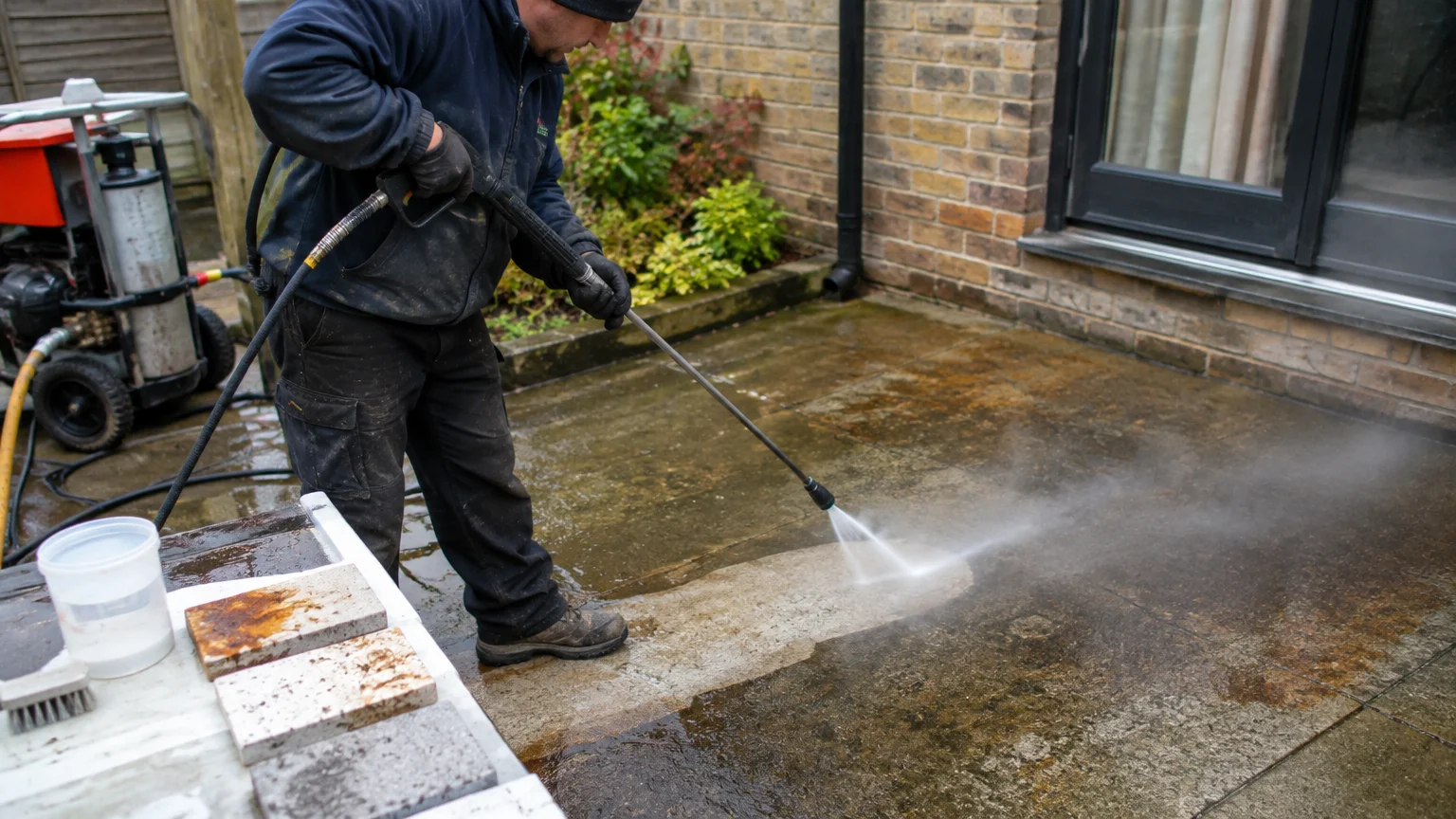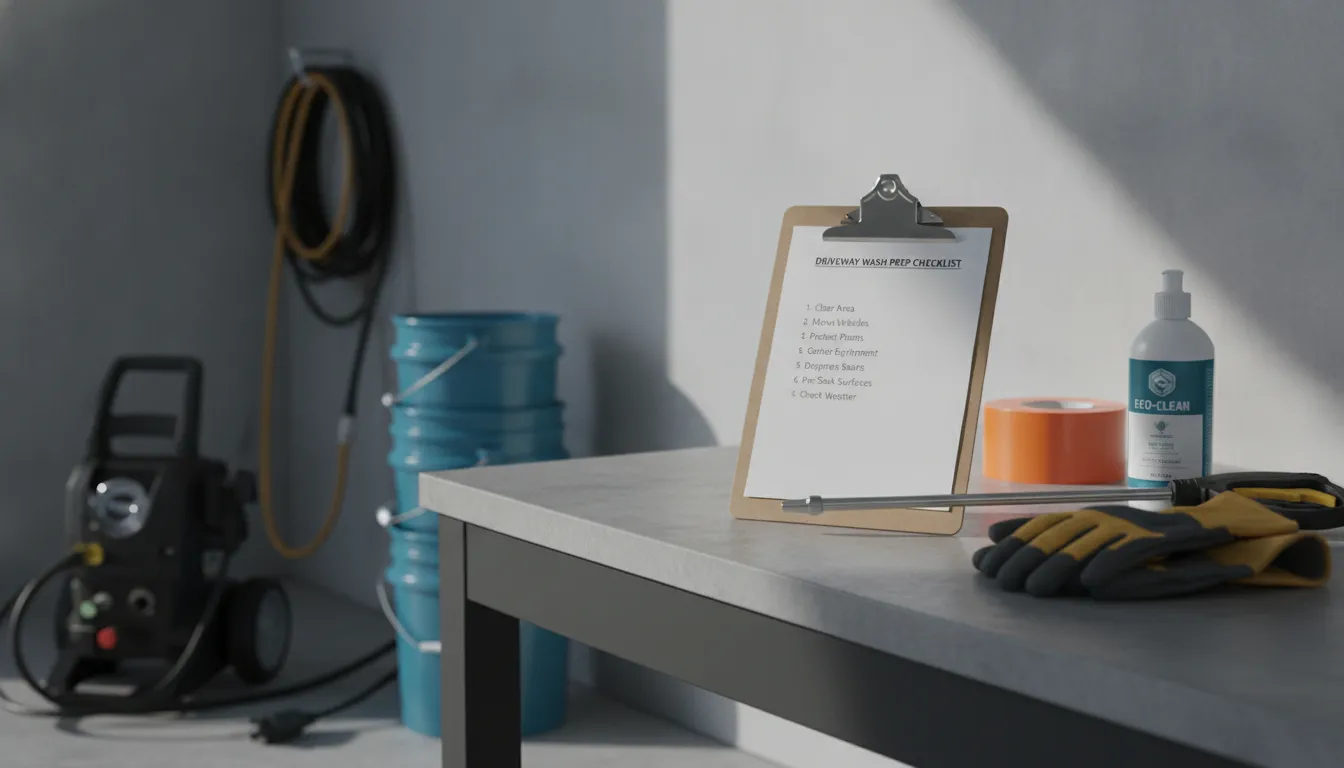
Weekend plans can collide with a stained driveway—oil drips by the garage, algae along the lawn, and a week’s worth of dusty tire tracks. A driveway washing prep checklist is a simple, step-by-step plan that covers inspection and safety, clearing and protection, targeted pre-treatments, and runoff control so you get cleaner concrete with fewer risks. In Largo, Pressure Washing Largo follows these steps every day and is ready to help when you want professional support.
Key Takeaways
- Inspect surfaces, confirm weather, and note drainage before you start.
- Clear vehicles and trip hazards; cover doors, outlets, and seals.
- Match cleaners to oil, rust, algae, and paint with correct dwell times.
- Divert water, protect plants, and keep detergents out of storm drains.
- Test a small patch, then clean with conservative pressure and an even pace.
Start Smart: Inspect the Driveway and Plan for Safety
Check surface type, condition, and drainage. Identify whether your slab is broom-finished, stamped, pavers, or sealed concrete. Note cracks, spalling (surface flaking), and any previous coatings so you can avoid making damage worse. Observe where water naturally flows to keep runoff away from storm drains, then give the surface a quick sweep so grit doesn’t scratch during cleaning.
Confirm weather window and local water rules. Aim for a dry, mild day so detergents can work and the surface can dry evenly. Many cities restrict discharge into storm drains; check Largo guidance in Florida before you begin. Postpone if high winds could carry overspray toward doors or gardens in your Largo neighborhood.
Gather tools, detergents, and PPE. PPE (personal protective equipment) includes eye protection, gloves, boots, and hearing protection. Stock a concrete-safe detergent and stain-specific cleaners. Set your pressure washer with conservative settings first—PSI (pounds per square inch) and nozzle choice matter. Start with a 25–40° tip and keep a steady distance to avoid etching or lifting aggregate.
Clear the Area: What to Move, Cover, and Secure
Remove vehicles, bins, furniture, and trip hazards. Park cars on the street, relocate planters, toys, and grills, and coil hoses and cords. A cleared work area gives your surface cleaner even access and reduces the chance of tracking grime back across freshly cleaned concrete.
Protect doors, walls, outlets, and garage seals. Tape plastic over the bottom of doors, siding edges, and any electrical outlets (preferably GFCI). Seal garage thresholds and expansion joints near doors with foam backer or tape to keep dirty water out. Avoid aiming water toward weatherstripping or under door sweeps.
Post signs and set boundaries for people and pets. A simple “Wet Surface—Keep Off” sign will do. Keep kids and pets inside or in the backyard until the area is dry. Slippery detergents and moving hoses are easy trip hazards during concrete pressure washing.
Pre-Treat Trouble Spots: Oil, Rust, Algae, and Paint
Choose the right cleaner and dwell times for each stain. Dwell time is how long a cleaner sits on a stain to work. Use a degreaser for oil and tire marks, a rust remover (often oxalic-based) for orange spots, and a light sodium hypochlorite house-wash mix for algae or mildew. For paint, apply a concrete-safe stripper per label directions; this is where soft washing techniques can help on surrounding siding—see our soft washing info at /soft-washing.
Agitate safely and blot up residues before rinsing. Work cleaners in with a nylon or soft-bristle brush; avoid aggressive wire on sealed or decorative finishes. For oil, apply an absorbent (kitty litter or oil dry), press it in, and sweep it up so it doesn’t smear during rinsing and cause shadows.
Eco-friendlier options and when to call a pro. Enzyme and citrus degreasers can reduce chemical impact. Severe rust, large paint spills, or hot-tire transfer may require heated water, specialized detergents, or a surface cleaner. If stains persist or the concrete is delicate, Pressure Washing Largo can provide a professional driveway cleaning service in Largo and nearby areas—see /driveway-cleaning. If you decide to hire out, remember that pressure washing costs vary based on size, soil level, and stain severity.
Protect Surroundings and Manage Runoff
Shield plants and lawns; pre-wet and rinse after. Plants absorb less detergent when leaves and soil are pre-wet. Use breathable covers on sensitive shrubs, then rinse foliage and soil again when you finish. Avoid pooling so fertilizers or detergents don’t concentrate in one spot.
Divert water, contain chemicals, and use mats where needed. Create temporary berms with sand snakes or mats to direct water toward landscaping rather than storm drains. Keep detergents out of public drains where required. Sweep up solids—mud, sand, and grit—before final rinses so you’re not washing debris into the street.
Do a small test patch and set pressure/nozzle distance. Test in an inconspicuous corner to confirm detergent choice and technique. Increase pressure gradually and keep the nozzle moving 8–12 inches from the surface. For even results, a surface cleaner helps avoid stripes and reduces the risk of pressure washing damage to a concrete driveway. For broader exterior cleaning needs, see /professional-pressure-washing-services and /house-washing.
Frequently Asked Questions
What cleaner should I use before pressure washing concrete?
For general grime, use a concrete-safe detergent. Degreasers work best on oil and tire marks, rust removers address orange staining, and a light sodium hypochlorite mix treats algae or mildew. Always test in a small spot first and follow label dwell times from your driveway washing prep checklist.
Can high pressure damage a driveway?
Yes. Excessive PSI or a narrow nozzle can etch lines, pop aggregate, or force water under joints. Start low, use a 25–40° tip, and keep the wand moving at a consistent distance. A surface cleaner helps deliver even cleaning with less risk to residential concrete.
How do I keep runoff out of storm drains?
Pre-sweep solids, use temporary berms or water-filled mats to redirect flow, and minimize detergent use. Rinse toward landscaping where allowed, not into streets. Many municipalities restrict discharges; always check local rules in Largo and contain residues before final rinsing and drying.
Key Takeaways
- Plan first: Inspect the surface, confirm weather, and check local water rules.
- Clear and protect: Move cars and clutter; cover doors, outlets, and garage seals.
- Pre-treat smart: Match cleaners to oil, rust, algae, and paint with correct dwell times.
- Control runoff: Shield plants, divert water, and capture solids before rinsing.
- Test and adjust: Start with lower PSI and a wider tip; use a surface cleaner for even results.
Conclusion
A little planning turns driveway washing from a messy chore into a smooth, safer cleanup. Follow this checklist to inspect, clear, pre-treat, and manage runoff, and you’ll be set for a faster, more consistent wash. If you’re in Largo, Pressure Washing Largo is ready to help with concrete pressure washing and sidewalk cleaning across the Largo area—see /driveway-cleaning or /contact-us to get in touch. Contact us to schedule or ask a question today. Pressure Washing Largo in Largo is here when you need a careful, local team.