Smudges after you just cleaned? It’s not you—glass shows every flaw, and window frames, tracks, and screens hide dust that rides back onto freshly cleaned panes. Here’s the direct answer: a professional window cleaning service includes inside and outside glass, meticulous edge work, spot checks in varied light, and cleaning of frames, tracks, sills, and screens, all delivered with a safe, efficient workflow and the right tools so results last in Largo.
Executive summary: If you’re tired of streaks and short-lived results, a pro team follows a proven process that removes hidden grit, details edges, and protects your home or business. You’ll know what’s included, what standard cleaning can’t fix, how often to schedule, and how services like house washing fit into a smart plan for your property in Largo.
Key Takeaways
- A pro window cleaning service covers inside/out glass, edge detailing, spot checks, and cleaning for frames, tracks, sills, and screens.
- Do exterior cleaning first—then detail the glass—to avoid film and residue on windows.
- Soft washing near seals is gentler than high pressure and helps prevent water intrusion.
- Some issues (hard water etching, failed seals, deep scratches) require restoration or replacement, not standard cleaning.
- Clear prep, seasonal timing, and working with a local provider in Largo keep windows clearer for longer.
Table of Contents
- What a Professional Window Cleaning Service Includes
- The Step-by-Step Process and Equipment Pros Use
- How Window Cleaning Pairs with Exterior Washing
- How Often to Schedule: Residential vs. Commercial
- What Standard Cleaning Can’t Fix (and What Can)
- Pricing, Estimates, and What Affects Cost
- Prep, Aftercare, and Choosing the Right Provider
What a Professional Window Cleaning Service Includes
A complete window cleaning is more than wiping glass. It starts with a simple plan for each room and building side. Crews move in a defined loop so nothing gets missed and dust isn’t tracked back onto clean panes. That order matters for consistent quality and time savings.
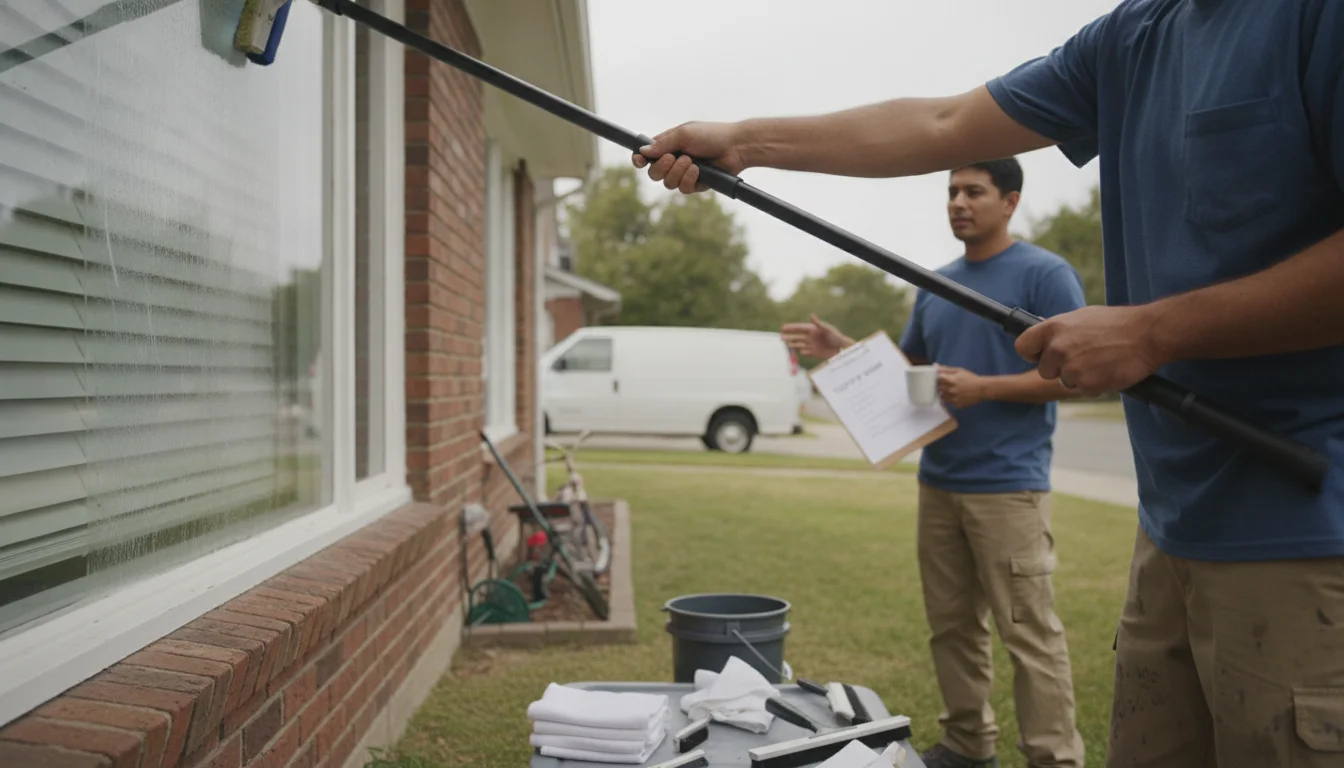
Glass detailing covers both sides of each pane. Pros begin by wiping the top frame to prevent drips, wet the glass with a mild solution, and use a squeegee in smooth, overlapping strokes. A squeegee’s rubber blade removes water without leaving marks. Edge detailing with a dry cloth or pad catches the thin water line around borders so no streak forms as the glass dries. Finally, technicians step back and inspect the pane in different lighting angles, touching up any haze.
Frames, tracks, and sills collect grit, pollen, and bugs. These parts are brushed, vacuumed, and wiped. Tracks—the grooves windows slide on—are loosened with a small brush, then cleaned with a damp cloth. Sills are wiped so water doesn’t pool. Screens are removed, dusted, and washed with a gentle soap or screen cleaner, then rinsed to prevent dark transfer stains on the glass from dirty mesh.
There are reasonable exclusions. Standard cleaning doesn’t fix scratches, hard water etching, torn screens, broken seals, or failed caulk. Those need add-on work or a different trade. Crews document issues and explain your options.
- Key inclusions: inside/out glass, edge detailing, spot checks, frames, tracks, sills, and screens.
Pressure Washing Largo works across Largo every week with this exact approach. The same method applies to homes and commercial spaces; only the scale changes, not the care.
The Step-by-Step Process and Equipment Pros Use
Pros follow a clear path. They walk the site to note hazards, plan access to high panes, and protect floors and furnishings. Drop cloths and shoe covers go where needed. Work begins at the top floor and moves downward to prevent drips or footprints on finished areas.
Tools make the difference. The basics are a squeegee, scrubber, and glass-safe detergent. For stubborn film, a white non-scratch pad lifts grime that soap alone can’t. For high exterior panes, many teams use a water-fed pole with deionized or reverse osmosis (DI/RO) purified water. Pure water contains no minerals, so it dries clear without wiping—great for multi-story exterior glass. A razor scraper can remove paint specks or stickers, but only with a fresh blade on wet, grit-free glass to avoid damage.
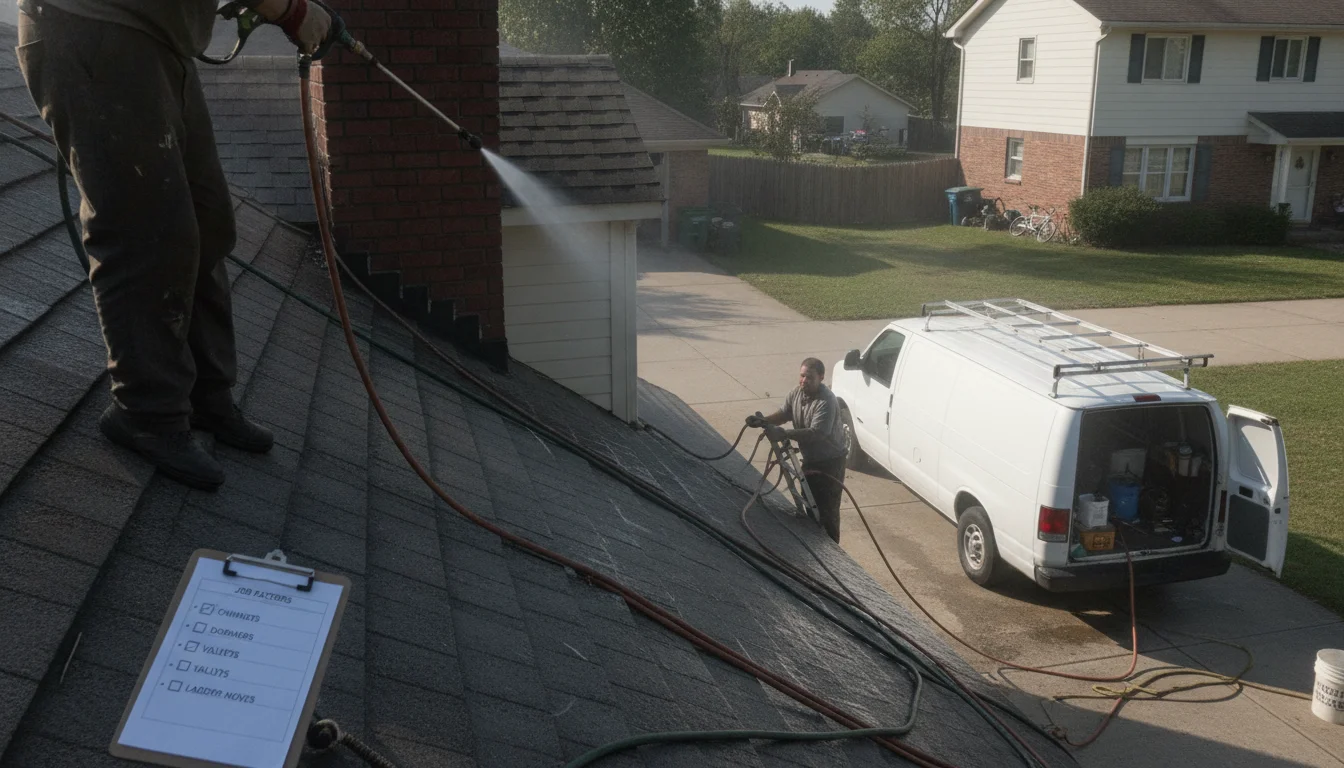
Safety is priority one. Ladders are placed on level ground, set at a proper angle, and used with three points of contact. The common 4-to-1 placement rule—set the base one foot out for every four feet up—helps with safe positioning, following guidance from OSHA’s ladder safety resources. Crews may add standoff arms to protect gutters and stabilize the angle. On roofs, they use tie-offs or avoid fragile areas altogether.
Chemical handling is careful and minimal. Technicians choose low-odor soaps designed for glass, test on a small corner first, and rinse seals and frames as needed. They also manage wastewater thoughtfully to keep it out of storm drains. Throughout the job, a good team explains progress so you know what’s next.
How Window Cleaning Pairs with Exterior Washing
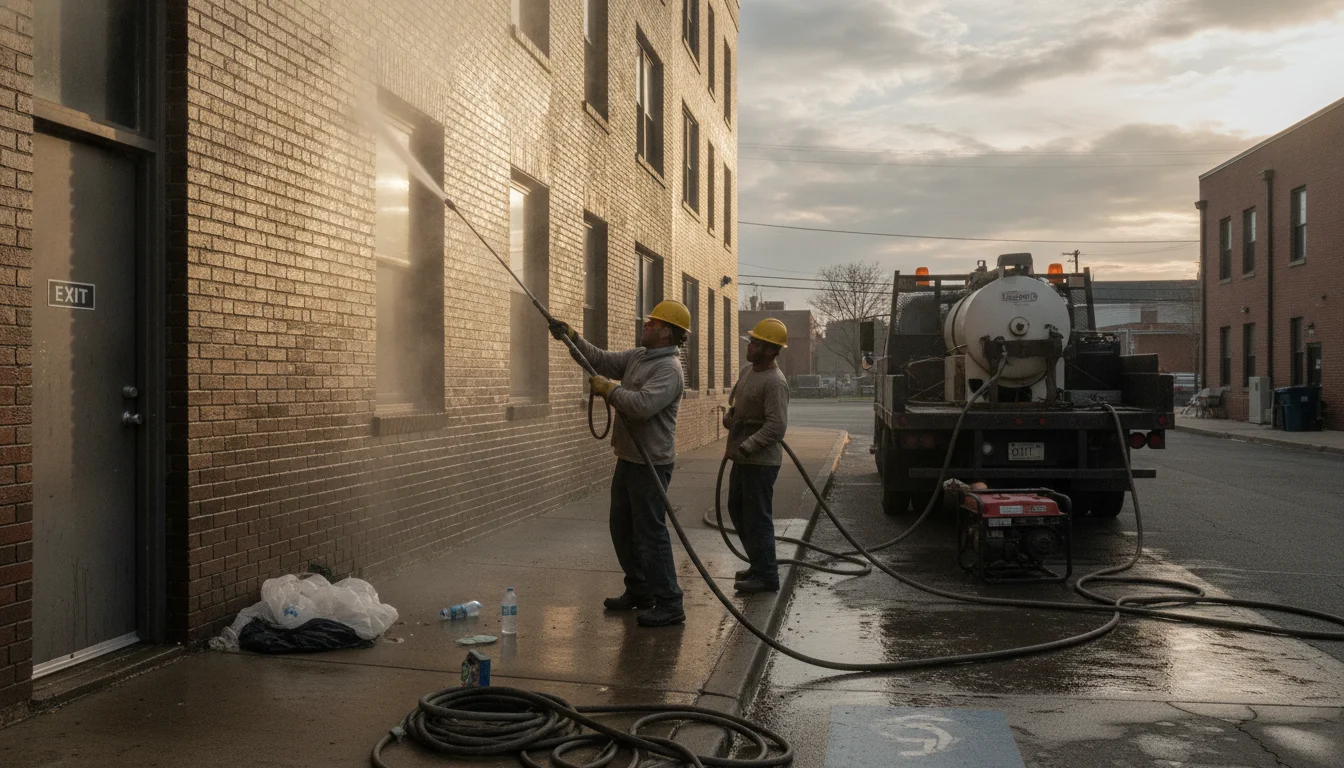
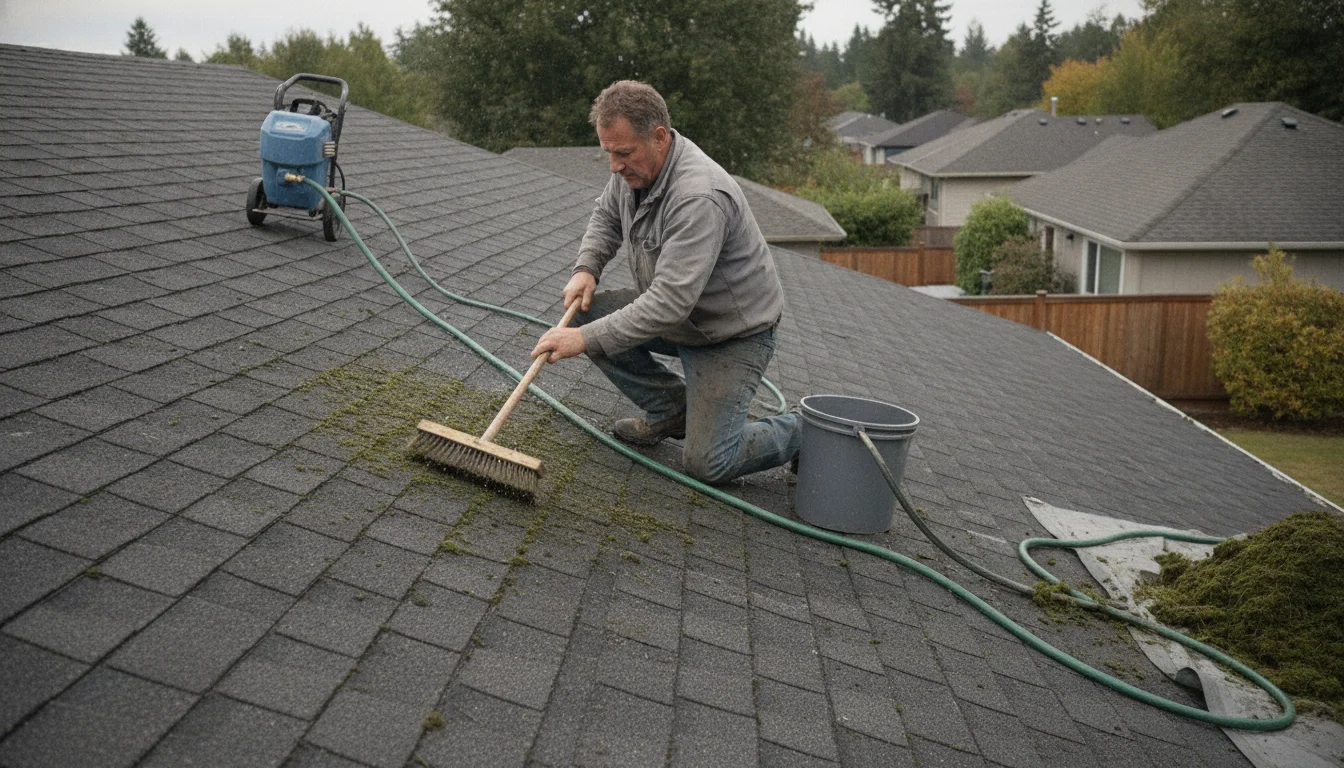
Window cleaning pairs well with house washing, building washing, and roof cleaning. The order matters: do exterior cleaning first, then detail the glass. Exterior washing can move dirt, algae, or soap film onto windows. If you clean windows first, runoff can re-soil the glass.
The flow typically looks like this: crews soft wash siding at low pressure, rinse thoroughly, and check window seals and weeps. After the building dries, they return for glass detailing. On larger properties, teams work in zones so the window detail follows soon after each washed section.
Soft washing uses low pressure and a cleaning mix, which is easier on seals, trim, and caulk than high-pressure spray. Near glass and rubber gaskets, soft washing helps prevent damage and water intrusion. Pressure washing can be appropriate on durable surfaces but may lift paint or push water past tired seals if used incorrectly. For delicate areas, pros choose a soft wash first, then a careful rinse, and finish with a hand tool or pure-water pole on the glass.
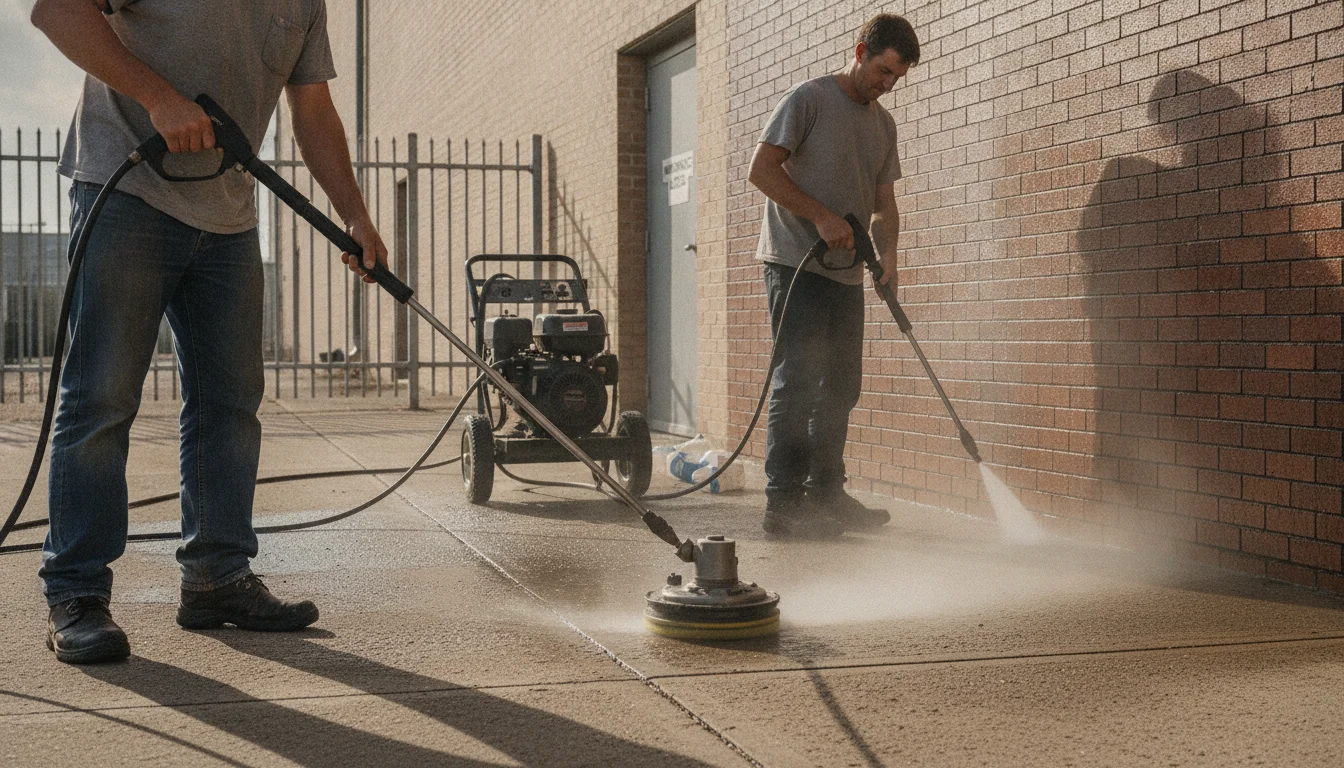
For driveways, sidewalks, and brick, pressure can be appropriate when performed by trained technicians. For stucco and older wood trim near windows, soft washing is often safer and more effective. This choice protects putty lines and sealant and lowers the chance of forcing water into walls. The right method always depends on the surface.
If you plan window cleaning alongside building washing or roof cleaning in Largo, ask the crew to align the schedule so window detailing follows after runoff ends. This small step keeps glass clear longer. If you’re planning broader exterior cleaning—such as Driveway Cleaning Services in Largo, concrete cleaning for walkways, deck cleaning, or fence cleaning—coordinate these with your window detailing to minimize overlap and keep everything looking consistent.
How Often to Schedule: Residential vs. Commercial
How often should you arrange a window cleaning service? It varies by traffic, trees, weather, and how you use the space. Homes near busy roads collect film faster. Professional kitchens and bathrooms fog and spot panes inside more quickly. Storefront entries show fingerprints sooner due to frequent handling.
For many Largo homes, two to four services per year keep glass clear. Spring addresses pollen, late summer removes dust and haze, fall clears spider webs and leaf residue, and a winter visit can handle condensation marks. If you live near the coast or a lake, salt spray and humidity may call for more frequent care. In wooded neighborhoods, sap and pollen build up quickly.
Commercial sites usually need more frequent attention. Storefronts may require weekly or biweekly touch-ups on entry doors and front panes, while full-building glass may be monthly or quarterly. Medical, hospitality, and retail spaces often lean toward tighter cycles. Smudges on partition glass and entry doors are among the first things customers and guests notice.
Seasonal factors that shape timing include:
- Pollen blooms coating windows—plan a cleaning right after peak levels.
- Storm splatter on lower panes, especially after heavy rain.
- Construction dust or paint overspray, which calls for a post-project clean.
- Holiday traffic, which adds fingerprints and smudges to high-touch doors.
Check your space each season. If light looks dull or edges show streaks, it’s time to refresh. Pressure Washing Largo can align window service with building washing so you get both done in one visit window. That helps homes and businesses in Largo keep interiors bright and welcoming while maintaining tidy exteriors.
What Standard Cleaning Can’t Fix (and What Can)
Standard cleaning removes everyday dirt, fingerprints, pollen, and cobwebs. It does not repair damage to glass or seals. Knowing the boundary helps you plan wisely.
Hard water spots appear as white rings or dots from mineral deposits. Over time, minerals can etch glass—a physical change in the surface. Basic soap and a squeegee won’t remove etching. Restoration may involve a mineral remover or a polishing compound designed for glass, sometimes cerium oxide with a pad to reduce visible marks. Deep etching may not be fully correctable.
Chemical damage can result from harsh cleaners or acidic runoff from masonry. These can leave streaks or dull areas. The remedy is a careful neutral wash and, if needed, a restoration polish. Scratches from razor misuse or grit under pads also fit this group. If a scratch catches a fingernail, polishing may help but can be time-consuming; minor marks may be tolerable if they’re not visible in normal light.
Fogged double panes signal a failed seal with moisture trapped between layers. Standard cleaning can’t reach between panes. Options include defogging services or replacing the insulated glass unit. Screen burn—a faint shadow on glass where a dirty screen sat—may lighten with a mild restoration product but can be stubborn. Edge seal failures can allow water intrusion during pressure washing; soft washing and gentle rinsing reduce this risk.
A conscientious crew points out these issues before starting. They won’t scrape dry grit, and they always test pads or chemicals on a small, inconspicuous corner first. When in doubt, they’ll pause and consult with you.
Pricing, Estimates, and What Affects Cost
Every property is different. Costs vary by size, window type, access, and add-ons. A clear scope helps set expectations. That begins with a count of panes or panels, number of screens, and which sides need service. Whether it’s interior-only, exterior-only, or both affects time. Access is another factor—second- or third-story work requires more equipment and care.
Window style also influences time. French panes, grids, and divided lights demand more attention. Large fixed panes are quicker but may require poles or ladders. Skylights and transoms add time due to their height and angle. Screens add steps for removal, washing, and reinstallation. Tracks that need deep cleaning take longer than a simple wipe.
A solid quote spells out the inclusions: interior and exterior glass, frame wipe-downs, track cleaning, sill wipe-downs, and screen washing. It also clarifies workflow order and safety steps. Add-ons could include hard water removal, scratch evaluation, solar panel cleaning, or post-construction cleanup. Post-construction work involves paint, glue, or stucco dust and calls for extra care.
Good teams estimate how long the job will take and explain any helpful prep. They can also coordinate with related services like building washing, brick cleaning, parking lot cleaning for concrete areas, or graffiti removal so your exterior cleaning is organized. Weather plans matter too: high winds and lightning pause work at heights; light rain may be acceptable, but heavy rain can affect quality.
If you have a tight schedule or access window, share it early. Clear notes help the crew plan a smooth, efficient visit in Largo.
Prep, Aftercare, and Choosing the Right Provider
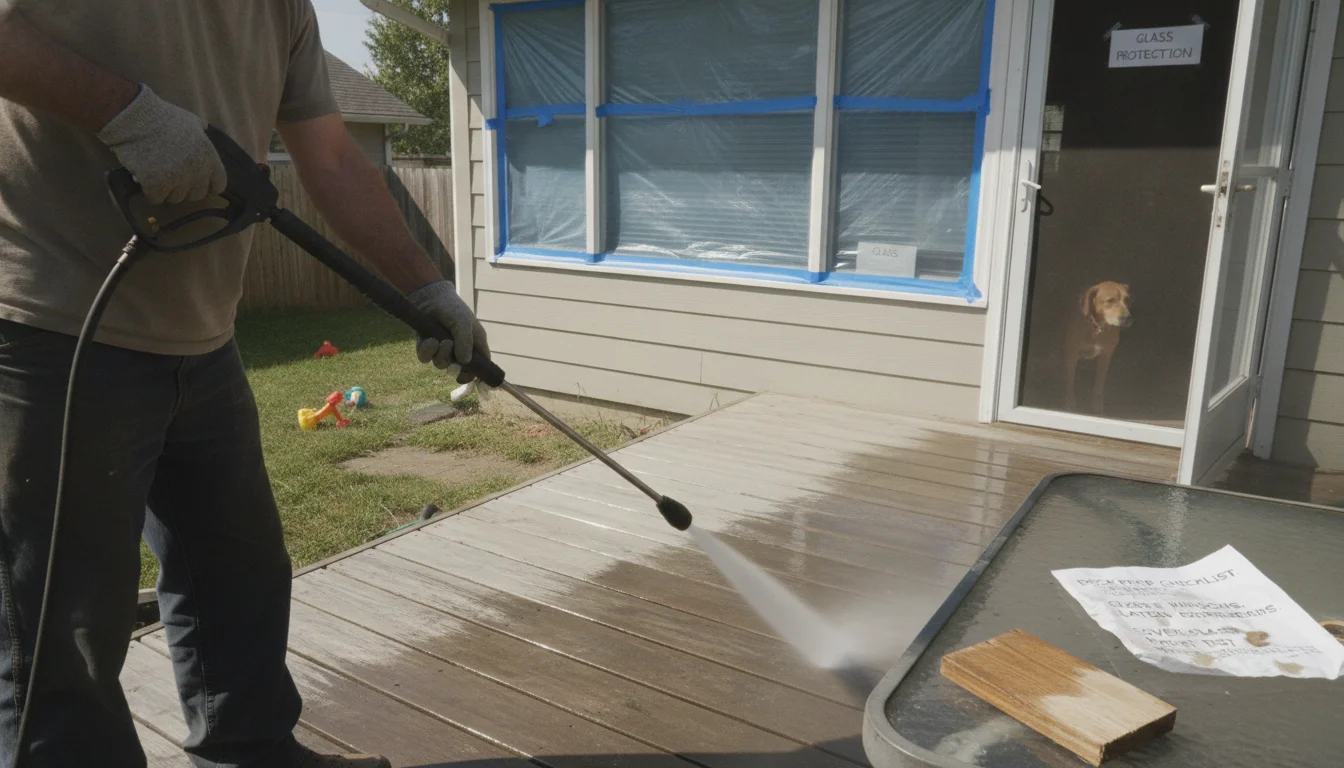
Smart prep makes the day easy. Clear small items from sills and move fragile decor away from windows. Unlock doors and gates. If blinds are delicate, leave them open so techs can reach panes. Keep pets comfortable in a closed room for safety. Outside, trim plants that block access and move cars from under second-story windows.
Aftercare is straightforward. Allow glass to dry before touching. Open tracks to air out if they were damp. Keep sprinklers off windows for a day. If you spot a drying drip line later, let the team know so they can handle a quick touch-up.
Choosing the right provider is about safety, skill, and service. Ask about training and ladder practices. The International Window Cleaning Association (IWCA) publishes best practices for professional care. Ask whether they use DI/RO pure water for high glass and when they switch to hand tools. Confirm coverage and local compliance. Ask how they protect floors, furnishings, landscaping, and how they manage wastewater.
Questions to ask before you book a window cleaning service:
- Do you clean frames, tracks, sills, and screens as part of standard service?
- What safety steps do you use for ladders and multi-story glass?
- When do you use soft washing near windows versus pressure washing?
- How do you handle hard water spots or post-construction cleanup?
- Can you schedule glass detailing after house or building washing?
A strong provider offers clear answers, puts the scope in writing, arrives with clean tools, and respects your time and space. Pressure Washing Largo serves Largo with this mindset and often pairs window cleaning with other exterior cleaning services so your property looks consistently cared for.
Key takeaways
- A pro clean covers inside/out glass, frames, tracks, sills, and screens.
- House or building washing comes first; glass detailing follows.
- Soft washing near seals is safer than high pressure.
- Some damage needs restoration or glass replacement, not standard cleaning.
- Clear prep and smart scheduling keep results streak-free longer.
Frequently Asked Questions
What’s the difference between pressure washing and soft washing near windows?
Pressure washing uses higher force to remove grime. Soft washing uses low pressure with a cleaner mix. Near glass and seals, soft washing is gentler and helps prevent forcing water past tired seals. After the rinse, window detailing provides a clear, streak-free finish.
How often should home windows be cleaned?
Most homes look great with two to four cleanings per year. Add an extra visit after heavy pollen, big storms, or nearby construction. Homes close to the coast or busy roads in Largo may need more frequent care due to salt spray or road film.
Can a window cleaning service remove hard water spots?
Light mineral spots can often be reduced with the right remover and careful polishing. Deep etching is a change in the glass surface itself, which standard cleaning won’t fix. Restoration can lessen the appearance, but some etching may remain.
Is it safe to use a razor on glass?
Yes, in trained hands on wet, grit-free glass using a fresh blade. A technician will test a small area first and keep the blade flat. Misuse, dry scraping, or a dull edge can scratch.
Do crews clean screens, tracks, and frames too?
Good teams include them as part of standard service. Screens are removed, washed, and reinstalled. Tracks are brushed and wiped. Frames and sills are cleaned so no debris runs back onto the glass. Any needed repairs are noted as extras.
Conclusion
Clean windows brighten rooms and present a well-kept exterior. Pair glass detailing with house washing or building washing, choose soft washing near seals, and plan service by season for results that last in Largo. For local help from Pressure Washing Largo, Contact us.
If you are not sure which of these you are dealing with, it is worth having someone look at it before it turns into a bigger job. Get in touch with Pressure Washing Largo today and we will tell you where you stand.