To choose a pressure washing contractor, check licenses, insurance, cleaning methods, and the written work plan. A good team matches pressure and cleaners to each surface. They also protect plants, paint, windows, and storm drains. These checks help Largo property owners hire safely and avoid costly damage.
A pressure washing contractor is a trained professional who cleans outdoor surfaces with pressurized water. The contractor chooses tools, soaps, and steps for each material. This helps remove dirt, mold, and stains without harming your property. The best choice cleans the areas you need while keeping people, plants, and buildings safe.
Pressure Washing Largo serves homes and small shops across Largo. This guide shows you how to check skills, tools, insurance, and safety steps. Use it when comparing companies in Largo and nearby areas. A few careful questions can help you book with greater confidence.
Table of Contents
- What a pressure washing contractor does—and why the right choice matters
- Credentials to verify: licenses, insurance, and safety training
- The 10 must-ask questions before you hire
- Service scope and methods: matching surfaces, stains, and techniques
- Equipment and quality standards: how pros protect your property
- Estimates, pricing models, and contracts you can trust
- Red flags to avoid—and what service day should look like
- Frequently Asked Questions
- Key takeaways
- Conclusion
What a pressure washing contractor does—and why the right choice matters
A skilled contractor cleans siding, roofs, walkways, decks, fences, and other outdoor areas. They select the right pressure, spray angle, and soap for each surface. They also protect plants and control runoff. Runoff is water that leaves the work area and may carry soap or dirt.
A careful crew plans safe access for ladders, hoses, and other tools. They check paint, caulk, seals, and fragile areas before work starts. They also make sure water does not enter doors, vents, or wall gaps. These simple steps help prevent problems after the cleaning is done.
A poor hire can cause real damage. Too much pressure may scar wood, mark concrete, or crack siding. The wrong detergent may strip a finish or stain glass. Poor runoff control can move soil and dirty lawns. Missed prep may push water under doors or into walls.
- A service scope may include house washing, roof cleaning, driveway and patio cleaning, pool deck cleaning, and gutter brightening. Many contractors also clean storefronts, parking pads, and trash areas for small shops.
A good contractor asks about your goals before suggesting a method. They check the age and condition of your paint, sealants, and caulk. They note shade, water access, drainage, and hard-to-reach areas. They then explain the prep, wash, rinse, and cleanup steps.
Special surfaces need a clear plan. Cedar siding, old brick, painted wood, and worn concrete can react badly to strong pressure. Ask how the contractor will handle these areas. If the answers are vague, compare another company before booking.
Reviews and job photos can also help. Look for recent work on homes or buildings like yours. A strong pressure washing contractor explains what they will do, why it fits the surface, and how they will protect your property. Pressure Washing Largo can discuss these steps with property owners who need clear guidance.
Credentials to verify: licenses, insurance, and safety training
Check the company’s records before you book. Many cities and counties require a business license. Ask to see the current license. Also confirm general liability insurance and workers’ compensation coverage.
General liability insurance can help cover property damage caused during the job. Workers’ compensation can help cover an employee’s work injury. These protections matter for homeowners, tenants, landlords, and business owners. Do not rely only on a verbal promise.
Safety training is just as important. Crews should know ladder safety and fall protection. They should understand chemical labels and safety data sheets. A safety data sheet explains how to use and store a product safely.
Crews should also know how to protect storm drains. Wash water may carry soap, oil, dirt, or other waste. Ask how the company will block, collect, or direct runoff. They should follow local rules for water disposal in Largo.
Licensing, liability coverage, and workers’ comp explained
A license shows that the business is registered with the proper local or state office. It does not prove that every cleaning method is safe. Still, it is an important first check.
Liability coverage may help if a window breaks or paint peels during work. Workers’ compensation may help if a crew member gets hurt. Ask for proof of both types of coverage. Make sure the documents are current for the planned service date.
Some companies use subcontractors. If so, ask whether the same insurance rules apply to those workers. The person doing the work should have proper coverage too. Keep copies of the documents with your estimate and contract.
Documentation to request before you book
Ask for a current certificate of insurance and any required local license. Request a written scope of work that names each surface. Ask how the crew will protect windows, plants, outdoor outlets, and fragile materials.
You can also ask for the names of the detergents they plan to use. The company should explain why each product fits the surface. Keep these details with the estimate. Written information makes it easier to compare contractors and resolve questions later.
The 10 must-ask questions before you hire
Good questions help you find a careful and skilled contractor. Ask them before you sign an agreement. Clear answers show that the company has a real plan. Vague answers may signal a lack of care.
Expertise and process: detergents, PSI/GPM, soft wash vs. pressure
- What method will you use on each surface? Look for soft washing on siding and roofs. Measured pressure may fit concrete.
- What detergents will you use, and why? Ask how the products affect plants, paint, and nearby surfaces.
- What PSI and GPM will you use? PSI means pounds per square inch, or water force. GPM means gallons per minute, or water flow. Both affect the cleaning result.
- How will you control runoff? Expect an answer about drain covers, berms, recovery, or another safe plan.
- Do you have recent photos or references? Ask for examples of homes or businesses like yours.
Pricing, guarantees, and scheduling commitments
- What does the work scope include? Ask about pre-soaking, scrubbing, rinsing, and any post-treatment.
- What happens if a stain remains? Look for a clear plan for another treatment or review.
- What driveway washing prep do I need to do? You may need to move cars, bins, toys, or patio items.
- How long will the visit take? Ask for an arrival window and a simple work schedule.
- Is there a workmanship warranty? Ask what it covers and how long the terms last.
These questions also help you understand pressure washing costs. Charges can vary with surface size, height, access, stain type, and the method needed. A contractor should explain the factors that shape the estimate. The final amount should be confirmed in writing before work begins.
Service scope and methods: matching surfaces, stains, and techniques
Each surface needs its own cleaning method. Siding often needs soft washing. This uses low pressure and a cleaning mix to remove algae and grime. Roofs also need a gentle method because strong spray can damage shingles.
Concrete and pavers can handle more pressure than siding. However, too much force may etch concrete or remove sand from joints. Wood needs even, controlled passes to help prevent raised grain. A skilled contractor changes the method as the surface changes.
Common stains include algae, mold, mildew, rust, tire marks, grease, and tannins. Organic stains often respond to the right cleaner and a gentle rinse. Rust may need a special product and careful handling. Grease may need hot water and a degreaser.
Tire marks often need time for the cleaner to work. The contractor may then use a surface cleaner or a focused rinse. Ask which stains they expect to remove and which may need more than one treatment. This keeps the service scope realistic.
Common surfaces and stain types—and what removes them
- Vinyl siding and stucco: Use a soft wash with a mild mix and rinse from top to bottom.
- Asphalt shingles: Use a soft wash only; high pressure can harm shingles.
- Concrete driveways: Pre-treat, use a surface cleaner, and add a post-treatment when needed.
- Decks and fences: Use low pressure and a wood-safe cleaner with even strokes.
- Pool decks: Use a gentle pass that protects sealers and joints while managing runoff.
Methods and eco-practices: soft washing, hot water, and runoff control
Soft washing uses low force and a detergent blend for fragile areas. It can help remove algae, mildew, and grime without blasting the surface. The mix still needs careful use. Plants, windows, painted areas, and people should be protected.
Hot water can help loosen grease on concrete. Runoff control keeps dirty water and soap away from storm drains. Contractors may cover drains, recover water, or direct water to a safe area. Ask how the method fits local rules in Largo.
Equipment and quality standards: how pros protect your property
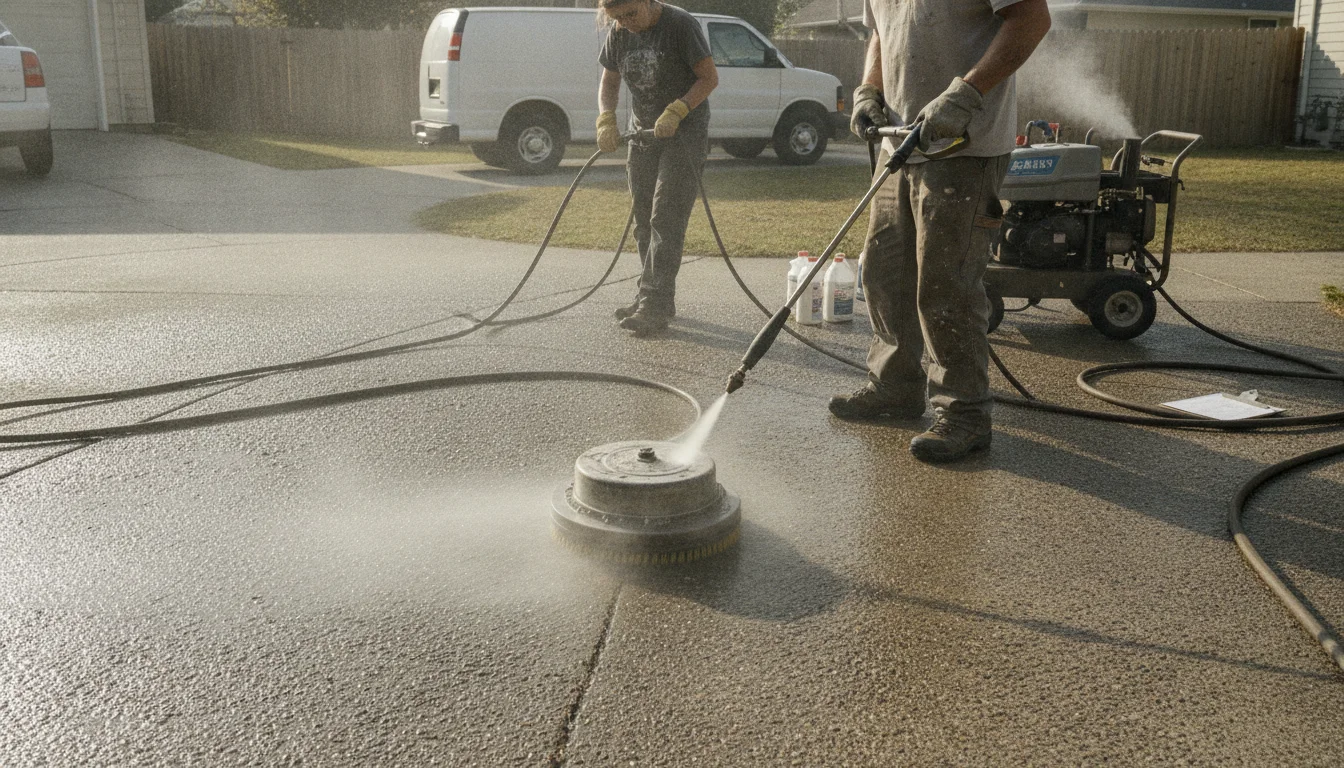
Professional crews use equipment that gives steady and even results. This may include pumps, adjustable wands, surface cleaners, hose reels, ladders, and safety gear. A surface cleaner keeps spray at an even height across concrete. This can help limit lines and uneven marks.
A good contractor brings more than a powerful machine. They carry different nozzles for rinsing, reaching, and gentle cleaning. They use the lowest useful pressure for fragile areas. They also check wind and sun so cleaning products do not dry on glass or paint.
Small habits show quality. Crews cover outlets and doorbells. They wet plants before applying detergent and rinse them afterward. They protect trim, wood, seals, and nearby furniture. They avoid spraying directly into window seals, screens, vents, and flashing.
Pro-grade gear and results: pumps, nozzles, surface cleaners
Pumps with strong water flow can help a crew rinse dirt away. Nozzle choice changes the spray pattern and force. A wide spray may fit a rinse, while a narrow spray may reach a small spot. The wrong nozzle can damage paint or wood.
Surface cleaners help keep concrete cleaning even. Hot water equipment may help remove oil, gum, and grease. Ask which tools will be used on your property. The contractor should explain how each tool fits the material.
Damage prevention for paint, plants, windows, and seals
Pros test a small area before cleaning the full surface. They avoid high force on painted areas. They rinse plants and add plant guards when needed. They keep spray away from window seals and screens.
They also watch caulk lines, vents, attic gaps, and loose trim. These steps lower the risk of leaks and peeling paint. Safe ladder setup helps protect both the crew and the property. Ask what the contractor will cover before the first spray.
Estimates, pricing models, and contracts you can trust
A clear scope is the base of a good estimate. It should list the areas to clean, the methods, and any stain treatments. It should also note detergent types and property protections. Ask whether the estimate includes setup, rinsing, cleanup, and removal of covers.
The contractor should explain what affects pressure washing costs. Common factors include surface size, soil level, height, access, and stain type. Two-story work or steep roofs may need more time and safety gear. Steps, corners, railings, and tight spaces may also add work.
Costs vary from one job to another. A trustworthy contractor explains the reason for the estimate. They do not promise a price without seeing the scope. Ask for the final terms in writing before you approve the work.
What to expect in a written estimate, timeline, and warranty
Expect a written estimate with:
- Defined surfaces and notes about trouble spots.
- Prep steps for you and the cleaning crew.
- An arrival window, expected duration, and cleanup plan.
- Any workmanship warranty explained in simple terms.
For larger jobs, ask for a schedule by day or work area. Home and small shop projects may often finish in one visit, but the exact time depends on the property. Keep the estimate and warranty with your property records.
For broader planning, review our pressure washing services or Commercial Pressure Washing in Largo, FL. These resources can help owners plan future work for shops and other buildings.
Red flags to avoid—and what service day should look like
Some warning signs appear before you sign. Be careful if a company will not show proof of insurance. A missing written estimate is another concern. Pushy sales, unclear methods, and one price for every surface should also make you pause.
Avoid anyone who says the same high-pressure method works for roofs, siding, wood, and concrete. Ask what detergents they use and how they control runoff. If they cannot answer simple questions, compare another pressure washing contractor.
Warning signs that signal risk before you sign
- A vague scope that only says “whole house.”
- No plan for plants, windows, outlets, or storm drains.
- High-pressure cleaning offered for every roof or siding job.
- Refusal to test a small area first.
- No local references for similar work.
From arrival to final walkthrough: prep, cleanup, and aftercare
On service day, a good crew walks the property with you. They confirm the scope and identify fragile areas. They wet plants, cover outlets, check windows, and move or protect items. They also confirm where water can safely flow.
The crew may pre-treat stains before washing. They use the planned spray angle and pressure for each surface. They rinse well and control runoff during the work. Storm drains may lead to local streams or lakes, so this step matters in Largo.
After cleaning, the crew removes covers and rinses plants again. They coil hoses and tidy the work area. A final walkthrough gives you a chance to point out spots that need attention. Ask about aftercare if the surface needs time to dry before sealing or painting.
Pressure Washing Largo serves homes and small shops with clear steps and careful work. The team can explain safety training, detergent choices, surface methods, and runoff plans. Property owners in Largo can also learn more about the team through About Our Pressure Washing Team.
For more guidance, see the Professional Pressure Washing Guide for Homes & Businesses. Owners of larger sites can also review Building Washing Services in Largo, FL.
Frequently Asked Questions
Does soft washing damage stucco?
Soft washing uses low pressure and a cleaning solution. It can be a safe choice for stucco when a trained contractor uses the right mix. The spray should be wide and gentle. The surface also needs a full rinse before the cleaner dries.
High pressure can gouge stucco or push water into cracks. Ask the contractor to explain the mix, spray force, and rinse plan. A small test area can help show how the stucco will react.
How often should you soft wash your house?
Many homes need cleaning from time to time as algae, mildew, and dirt return. Shady walls, roof drip lines, and areas near trees may need attention sooner. Homes near busy roads or water may collect grime faster.
A yearly check can help you decide when to clean. The right schedule depends on shade, weather, surface type, and nearby plants. Ask a local contractor to review the condition rather than choosing a fixed schedule without looking.
Who pressure washes houses?
A pressure washing contractor cleans homes, roofs, decks, driveways, and other outdoor surfaces. They use soft washing for delicate areas and measured pressure for stronger materials. They should also manage plants, runoff, ladders, and safety.
Look for training, insurance, clear photos, and a written scope. Ask about similar jobs in Largo. A good contractor should explain the work in plain language before starting.
How do you clean cedar siding?
Cedar needs a gentle method. Use low pressure and a wood-safe cleaner. Work with the grain and avoid holding the spray in one place. Rinse well after the cleaner has had time to work.
A contractor may use soft washing and a soft brush for stubborn spots. Let the wood dry fully before adding a seal or stain. Ask how the company will protect nearby windows, plants, and trim.
Can roof cleaning hurt shingles?
High pressure can lift shingle granules and damage roof edges. A proper roof wash uses a soft method and a shingle-safe cleaning mix. The contractor should rinse carefully and avoid walking on weak areas.
Ask the company to explain each roof-cleaning step. Choose a contractor who will not use strong pressure simply because it is faster. Written safety and access plans are also important for roof work.
Key takeaways
- Match the method to the surface. Use soft washing for siding and roofs, and measured pressure for concrete.
- Check protection first. Confirm licenses, insurance, and safety training before booking.
- Ask clear questions. Discuss detergents, pressure, runoff, scheduling, and warranty terms.
- Request a written plan. The scope should cover prep, methods, timing, cleanup, and aftercare.
- Watch for warning signs. Vague answers and one method for every surface can lead to damage.
Conclusion
Choosing the right pressure washing contractor is about care, not force. Look for clear methods, safe equipment, current insurance, and respect for your home or business. Pressure Washing Largo can help property owners review cleaning needs and plan the next step. Contact us.
If you are not sure what you are dealing with, it is worth having someone look at it before it turns into a bigger job. Get in touch with Pressure Washing Largo today and we will tell you where you stand.





