To identify mold vs algae on house surfaces, check the color, texture, and location. Mold often looks patchy, dusty, or fuzzy. Algae often forms a smooth green, blue-green, or dark film. The signs can overlap, so also check for moisture before choosing a cleaning method.
Dark marks on siding, concrete, or a deck can make a property look uncared for. Yet these marks do not all come from the same growth. Mold, mildew, algae, and lichen need different care. The surface beneath the growth matters, too.
Pressure Washing Largo helps property owners learn the difference before cleaning starts. A good match can help protect vinyl siding, wood, masonry, painted surfaces, and nearby plants. It can also stop a strong cleaning method from harming a delicate area.
Table of Contents
- How can you identify mold vs algae on a house?
- What does mold look like on exterior surfaces?
- How can you tell mildew from mold outside?
- What does algae look like on a house?
- How do you identify lichen on siding, masonry, or other surfaces?
- Why does organic growth keep coming back after cleaning?
- What is the safest way to remove mold, mildew, algae, and lichen?
- Frequently Asked Questions
How can you identify mold vs algae on a house?
Mold often looks fuzzy, dusty, or uneven. Algae usually looks like a smooth film or stain. Color can offer a clue, but it cannot prove the growth type. Sun, rain, surface color, and age can change how growth looks.
What color, texture, and location reveal about organic growth
Mold may look white, gray, brown, green, or black. It often forms blotches or small patches. Some mold looks flat, while other growth has soft or fuzzy edges. It may collect near leaks, damp trim, gutters, shaded walls, or areas with poor air flow.
Algae often covers broad, damp areas. It may look green, blue-green, or black. On a concrete walkway, algae can form a dark, slick film. On siding, it may leave streaks below roof edges or near places that stay wet after rain.
Mildew is often lighter and more powdery than mold. Lichen may look crusty, leafy, or raised. Growth on a pool deck, fence, patio, or deck may mix with dirt, pollen, and weather stains. This mix can hide the first signs.
Why appearance alone cannot always confirm the growth type
A dark stain is not always mold. It may be algae, soot, dirt, or several materials together. A green mark is not always algae, either. Moss, plant debris, and lichen can show a similar color.
Homeowners can look from a safe distance and check for wet areas. They should not scrape unknown growth with bare hands. They should also avoid stirring dry material with force. Anyone with health concerns should avoid contact and ask a qualified cleaning professional for help.
What does mold look like on exterior surfaces?
Outdoor mold often appears as uneven spots, blotches, or spreading patches. It may feel soft, chalky, or slightly raised. Mold grows where moisture stays long enough to support organic growth.
Common colors, patterns, and textures of outdoor mold
Mold does not have one set color. White or pale mold may look like dust. Green mold can look like algae. Black mold-like marks may look like soot or old dirt. A closer view may show uneven edges, tiny specks, or a rough surface.
Mold may grow in seams, below loose paint, behind trim, or within damp wood. On painted siding, it can leave streaks. On masonry, small pits and cracks can hold moisture. On a wooden deck, mold may appear between boards or near shaded steps.
Color alone cannot name a mold species. Homeowners should not try to identify a species by sight. The useful question is whether damp organic growth is present. The next question is whether the surface needs safe cleaning or repair.
Where mold commonly develops around a property
Mold favors places that stay damp and get little sun. Common areas include shaded walls, fence lines, covered porches, damp decks, and spots near leaking gutters. It may also appear near outdoor faucets, downspouts, and poorly draining plants beds.
Mold on concrete can become slippery when wet. This matters on walkways, patios, and pool decks. Cleaning mold from concrete may remove the mark, but poor drainage can bring it back. The same issue can occur near a downspout or shaded garden bed.
Before cleaning, a homeowner can check where water flows. Clearing leaves and extending a downspout may help. Repairs may be needed when a leak or damaged surface keeps the area wet. These simple checks are often safe to do without professional help when done from the ground.
How can you tell mildew from mold outside?
Mildew is a type of surface fungus that often looks thin, light, and powdery. Mold may grow deeper and look thicker, darker, or less even. People often use the two words in the same way, so sight alone cannot always separate them.
The difference between mildew and mold
Mildew often stays on the surface and spreads across damp materials. It may look white, gray, or pale green. Mold can also sit on the surface, but it may enter porous materials and leave deeper marks. Both can grow where air movement is poor.
The cleaning plan depends more on the surface and moisture source than the name. Vinyl siding, painted wood, concrete, and composite decking each need different pressure and cleaning care. A method that works on masonry may damage paint or wood.
Homeowners can wash small, light surface spots when they can work safely. They should wear suitable protection and keep children and pets away. They should never mix cleaning products. Strong odors, widespread growth, or damp indoor materials need more careful help.
When surface discoloration may indicate a deeper moisture problem
Mold or mildew that keeps returning often points to a moisture problem. Causes may include a leaking gutter, blocked drain, poor grading, damaged caulk, or a wall that gets little sun. Growth may return while the source remains.
A homeowner can inspect gutters, downspouts, hose connections, and nearby plants. These checks are usually safe when done from the ground. Roof access, ladder work, electrical equipment, or suspected building leaks need extra care.
A clean surface is useful, but it is not the whole answer. If a damp area returns soon after cleaning, the property needs a moisture review. Pressure Washing Largo can help Largo property owners decide if the surface needs gentle cleaning, stronger washing, or repair first.
What does algae look like on a house?
Algae often looks like a thin stain or slippery film. It may be green, blue-green, dark green, or almost black. Algae commonly spreads across shaded surfaces that stay damp after rain, washing, or irrigation.
Recognizing green, black, and blue-green algae growth
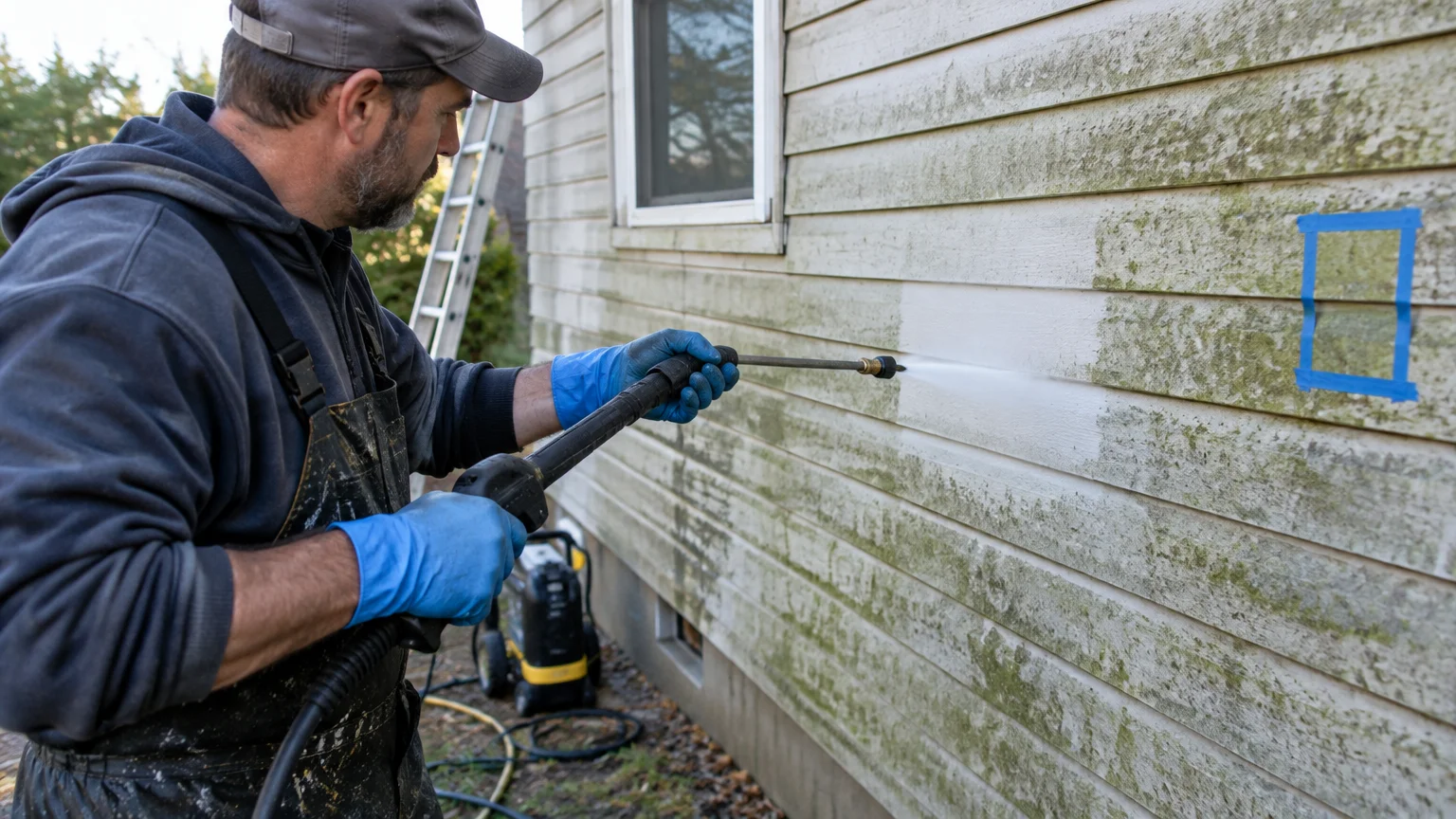
Green algae may appear as a soft coating on decks, siding, concrete, or fences. Dark algae can create black streaks below roof edges. Blue-green shades may show on wet masonry or near plants and standing water.
Algae can spread across broad areas instead of forming small fuzzy patches. On a deck, it may make boards look dark and slick. On concrete, it can settle into pores and create uneven color. Cleaning concrete algae needs care so the film comes off without leaving lines or harming the surface.
Algae stains can mix with mold, mildew, dirt, and pollen. That is why a color check has limits. A test spot in a hidden area can show how a cleaner and pressure level affect the surface.
Why shaded and damp surfaces are more likely to develop algae
Algae needs moisture to grow. Shade slows drying, while trees and fences can block air flow. Sprinklers that wet siding, decks, or walkways can add more moisture.
Leaves and soil also hold water against a surface. A dirty gutter can send a steady stream down one wall. These conditions explain why algae may return after a deck or patio looks clean.
Homeowners can limit regrowth by trimming plants away from walls, clearing debris, and aiming sprinklers away from the home. Safe upkeep can help, but it may not remove old growth. Cleaning algae from a deck also needs care because too much pressure can scar wood or strip its surface.
How do you identify lichen on siding, masonry, or other surfaces?
Lichen is a living partnership between a fungus and an alga-like organism. It often looks crusty, leafy, flaky, or raised. Unlike a thin algae film, lichen may attach firmly and remain after basic washing.
How lichen differs from algae, mold, and mildew
Algae usually forms a smooth coating. Mold and mildew often look like spots, dust, or fuzzy patches. Lichen may look like small pale disks, branching growth, or rough green-gray crusts. Its shape may be easier to see from an angle.
Lichen grows on masonry, siding, roof edges, fences, and other outdoor surfaces. It can settle into small cracks and rough areas. On porous materials, its attachment may make removal harder than cleaning a fresh stain.
A homeowner should not pull lichen from painted siding or scrape it with a sharp tool. This can lift paint, break a surface coating, or cause other damage. Gentle cleaning may work for light growth, while older growth may need a planned process.
Why lichen can remain attached after surface cleaning
Lichen holds onto rough surfaces with parts that help it stay in place. Washing may remove the color but leave pale marks or small attached pieces. Repeated force can harm the surface before it removes the growth.
The right method depends on the material, age of the growth, and nearby drainage. Masonry may handle a different method than wood, painted siding, or composite decking. Soft Washing Services may suit delicate surfaces because it uses lower pressure with a suitable cleaning solution.
A homeowner can inspect the area and remove loose leaves nearby. Scraping, climbing, or using harsh chemicals is not always safe. A professional can help when growth covers a large area or sits on a fragile finish.
Why does organic growth keep coming back after cleaning?
Organic growth returns when moisture, shade, debris, or surface conditions remain. Cleaning removes visible growth, but it may not remove the cause. A surface can look clean while the same damp conditions continue nearby.
The difference between removing discoloration and treating the cause
Pressure can remove color and loose material. A cleaning solution may help break down organic growth. Neither step repairs a leaking gutter, poor drainage, damaged caulk, or a shaded area that never dries.
This difference matters when cleaning concrete mold, deck mold, or algae from a pool deck. A strong wash may make the surface look better for a while. If water still collects in the same place, new growth may appear.
Homeowners can begin with simple checks. Clear leaves from drains, move stored items away from walls, and check that sprinklers do not spray the building. They can trim plants when safe. These steps may reduce moisture without professional help.
Moisture, shade, debris, and surface conditions that support regrowth
Growth often returns near north-facing walls, under trees, beside fences, and below roof drainage points. Rough or porous surfaces hold water and dirt longer than smooth ones. Cracks and open joints can also trap organic material.
A property owner should look for patterns. One streak below a gutter may point to a drainage issue. Broad growth on a shaded deck may point to slow drying. Repeated marks near a faucet may suggest a small leak.
Pressure Washing Largo can help homeowners review the cleaning need and surface risk. The goal is not only a cleaner look. It is also a method that fits the material and helps prevent avoidable damage. In Largo, checking moisture before exterior cleaning can save time and protect the surface.
What is the safest way to remove mold, mildew, algae, and lichen?
The safest method matches the growth, surface, and moisture source. Light surface growth may respond to careful homeowner cleaning. Delicate siding, high areas, broad growth, and slippery surfaces often need professional pressure washing or soft washing.
How cleaning methods vary by growth type and surface
Pressure washing uses a focused stream of water to remove dirt and growth. Soft washing uses lower pressure with cleaning agents made for the surface. The difference between pressure washing and soft washing matters because high pressure can damage paint, wood fibers, mortar, seals, and delicate fixtures.
A homeowner may clean a small, reachable area when the surface is sound. These steps offer a careful starting point:
- Inspect the surface first. Look for loose paint, cracks, rotten wood, open joints, and nearby electrical parts.
- Protect the area. Move furniture, cover sensitive plants, and keep people and pets away.
- Choose a small test spot. Start in a hidden area with the gentlest suitable method.
- Use the right tool and cleaner. Follow the product label and never mix cleaning chemicals.
- Rinse without forcing water into gaps. Keep spray away from vents, seals, outlets, and damaged areas.
- Check the result after drying. Remaining marks may be deep stains, lichen, or a moisture problem.
When professional pressure washing or soft washing is the better choice
Professional help makes sense when growth covers a large area, sits high above the ground, or affects a fragile finish. It also helps when a deck, walkway, or pool deck becomes slippery. A trained cleaner can adjust pressure, distance, cleaning agents, and rinse methods.
Pressure Washing Services may suit sound concrete or masonry. Soft Washing Services may suit siding, painted surfaces, roofs, and other areas that need lower pressure. Deck cleaning, pool deck cleaning, and patio cleaning also need care because each material can react differently.
A homeowner does not need a professional for every small spot. Basic ground-level checks and simple upkeep are often safe. Professional help is the better choice when ladders, roof access, strong chemicals, electrical parts, suspected damage, or widespread growth are involved. The same care applies to house washing, driveway cleaning, and other exterior cleaning tasks.
Frequently Asked Questions
Is black growth on siding always mold?
No. Black marks may come from algae, mold, dirt, soot, or several materials. Color alone cannot confirm the cause. The pattern, texture, moisture source, and surface type all matter. A cautious inspection and small test area can guide cleaning, but a visual check cannot identify a mold species.
Can a homeowner clean mold from concrete?
A homeowner can often clean small, reachable areas of sound concrete. The person should protect nearby plants, avoid mixing chemicals, and use care around drains. Large areas, slippery surfaces, drainage problems, and returning growth may need professional cleaning. Cleaning removes visible growth, but repairs may be needed to stop its return.
What is the safest way to clean algae off a deck?
The safest approach starts with a gentle test on a hidden section. Wood and composite boards can react badly to high pressure, harsh cleaners, or close spray. A homeowner should follow the product label and avoid forcing water into joints. Professional help is wise for older, weak, painted, or high decks.
Does pressure washing kill mold and algae?
Pressure washing can remove visible growth, dirt, and stains, but water pressure alone may not address every cause. Moisture, shade, and debris can support regrowth. A suitable cleaning solution and careful surface method may work better. The right plan depends on the material, growth, and condition of the area.
When should a homeowner call a professional cleaner?
A homeowner should consider professional help for widespread growth, high surfaces, fragile siding, damaged wood, slippery walkways, or suspected leaks. It is also safer when ladders, strong chemicals, or electrical fixtures are nearby. Pressure Washing Largo can review the surface and help property owners choose a suitable cleaning approach.
Key takeaways
- Mold, mildew, algae, and lichen can look alike, so color alone is not enough.
- Moisture and shade often cause regrowth after visible stains are removed.
- Concrete, wood, siding, masonry, and composite surfaces need different care.
- Homeowners can handle small, safe, ground-level checks, but not every task is right for DIY work.
- Professional pressure washing or soft washing can limit surface damage when the method fits the material.
Contact us to discuss a safe cleaning plan for the affected surface and growth.