The safest way to learn how to pressure wash a driveway is to use moderate pressure, the right nozzle, and steady passes. First inspect the concrete, remove loose debris, pretreat stains, and test a small area. Keep the spray moving, rinse from high to low, and stop if the surface starts to weaken.
Table of Contents
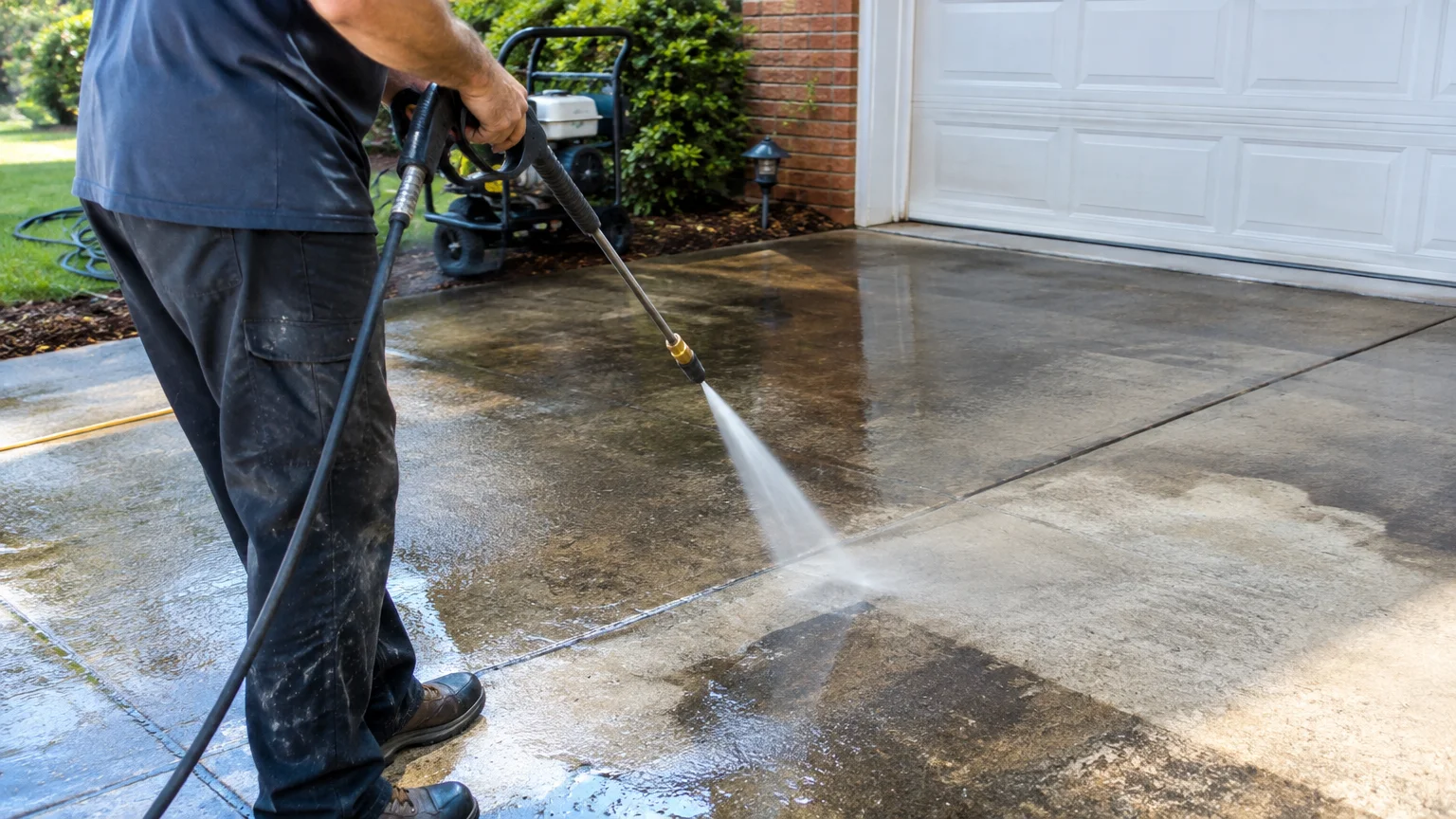
- What should you do before pressure washing a driveway?
- What pressure washer settings are safest for concrete?
- How do you apply driveway cleaner before pressure washing?
- How should you pressure wash a driveway without leaving streaks?
- How can you remove oil stains, algae, and tire marks from concrete?
- What causes concrete etching and how can you prevent it?
- How should you rinse, dry, and maintain a pressure-washed driveway?
- Frequently Asked Questions
- Key Takeaways
- Conclusion
What should you do before pressure washing a driveway?
Before you start, move vehicles, toys, planters, mats, and loose items. Sweep away leaves, sand, and small stones. Check where the water will flow, since dirty runoff should not collect near a garage, door, drain, or planting bed. Good driveway washing prep makes the job safer and helps prevent new stains.
Gather the right equipment and cleaning supplies
A homeowner may need a pressure washer, garden hose, safety glasses, gloves, sturdy shoes, a stiff broom, and a driveway-safe cleaner. A surface cleaner can make broad areas more even than a spray wand. It has a round cover that keeps the spray at a steady height over the concrete.
Choose a cleaner that matches the surface and stain. Read the product label because some cleaners can harm grass, plants, painted areas, or nearby stone. Keep clean water close by for rinsing plants and tools. Pressure Washing Largo provides Driveway Cleaning Services for property owners who would rather have help with this work.
Inspect the concrete and prepare the surrounding area
Look for cracks, loose pieces, flaking areas, old repairs, and joints with missing filler. Pressure washing cannot fix weak concrete. A strong spray may widen damaged spots when aimed too close. Move outdoor furniture away and cover delicate items near the work area.
Test a small hidden section before cleaning the full driveway. Watch for color changes, loose material, or lines that remain after drying. If the driveway has fresh sealant, follow the sealer maker’s waiting instructions. Tenants should ask the property owner before using a pressure washer.
What pressure washer settings are safest for concrete?
Moderate pressure and a wide spray are safer than maximum power. The right setting depends on the concrete’s age, strength, finish, and condition. Start with the lowest setting that removes surface dirt. Never let the wand stay still in one spot.
Choose the right nozzle, pressure, and spray distance
A wide-angle nozzle spreads water over more concrete. This lowers the chance of surface damage. Narrow, high-force tips can cut soft areas and leave clear marks. Hold the wand at a steady height, and test the spray before cleaning the main area.
Old, worn, or decorative concrete needs extra care. Keep the wand moving in smooth lines. The safest distance is the one that cleans without tearing at the surface. If the spray leaves a sharp, bright line, it is too close, too strong, or moving too slowly.
Pressure washing costs vary by the driveway’s size, access, surface condition, and stain level. A larger or badly damaged area usually takes more work than a small, sound driveway. The final cost is confirmed on a quote.
When should you use a surface cleaner instead of a wand?
A surface cleaner is often best for large, flat driveways. Its covered spray bars move at a regular height. This helps reduce zebra-like streaks. Move slowly enough for the tool to clean, but not so slowly that water sits in one place.
A wand still helps with edges, corners, steps, and narrow strips. Use it with a broad spray and steady movement. On sloped or uneven concrete, a wand may give better control. Professionals may use both tools during Concrete Cleaning Services, based on the surface condition.
How do you apply driveway cleaner before pressure washing?
Driveway cleaner loosens grime before water removes it. Sweep first, wet nearby plants, apply the product evenly, and follow the label. Cleaner works best when it stays wet for the listed dwell time. Dwell time means how long a solution stays on a surface before rinsing.
Match the cleaning solution to the type of stain
General dirt may respond to a mild concrete cleaner. Oil and grease often need a degreaser. Algae and mildew may need a product labeled for organic growth. A product made for siding, wood, or indoor floors may not be safe for concrete.
Never mix cleaning chemicals. Some mixtures can create dangerous fumes or damage the driveway. Protect your skin and eyes, and keep children and pets away. Follow the product label closely. A small test area can show whether the cleaner changes the concrete color.
Allow proper dwell time without letting the solution dry
The solution should stay wet while it works. On a hot or windy day, clean smaller sections. A light mist of water may help keep the product active, but the label should guide you.
If the cleaner dries, it may leave a film or uneven marks. Rinse that area before applying more product. Direct water away from doors, garages, drains that lead to waterways, and delicate landscaping. Local rules may also limit where wash water can flow.
How should you pressure wash a driveway without leaving streaks?
The key is to clean with steady, overlapping passes. Divide the driveway into manageable sections and finish each section before moving on. A consistent pace helps prevent stripes caused by uneven spray distance or missed areas.
Use consistent passes and overlapping cleaning patterns
Move the wand or surface cleaner in straight lines. Let each pass overlap the last one slightly. Do not wave the wand in random arcs. This can create curved marks and uneven cleaning.
Keep the nozzle at a similar height during each pass. Do not stop while pulling the trigger. If a dirty line remains, clean it again after the first pass. Chasing one spot with a narrow spray can cause more damage than benefit.
Work from the highest point toward the drainage area
Cleaning from high to low lets dirty water move away from finished areas. Begin near the garage or upper edge. Then work toward the street or planned drainage area. This keeps runoff from crossing sections that are already clean.
Edges may need a slower pass, but do not aim the spray into cracks or joints. Use the same high-to-low pattern for the final rinse. Watch for pooling water, which may point to blocked drainage or a low area.
How can you remove oil stains, algae, and tire marks from concrete?
Different stains need different treatment. Fresh oil, old grease, organic growth, and rubber marks do not react in the same way. Pressure washing can remove surface buildup, but deep stains may remain because concrete is porous. Porous concrete has tiny openings that can hold water and dirt below the surface.
Treat deep oil and grease stains
Fresh oil should first be absorbed with a suitable material. Collect the material and dispose of it under local rules. A concrete-safe degreaser can then break down the remaining film before rinsing.
Old oil marks may need more than one treatment. Avoid forcing grease deeper into the slab with a narrow, powerful spray. If a dark shadow remains, more pressure may not solve it. A professional can check whether the mark is on the surface or inside the concrete.
Clean organic growth and dark surface buildup
Algae, mildew, and moss grow more easily where concrete stays damp and shaded. Use a cleaner labeled for that type of growth. Protect plants and rinse nearby surfaces as the product label directs.
Tire marks may respond to a mild cleaner and a stiff brush before washing. Work gently around decorative finishes and painted lines. Driveway Cleaning Services can help homeowners in Largo handle hard stains while reducing the risk of uneven cleaning.
What causes concrete etching and how can you prevent it?
Concrete etching happens when force or chemicals remove part of the surface. It can leave rough spots, pale lines, or spray marks. Common causes include a narrow nozzle, high pressure, close spraying, harsh chemicals, or slow movement. Etching is surface damage, not dirt that another rinse can remove.
Avoid common mistakes that damage driveway surfaces
The most common mistakes include:
- Using a narrow nozzle on old or weak concrete
- Holding the spray in one place
- Working too close to the surface
- Skipping a small test area
- Letting cleaner dry on the driveway
- Aiming strong spray into cracks or loose edges
A homeowner does not always need a professional for sweeping, light rinsing, or simple spot cleaning. These tasks are usually safe when the concrete is sound and runoff is controlled. Professional help is wise when concrete is badly cracked, flaking, deeply stained, or hard to drain. It also helps when the owner lacks safe equipment.
Know when pressure washing is not suitable for the concrete
Very soft, damaged, decorative, or recently repaired concrete may not suit strong pressure. Pavers can also lose joint sand when cleaned too hard. Lower pressure, a gentler method, or another cleaning process may be safer.
When the surface condition is unclear, stop after testing a hidden section. Pressure Washing Largo can help property owners decide whether pressure washing suits the driveway. Its team can also discuss Concrete Cleaning Services for walkways, patios, and other hard surfaces.
How should you rinse, dry, and maintain a pressure-washed driveway?
A final rinse should remove cleaner and loose soil from the highest point toward the drainage area. After rinsing, inspect the driveway from several angles. Wet concrete can hide missed spots, so check the surface again as it dries.
Check the finished surface and address missed areas
Look for oil shadows, cleaner film, streaks, and water pooling. Treat a missed area gently instead of attacking it with more pressure. If the driveway looks uneven while wet, wait until it dries before deciding on another pass.
Also check nearby walls, garage doors, plants, and walkways for splashback. Rinse those areas when needed. The finished surface should look clean and even, without rough lines, exposed aggregate, or damaged edges.
Create a practical maintenance routine for residential driveways
Regular sweeping helps keep grit from grinding into the concrete. Absorb and clean spills soon after they happen. Do not let leaves and damp debris sit in shaded areas for long periods.
Inspect the driveway during seasonal yard work and after heavy storms. Address small cracks before water reaches the base. A property owner in the main Largo area—from Downtown Largo and Harbor Bluffs to Clearwater, Seminole, Belleair, Pinellas Park, and nearby communities—may also use Driveway & Walkway Cleaning Benefits when planning routine care. Pressure Washing Largo serves local property owners who need a careful cleaning plan.
Frequently Asked Questions
Can pressure washing damage a concrete driveway?
Yes, pressure washing can damage concrete when the force is too strong or the nozzle is too narrow. Holding the spray still can also leave etching. Begin gently, test a hidden spot, keep the wand moving, and avoid damaged or flaking areas.
What cleaner should be used when pressure washing concrete?
The right cleaner depends on the stain. A mild concrete cleaner may handle dirt, while a degreaser suits oil and grease. Organic growth may need a product labeled for algae or mildew. Follow the label and never mix cleaning chemicals.
Is a surface cleaner better than a pressure washer wand?
A surface cleaner is often better for broad, flat areas because it keeps the spray more even. A wand works well around edges, steps, corners, and uneven sections. Many driveway cleaning jobs use both tools. The best choice depends on the concrete and equipment available.
How often should a driveway be pressure washed?
There is no single schedule for every driveway. Shade, trees, traffic, spills, drainage, and local weather all affect buildup. Sweeping and quick spill cleanup can reduce the need for deep cleaning. Wash the surface when dirt or growth returns, but do not use pressure as a substitute for repairs.
Can a homeowner pressure wash a driveway without professional help?
Yes, a homeowner can handle light dirt when the concrete is sound and the equipment is used with care. Professional help makes more sense for deep oil, large areas, damaged concrete, poor drainage, or uncertain runoff. Inspect the driveway before choosing any cleaning method.
Key Takeaways
- Inspect the driveway first for cracks, flaking, loose edges, and poor drainage.
- Use moderate pressure and a wide spray before trying stronger settings.
- Match the cleaner to the stain and keep it wet during dwell time.
- Clean with steady, overlapping passes from high areas toward drainage.
- Stop when the surface looks weak or damaged and seek trained guidance.
Conclusion
Learning how to pressure wash a driveway safely takes more care than turning up the machine. A sound surface, suitable cleaner, steady passes, and a full rinse can remove buildup without etching the concrete. For help choosing a safe approach, Contact us at Pressure Washing Largo to discuss the driveway and next steps.
If you are not sure what you are dealing with, it is worth having someone look at it before it turns into a bigger job. Get in touch with Pressure Washing Largo today and we will tell you where you stand.





