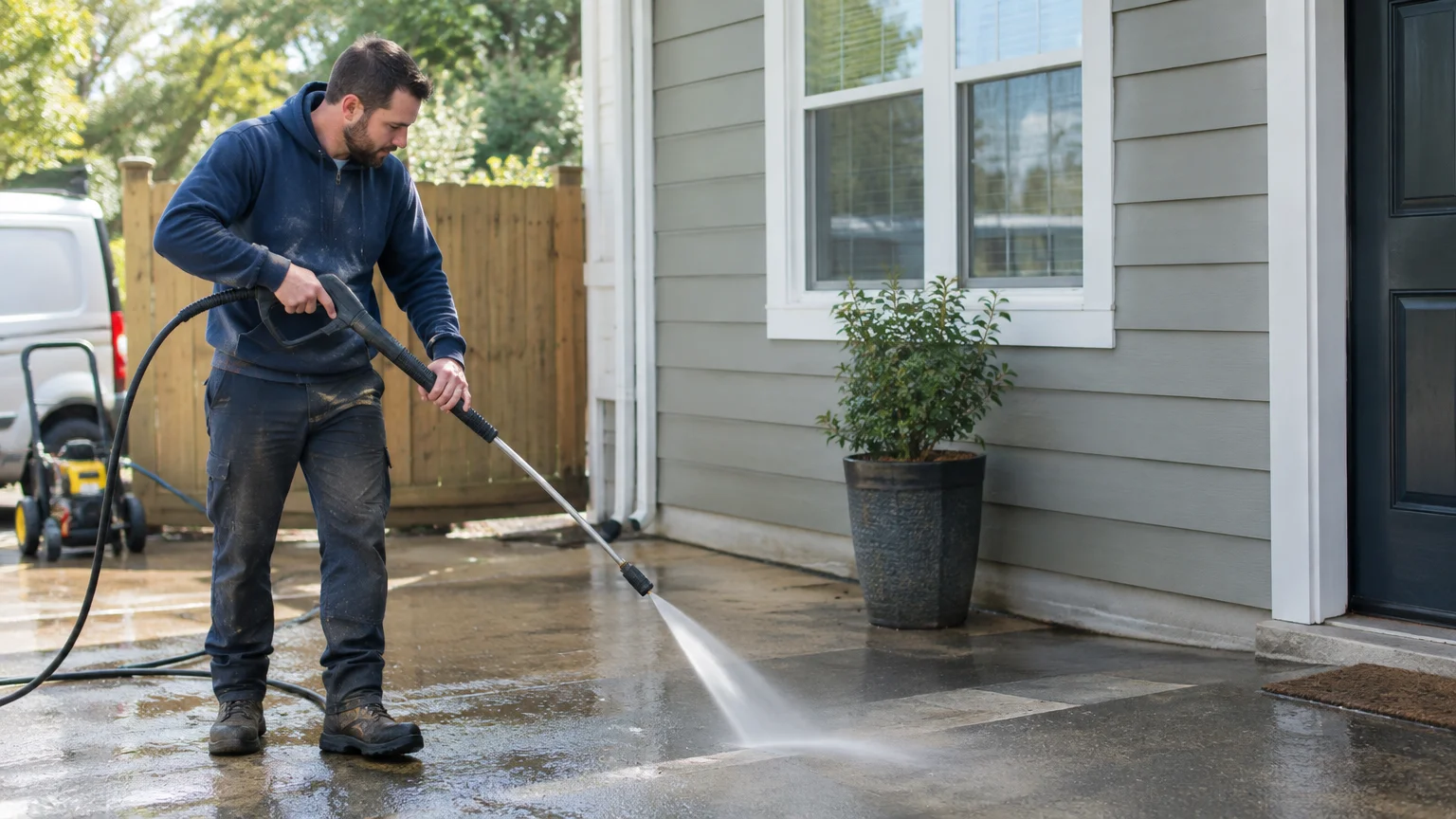
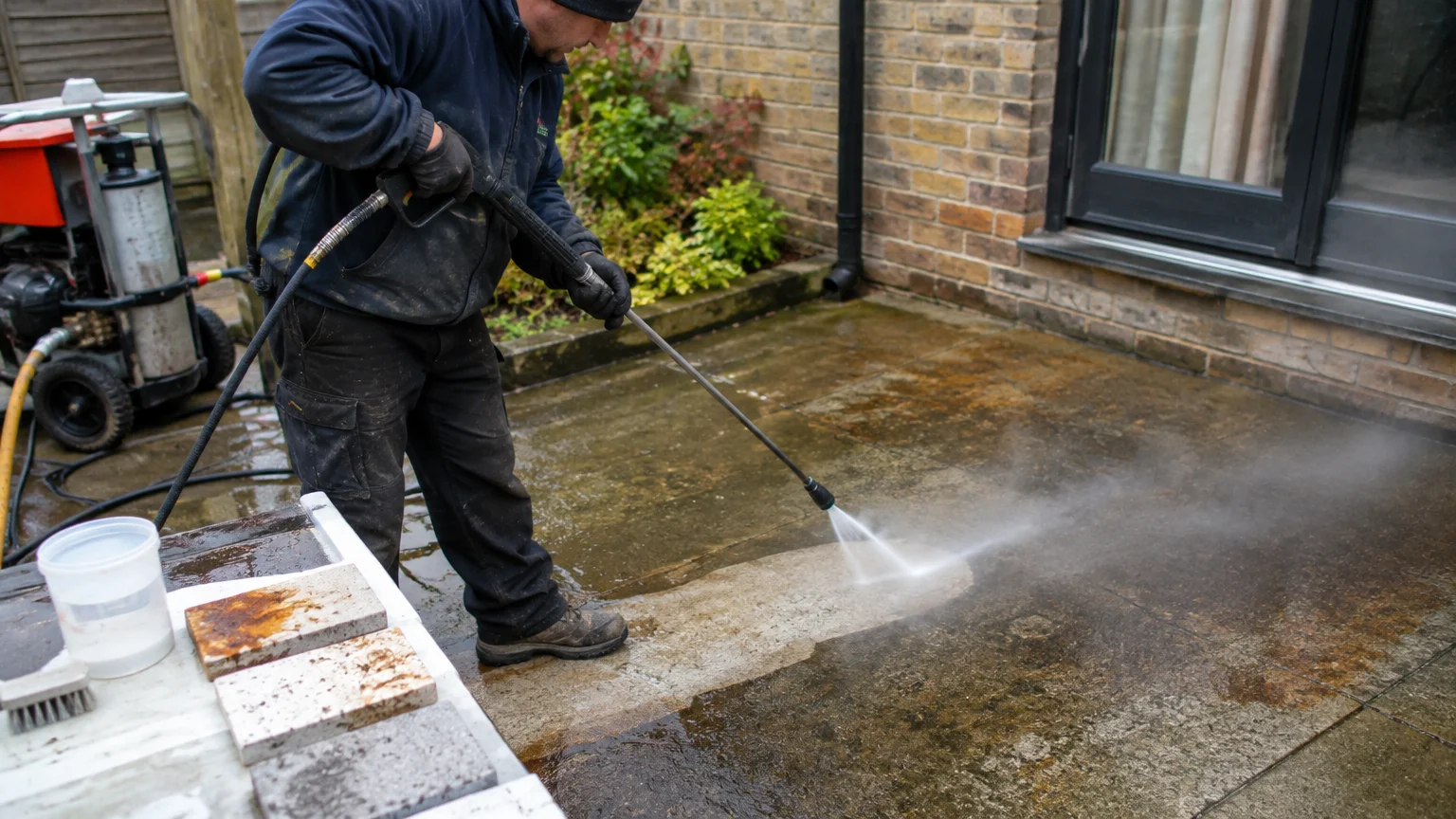
Power washing house before painting removes dirt, mildew, loose paint, and chalk from the exterior. The wall should be clean, dry, sound, and free of loose debris before primer or paint is applied. The best washing method depends on the siding, masonry, surface condition, weather, and time needed for drying.
Table of Contents
- Why should you power wash a house before painting?
- What should the surface look like after pressure washing?
- Which exterior surfaces need different washing methods?
- How long should you wait to paint after power washing?
- Can pressure washing damage a house before painting?
- What should homeowners inspect before the painter arrives?
- Should you hire a professional to wash your house before painting?
- Frequently Asked Questions
Why should you power wash a house before painting?
Power washing before painting removes surface dirt that can stop paint from sticking. It can also reveal damage that needs repair. A clean wall gives the painter a better starting point and helps the new coat look even.
How exterior washing affects paint adhesion
Paint adhesion means how well paint sticks to a surface. Dust, pollen, grease, mildew, and loose chalk can sit between the wall and the new coating. If that layer stays in place, paint may peel, blister, or flake sooner.
Washing does not replace scraping, sanding, priming, or repairs. It is one part of surface preparation. After washing, the painter can remove loose paint and smooth rough spots. A clean wall also makes cracks, failed caulk, soft wood, and damaged siding easier to see.
The washing method should match the home. Many siding types need a soft wash, which uses low water pressure and a cleaning solution. Brick and some masonry may need another method, especially when old mortar is weak. A careful approach protects the wall while removing the film that blocks paint.
What dirt, mold, mildew, and chalking can hide
Mildew is a surface fungus that often grows in dark, damp areas. Mold and algae can leave stains and may return when moisture problems remain. Washing removes much of this growth, but it does not repair leaks, poor drainage, or trapped moisture.
Chalking is a powdery layer left when old paint breaks down. You can test for it by rubbing a clean hand over the wall. If white or colored powder comes off, the painter may need more cleaning, surface work, and a suitable primer.
Pressure Washing Largo helps Largo homeowners prepare exterior walls before a paint project. House Washing Services can clean siding, brick, stucco, gutters, and other areas that collect grime. The goal is not only a brighter wall. It is a surface the painter can inspect and prepare with care.
What should the surface look like after pressure washing?
After washing, the surface should look clean, with little loose dirt, mildew, or flaky debris. It should also remain intact, with no fresh gouges, broken seals, or exposed areas. A clean surface is ready for paint only when it is dry and sound.
Signs the siding, brick, or stucco is properly cleaned
A properly cleaned wall often has a more even color. Dark streaks, green growth, cobwebs, and dusty buildup should be gone or much lighter. Some old stains may remain if they have soaked into the material, but loose dirt should not remain on top.
Check corners, areas under eaves, spaces behind downspouts, and spots around windows. These places often stay dirty because they get less sun or collect runoff. Lower wall sections also need care because soil can splash up from the ground.
A clean wall does not have to look new. Old paint may still show color changes after washing. The key question is whether the remaining coating is firm and safe to paint. Loose or peeling paint still needs scraping and other preparation.
Why a clean surface must also be dry and sound
Water trapped under trim, siding edges, or caulk can cause trouble after painting. The same is true for damp wood, wet masonry, and walls shaded by trees. Painting too soon may trap moisture and cause poor bonding, stains, or blisters.
The wall should also be sound. This means it has no soft wood, open cracks, loose mortar, or failing boards that need repair. Washing may uncover these problems, which is helpful. It gives the homeowner and painter time to decide what comes next.
The final surface should be clean but not damaged. Look for fresh marks on siding, broken window seals, or water forced behind openings. If the wall looks clean but shows damage, wait until the cause is fixed.
Which exterior surfaces need different washing methods?
Different exterior materials need different pressure, cleaning products, and tools. Vinyl siding, wood, fiber cement, brick, and stucco do not react in the same way. One setting for every surface can cause damage or leave the wall poorly cleaned.
Preparing vinyl siding, wood, and fiber cement
Vinyl siding often responds well to a low-pressure wash with a suitable house washing solution. The spray should move with the siding instead of forcing water behind the seams. Window and door areas need extra care because water can enter through small gaps.
Wood siding needs a gentle method. High pressure can cut the wood fibers, leave marks, or push water into joints. Older wood may have weak paint and open areas. The surface should be cleaned without removing sound material needed for the next coat.
Fiber cement is strong, but its edges, joints, and paint film still need care. A controlled wash can remove dirt and mildew before painting. The cleaner should avoid damaging seams or forcing water behind boards. Once dry, the painter can inspect the joints and decide where caulk or primer is needed.
Cleaning brick, stucco, and painted masonry safely
Brick can collect soot, algae, and white mineral deposits. The mortar between bricks may be softer than the brick itself. Strong pressure can remove mortar or leave marks, especially on older walls. A test area helps show how the surface will respond.
Stucco has a textured face with many small openings. Water and cleaning products should be used with care so they do not enter cracks. Loose stucco must be repaired before paint covers it. Washing alone cannot restore a weak surface.
Painted masonry may show chalking, stains, and worn spots. The cleaning plan should remove loose residue while keeping sound paint in place. Homeowners considering pressure washing near me should focus on the method, not only the machine. The right service understands the wall material and the painting plan.
How long should you wait to paint after power washing?
A house should be fully dry before painting. Warm, sunny weather may help the wall dry sooner, while shaded or damp areas can take longer. Drying depends on the material, rain, humidity, airflow, sun, and how much water the wash used.
What affects exterior drying time
Porous materials hold water longer than smooth siding. Brick, stucco, wood, and older masonry can stay damp inside their pores even when the surface feels dry. A painter may check several places instead of trusting one dry-looking wall.
Deep shade also slows drying. Walls under trees, covered porches, and north-facing sides often need more time. Water can remain around trim, gutters, joints, and window edges. These areas need a careful check before primer or paint is used.
The amount of cleaning matters too. A light wash may dry sooner than a full exterior cleaning that uses more water. Open cracks and damaged caulk can hold moisture and must be repaired before painting.
How weather and shaded areas change the schedule
Dry weather with good airflow usually helps a wall dry. Humidity, clouds, rain, and still air slow the process. A storm can wet the surface again, so the schedule may need to change.
Ask the painter and cleaner to plan the work together. The paint label may give limits for moisture, temperature, or weather. Those directions matter more than a fixed drying rule for every home.
A rushed schedule can cause more trouble than a short delay. Waiting until the wall is truly dry helps primer and paint work as intended. Pressure Washing Largo can help Largo property owners plan house washing around the painting date and local weather.
Can pressure washing damage a house before painting?
Yes, pressure washing can damage a house when the pressure, nozzle, distance, or cleaning method is wrong. Common problems include cut siding, lifted paint, damaged mortar, broken screens, and water behind walls. Careful technique lowers these risks.
Common risks from excessive pressure or poor technique
High pressure can scar wood and strip away sound paint. It can also force water behind vinyl siding, under trim, or into wall openings. On masonry, a strong spray may wear soft mortar or damage a weak surface.
The machine matters, but the operator matters more. Spraying too close to a delicate surface can cause damage. Spray tips, hoses, and extension tools should also be checked before work begins.
A pressure washing machine rental may seem useful for a small job, but the homeowner still needs to choose the right method. A rental does not provide material knowledge or repair judgment. The safest choice depends on the wall, its age, its coating, and the condition of its joints.
How professionals protect windows, trim, landscaping, and openings
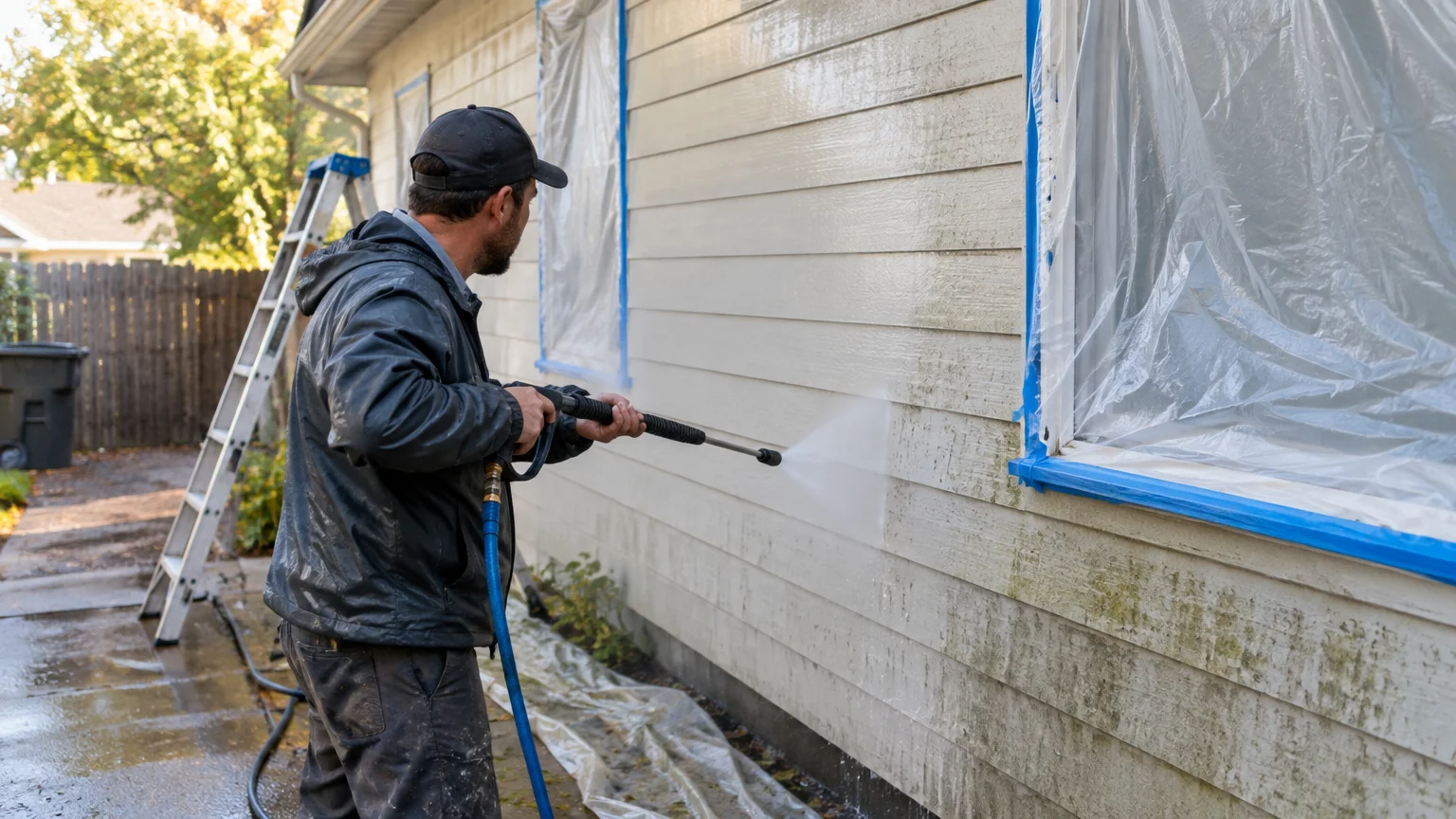
A careful cleaner checks the home before spraying. Windows, doors, vents, lights, outlets, and damaged areas may need protection. Plants and outdoor items should be moved or covered when needed. The spray should stay controlled around openings and fragile trim.
Cleaning products also need careful handling. Plants may need water before and after the work. Runoff should be managed so it does not harm landscaping or flow into unwanted areas. The cleaner should follow product directions and use proper safety gear.
Homeowners can move patio items, trim branches away from walls, and note existing damage. They should not climb unstable ladders or spray electrical areas. Professional help is safer when the home is tall, the wall is fragile, or the spray is hard to control.
What should homeowners inspect before the painter arrives?
Homeowners should inspect the washed exterior for loose paint, cracks, soft areas, failed caulk, and damp spots. Washing reveals problems, but it does not prepare every surface for paint. A short review before the painter arrives can prevent delays.
Surface repairs, peeling paint, and caulking to address
Peeling paint usually needs scraping and preparation before new paint covers it. Deep cracks may need repair instead of simple paint. Soft wood can signal water damage, while open joints may let water enter behind siding or trim.
Caulk is a flexible sealant used to close small gaps around trim and joints. Failed caulk may look cracked, loose, or separated from the surface. The painter can remove weak caulk and apply a suitable replacement after the area is clean and dry.
Look at gutters, downspouts, flashing, and areas below windows. These parts can create repeated stains when water drains against the wall. Fixing the water path may help the new paint stay cleaner for longer.
A practical pre-paint washing checklist
A simple checklist can help the homeowner and painter review the same areas:
- Confirm that siding, brick, stucco, and trim are free of loose dirt.
- Check corners, eaves, downspouts, windows, and shaded walls for missed growth.
- Look for peeling paint, open cracks, soft wood, loose mortar, and damaged boards.
- Make sure the wall, joints, and trim are fully dry before painting.
- Mark areas that need scraping, sanding, caulking, repair, or primer.
- Check that plants, outdoor items, windows, and openings were protected during washing.
You do not need special tools for this review. A clean hand, good daylight, and a slow walk around the house can reveal many issues. If anything looks uncertain, the painter or cleaning professional can check it before work continues.
Should you hire a professional to wash your house before painting?
A homeowner may handle light dust removal and simple upkeep. Professional washing is safer when the home is tall, heavily soiled, delicate, or hard to reach. The right service can match the method to the material and give the painter a cleaner, safer surface.
When professional exterior cleaning is the safer choice
Professional help makes sense when siding has heavy mildew, several materials meet, or the home has older paint. It also helps with large homes, steep areas, fragile stucco, and walls near delicate plants. A trained cleaner can spot risks before they become damage.
Ask what method will be used for each surface. The answer should explain pressure control, cleaning products, protection for openings, and drying needs. It should also make clear that washing does not replace repairs, scraping, sanding, or priming.
For a small, easy-to-reach area, a homeowner may clean by hand with basic tools and follow the product label. Avoid unsafe heights, electrical hazards, and strong spray near openings. When the task feels hard to control, professional exterior cleaning is the better choice.
How to coordinate washing with your painting project
The cleaner and painter should know the planned order of work. Washing normally comes before final scraping, repairs, caulking, priming, and painting. The painter needs time to inspect the wall and confirm that it is dry.
Share details about old paint, past leaks, known repairs, and shaded areas. Ask the cleaner to note any problems found during the wash. This creates a clear handoff and reduces the chance that a hidden issue is covered too soon.
Pressure Washing Largo works with homeowners and property owners in the main Largo area, including Downtown Largo, Harbor Bluffs, Clearwater, Seminole, Belleair, Pinellas Park, and nearby communities. The service can be planned around the surface type, project schedule, and condition of the exterior.
Key takeaways
- Wash before painting to remove dirt, mildew, chalk, and loose debris.
- Use the right method for vinyl, wood, fiber cement, brick, and stucco.
- Wait for a fully dry surface before primer or paint is applied.
- Inspect after washing for peeling paint, cracks, soft areas, and failed caulk.
- Choose professional help when height, access, materials, or surface damage create risk.
Conclusion
Power washing house before painting is an important preparation step, but it is not the whole painting process. The wall must also be dry, sound, repaired, and ready for primer. A careful cleaning plan protects the home and gives the painter a better surface to finish.
Contact us to schedule house washing with Pressure Washing Largo before a painting project.
Frequently Asked Questions
What psi pressure washer do I need to clean siding?
Most siding should not be cleaned with the highest pressure available. Vinyl and painted surfaces often need a controlled, low-pressure approach with the right cleaning solution. The safe setting depends on the material, age, coating, and condition. A professional can test a small area before cleaning the full wall.
What psi should be used to wash vinyl siding?
Vinyl siding usually needs less pressure than brick or concrete. Too much force can drive water behind panels or damage the surface. The nozzle should stay at a safe distance, and the spray should follow the siding. A soft wash is often safer than aggressive pressure washing.
How often should a house be power washed?
There is no schedule that fits every home. Climate, shade, trees, dust, drainage, and nearby plants affect how quickly dirt and growth return. Many homeowners wash when the exterior looks dirty or before a major project. Routine checks help keep buildup from becoming harder to remove.
Can a homeowner wash the house before painting?
Yes, a homeowner can handle a small, easy-to-reach area when the surface is sound and the method is mild. Avoid ladders, electrical areas, fragile materials, and strong spray near openings. Professional help is safer when the house is tall, heavily soiled, or made from mixed materials.
How often should a hotel be pressure washed?
A hotel may need more frequent exterior cleaning than a private home because of heavy traffic, guests, parking areas, weather, and public visibility. The right schedule depends on the building materials and local conditions. Managers should inspect busy and shaded areas, then plan cleaning before grime affects appearance or safety.
If you are unsure what you are dealing with, have the surface checked before it becomes a larger job.
If you are not sure what you are dealing with, it is worth having someone look at it before it turns into a bigger job. Get in touch with Pressure Washing Largo today and we will tell you where you stand.