Gutter brightening removes dark tiger stripes from aluminum gutters by using a safe cleaner, gentle brushing, and careful rinsing. Unlike gutter cleaning, which clears leaves and debris from the channel, this service treats the outside face. Largo property owners can use this guide to choose safe care for stained or weathered gutters.
Table of Contents
- What Is Gutter Brightening?
- Why Do Aluminum Gutters Develop Tiger Stripes?
- Can You Remove Tiger Stripes Without Damaging Gutters?
- What Is the Gutter Brightening Process?
- Should Gutters Be Cleaned Before They Are Brightened?
- How Can You Keep Gutters Looking Clean Longer?
- When Should You Hire a Professional for Gutter Brightening?
What Is Gutter Brightening?
Gutter brightening cleans dark stains and streaks from the outside of gutters. It focuses on the visible gutter face, not just the inside channel. The goal is to improve the look of the gutters without harming their finish or nearby siding.
How tiger stripes form on aluminum gutters
Tiger stripes are long, dark lines on the front of aluminum gutters. They often start below the roof edge and follow the path of rainwater. Dust, roof grit, algae, oxidation, and air pollution can collect in these wet paths.
The marks may look like simple dirt, but they are often harder to remove. Sun can dry residue onto the surface. Over time, the stain may bond with the finish. This is why a garden hose or basic gutter tool may not remove it.
Light gutters make these marks easier to see. White, cream, and light gray gutters show each dark run. The gutter system may work well but still look old when stains cover the front.
How gutter brightening differs from ordinary gutter cleaning
Ordinary gutter cleaning removes leaves, pine needles, roof grit, and other debris from the channel. It may also clear the downspouts. This helps rainwater move away from the roof and foundation.
Gutter brightening treats the outside surface. Both services may be needed during one visit, but they solve different problems. Brightening improves appearance, while inside cleaning helps protect drainage.
A full visit may also include a check for loose hangers, damaged seams, blocked outlets, and poor water flow. Pressure Washing Largo can explain which service matches the condition of a home or business.
Why Do Aluminum Gutters Develop Tiger Stripes?
Aluminum gutters develop tiger stripes when roof runoff carries residue over the front edge. Oxidation and airborne dirt can add to the problem. The cause depends on the roof, trees, weather, gutter finish, and nearby surroundings.
The role of roof runoff, oxidation, and atmospheric residue
Rainwater carries more than leaves into a gutter. It can pick up roof grit, pollen, dust, shingle residue, and decayed plant matter. When water spills over the front lip, some of this material stays behind.
Oxidation is a surface change that happens when aluminum reacts with air and moisture. It can make the finish look dull or chalky. Oxidized areas may also hold dirt more easily. The cleaner must match the surface, or the color may become uneven.
Airborne residue can come from traffic, smoke, nearby work, fireplaces, and outdoor dust. Trees add pollen and sticky plant material. Homes under heavy tree cover may need more regular gutter checks and roof reviews.
Why streaks are more noticeable on light-colored gutters
Dark stains stand out against white or pale gutters. Even a small amount of residue can look large from the street. The issue is mostly visual, but it can make the entire exterior seem uncared for.
A house wash may remove loose dirt from nearby siding. It may not remove bonded gutter streaks. Gutter brightening needs a focused method because the stain sits on a different material.
Homeowners should also inspect the area above the gutter. Damaged shingles, roof algae, poor drip-edge placement, or overflow may keep adding residue. Cleaning the mark without checking its source may only give a short-term result.
Can You Remove Tiger Stripes Without Damaging Gutters?
Tiger stripes can often be removed without damage, but the method must fit the gutter finish. A professional first checks the metal, paint, oxidation, seams, and nearby surfaces. A small test is safer than spreading a strong cleaner across the whole gutter.
How professionals assess gutter materials and surface condition
Most home gutters are made from aluminum, but finishes can differ. Some are factory painted. Others may have old coatings, chalking, scratches, or exposed metal. One cleaning method may not suit every surface.
An inspection may include a close look at the stain, a small test area, and a check for loose paint. The technician may also inspect the roof edge, fascia, downspouts, and gutter guards. These steps help tell a removable stain from lasting finish damage.
A test area matters because the result may change as the surface dries. It also shows whether the stain sits on the coating or within a worn finish. Some marks may improve greatly but not disappear fully.
Why harsh chemicals and abrasive scrubbing can cause problems
Strong chemicals can fade paint, harm plants, spot windows, or damage siding. Rough pads can scratch aluminum and leave bright patches. Water pressure that is too strong can bend a gutter, loosen a seam, or push water behind trim.
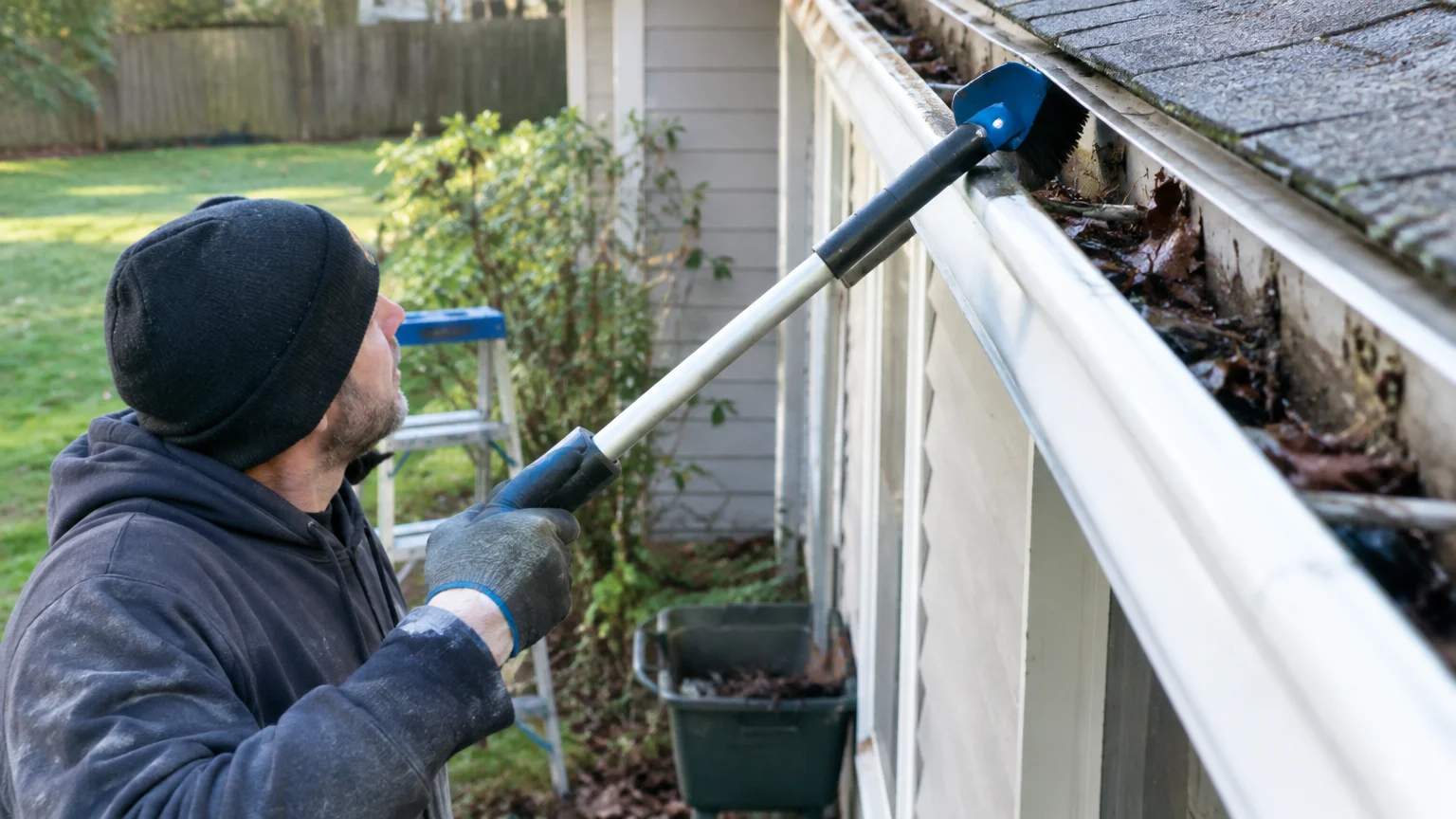
A homeowner can often remove light dirt from ground level with mild soap, a soft brush, and careful rinsing. Work near roof edges, ladders, steep slopes, and electrical fixtures needs more care. Do not climb or use chemicals when the setup feels unsafe.
The safest method is not always the strongest cleaner. Controlled work, surface protection, and full rinsing usually matter more than force. Soft washing uses low pressure and a suitable cleaning solution for delicate exterior surfaces. It may be a better choice when a finish needs extra care.
What Is the Gutter Brightening Process?
Gutter brightening usually starts with an inspection and a small test area. The work then moves through property protection, solution use, gentle brushing, and rinsing. The steps can change with the gutter finish, stain, roof design, and nearby materials.
Preparing the property and protecting nearby surfaces
Before work begins, loose items should be moved away from the area. Plants, windows, doors, painted walls, vehicles, and outdoor furniture may need protection. Downspout outlets should also be checked so runoff does not collect in one place.
The technician should identify delicate surfaces before using a solution. Some siding, stone, wood, and painted trim can react to runoff. Careful preparation keeps the cleaning focused on the gutter face.
Weather also matters. Wind can spread spray, while hot sun can dry a solution too fast. A controlled work area makes it easier to watch the surface and rinse at the right time.
Applying, agitating, and rinsing the cleaning solution
A suitable solution is first applied to a small section. The cleaner loosens the residue instead of relying on heavy force. A soft brush or similar tool may help break up the stain without scratching the finish.
The surface is then rinsed well. Rinsing removes loosened dirt and leftover cleaning product. Nearby areas may need another rinse to prevent new marks or residue.
Gutter guards can make the work more involved. Some guards lift out easily. Others attach beneath shingles or under the roof edge. The guard should not be bent or removed without knowing how it is installed.
A full exterior cleaning plan may include House Washing Services after gutter work. The order depends on the property. Cleaning in the right order helps stop fresh dirt from landing on a finished surface.
Should Gutters Be Cleaned Before They Are Brightened?
Yes. Leaves and debris should be removed before the outside of the gutter is brightened. A clear channel lets the technician check water flow, downspouts, seams, and hidden issues before working on appearance.
Why removing leaves and debris comes first
Debris can block outlets and make water spill over the front edge. That overflow may create new streaks soon after brightening. It can also wet fascia boards, siding, soil, and foundation areas.
Cleaning the inside first shows whether the gutter works as it should. The technician may find packed roof grit, plant growth, loose guards, or a blocked downspout. These issues should be handled before the final exterior rinse.
Homeowners may do simple ground-level checks with gloves and a stable tool. They should not reach from an unstable ladder or walk on a roof. A gutter tool helps with some tasks but does not remove every safety risk.
How exterior house washing fits into the sequence
The best order depends on the home and the amount of buildup. Often, gutters are cleared first, the surrounding exterior is washed next, and a final gutter rinse or brightening follows. The goal is to avoid moving dirt onto clean surfaces.
House washing can remove loose dust, mildew, and grime from siding and trim. It does not always remove tiger stripes from aluminum gutters. A focused treatment may still be needed after the wider wash.
Roof Cleaning Services may help when roof residue keeps flowing into the gutter. A roof should be checked on its own because shingles, metal panels, and other roof materials need different care. Finding the source matters as much as cleaning the stain.
How Can You Keep Gutters Looking Clean Longer?
The best way to keep gutters looking clean is to control the causes of staining. Regular gutter cleaning, roof checks, quick repairs, and proper guard care can reduce overflow and residue. These steps cannot stop every mark, but they can help the exterior stay neat.
The value of routine gutter cleaning and roof inspections
A clear gutter is less likely to overflow across the front face. Checks are useful after strong storms, heavy leaf fall, and long wet periods. Watch for sagging sections, standing water, peeling paint, and soil erosion below downspouts.
Roof inspections can find loose materials, damaged flashing, and areas that shed extra grit. A roof with heavy organic growth may keep sending residue into the drainage system. Fixing the source can help the results of gutter brightening last longer.
Property owners should also check that downspouts send water away from the foundation. Extensions and splash control may help reduce wet soil and stains near the base of the building. These small tasks support the whole drainage system.
When gutter guards help and when they do not prevent staining
Gutter guards can reduce leaves and larger debris entering the channel. They do not make a system maintenance-free. Fine roof grit, pollen, seeds, and residue can still collect on or below the guard.
Guards also do not stop rainwater from running over the outside of the gutter. If runoff carries dirt, the front face may still develop tiger stripes. Guard cleaning may be needed along with gutter cleaning and downspout checks.
The right guard depends on the roof, trees, gutter shape, and local weather. A poor fit can restrict flow or make access harder. Pressure Washing Largo can help property owners review the visible condition of gutters, guards, and nearby exterior surfaces.
When Should You Hire a Professional for Gutter Brightening?
A professional is a good choice when stains remain after gentle cleaning, access is hard, or the gutter finish looks fragile. Help is also wise when work involves steep roofs, tall walls, fragile guards, or runoff near plants and windows.
Signs that DIY cleaning may be unsafe or ineffective
A homeowner should stop and seek help when any of these conditions apply:
- The gutter is too high to reach safely from the ground.
- The roof edge is steep, wet, or hard to access.
- The gutter coating is peeling, chalky, scratched, or badly faded.
- The downspout is blocked beyond a safe reach.
- Runoff could reach delicate plants, glass, siding, or painted trim.
- Tiger stripes remain after mild soap and gentle brushing.
Basic upkeep is reasonable when the work stays at ground level and uses mild materials. Do not mix cleaning products or use unknown chemicals. A professional can test a small area and explain whether the marks are removable, permanent, or linked to a failing finish.
What to expect when comparing gutter brightening with replacement
Brightening may improve the look of sound gutters. Replacement may be better when sections are crushed, badly rusted, separated, or unable to carry water. A stain alone does not mean the whole system must be replaced.
The decision should consider the gutter material, finish, age, drainage, and repair history. A professional can explain whether the issue is cosmetic or structural. Exterior work may also be planned with Building Washing Services or other property care.
Frequently Asked Questions
Can gutter brightening remove every tiger stripe?
No. Many stains improve greatly, but some remain when the finish is worn or residue has changed the coating. A test area gives the clearest guide. If streaks return quickly, the roof edge, gutter overflow, or nearby residue may need attention.
Is gutter brightening the same as pressure washing?
No. Pressure washing uses pressurized water on suitable surfaces. Gutter brightening often needs a gentler solution and controlled rinsing because aluminum finishes can scratch, fade, or bend. A professional may use low pressure, soft tools, or hand cleaning based on the gutter condition.
Can a homeowner clean tiger stripes safely?
A homeowner may try mild soap, a soft brush, and ground-level work on a small area. Avoid ladders, roof access, harsh chemicals, and rough pads. If the stain remains or the gutter is high, professional help is safer and more likely to protect the finish.
Do gutter guards stop dark streaks?
No. Gutter guards can reduce leaves and larger debris, but they do not stop roof runoff from touching the gutter face. Fine dust, pollen, and roof residue may still create stains. Guards need inspection and cleaning so they can support good water flow.
How often should gutters be checked?
Gutters should be checked after major storms and during heavy leaf fall. The right schedule depends on tree cover, roof condition, guard design, and local weather. Regular checks can find overflow, loose sections, and blocked downspouts before they cause larger exterior problems.
Key takeaways
- Gutter brightening treats outside stains, while gutter cleaning clears the inside channel.
- Tiger stripes often come from roof runoff, oxidation, dust, and plant residue.
- Gentle testing helps prevent damage to aluminum finishes and nearby surfaces.
- Gutters should be cleared before the outside is brightened.
- Gutter guards reduce some debris but do not stop all staining.
Conclusion
Tiger stripes can make clean gutters look old and neglected. Gutter brightening targets those dark outside marks, while regular gutter cleaning helps protect water flow and the home’s drainage system. Safe methods matter because aluminum finishes can scratch, fade, or react to strong products.
For homes and businesses in Largo, a full review may include gutter channels, guards, downspouts, roof runoff, siding, and nearby surfaces. Downtown Largo, Harbor Bluffs, Clearwater, Seminole, Belleair, Pinellas Park, and nearby communities all have different trees, roofs, and weather exposure. Pressure Washing Largo can help property owners choose a suitable method. Contact us to discuss gutter brightening for your property.