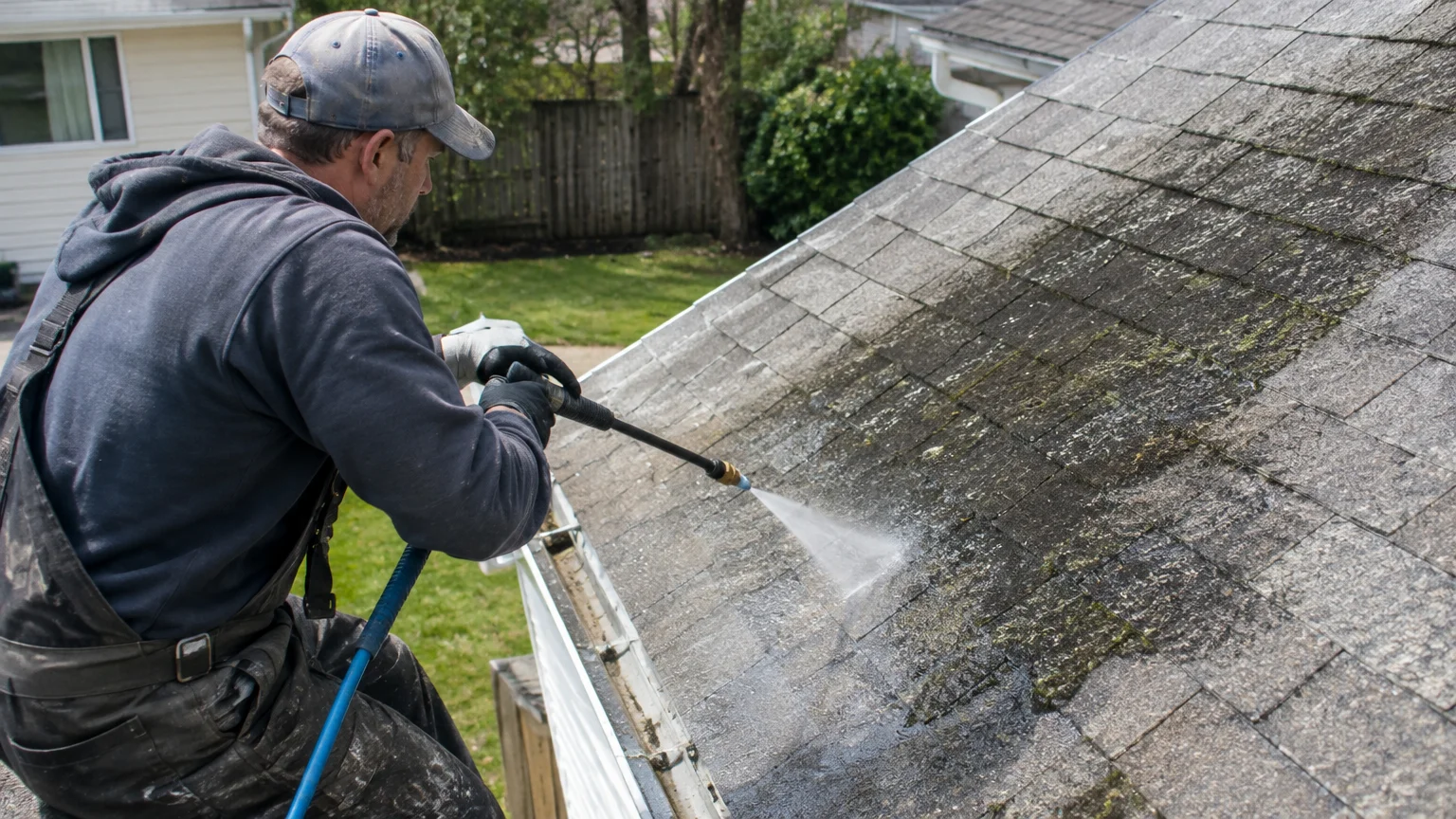
Black streaks on roof shingles usually come from algae that grows in damp, shaded areas. Tree cover, slow drying, and poor airflow can make the marks spread. Gentle soft washing can remove algae without the shingle damage that high-pressure cleaning may cause.
Table of Contents
- What Causes Black Streaks on Roof Shingles?
- Are Black Streaks on a Roof Just a Cosmetic Problem?
- How Can You Tell Whether Roof Streaks Are Algae, Moss, or Dirt?
- How Does Professional Treatment Remove Black Streaks?
- Can You Remove Black Streaks From Roof Shingles Yourself?
- How Can You Prevent Black Streaks From Returning?
- When Should You Call a Roof Cleaning Professional?
- Key Takeaways
- Frequently Asked Questions
- Conclusion
What Causes Black Streaks on Roof Shingles?
Black streaks are most often caused by roof algae. This growth lives on the surface of asphalt shingles and leaves dark marks as it spreads. The stains may look like long lines that run down the roof. They often start in one area before moving across nearby shingles.
The most common kind is blue-green algae. It can look black, gray, brown, or green. Wind, rain, birds, and trees can carry tiny algae particles to a roof. Once algae finds water and a food source, it can stay active on the shingles.
How algae create dark stains on asphalt shingles
Asphalt shingles have small mineral granules on top. These granules help protect the shingles from sun and rain. Algae can grow between the granules and hold water against the surface. That growth causes the dark color seen from the ground.
Roof algae does not always mean the shingles are failing. Still, the stain shows that the roof has conditions that support growth. A roof cleaning service can help tell the difference between a surface stain and a larger problem.
A review may find moss, damaged granules, broken shingles, or loose flashing. Cleaning can remove growth, but it cannot repair worn roofing materials. A roofer may be needed when the inspection finds damage.
Why moisture, shade, and roof orientation make streaks worse
Moisture is one of the main causes of lasting roof stains. A roof that stays wet after rain gives algae more time to grow. North-facing roof areas may dry more slowly, especially when trees block sunlight.
Overhanging branches add shade, leaves, and bits of bark. Poor roof ventilation may also hold heat and moisture under the shingles. These issues do not create algae alone, but they can help stains return.
Pressure Washing Largo helps Largo property owners look at the cause of roof staining. Shade, drainage, and surface growth may all play a part. Knowing the cause makes it easier to choose the right care plan.
Are Black Streaks on a Roof Just a Cosmetic Problem?
Black streaks often begin as an appearance problem, but they should not be ignored. Algae can hold moisture on the roof surface and spread over a wide area. The marks may also hide early signs of moss, lichen, loose granules, or damaged shingles.
A roof with dark marks may still work well. The right response depends on the roof’s age, slope, condition, and type of growth. Cleaning should not take the place of an inspection when shingles are cracked, curled, soft, or missing.
When algae stains affect the roof’s appearance
Streaks stand out on light-colored shingles. They can make a home look older, even when the rest of the exterior is clean. This may matter before a home sale, after other exterior work, or when an owner wants a more even look.
Stains may spread at different speeds across one roof. One side may look clean while another side has heavy marks. Shade, wind, drainage, and tree cover often explain this difference.
Roof growth may appear along with dirty gutters or siding. Homeowners may pair roof cleaning with Gutter Cleaning Services when leaves and growth affect the same area. Each service handles a different part of the home’s exterior.
House washing can also help when dirt and algae affect vinyl siding. The roof, siding, and gutters should still be cleaned with methods suited to each material. One strong cleaning method is not right for every surface.
How buildup can contribute to moisture retention and shingle wear
Algae is not the same as a roof leak. Still, heavy growth can keep the surface wet for longer. Moss is more likely than algae to lift or push under shingle edges. That movement can let water reach areas that should stay covered.
Strong cleaning can cause more harm than the stain. High pressure may remove protective granules, force water under shingles, or damage flashing. Roof care should focus on controlled treatment rather than force.
How Can You Tell Whether Roof Streaks Are Algae, Moss, or Dirt?
Algae often appears as flat, dark streaks or broad stains. Moss looks thicker and raised from the surface. Lichen may look like pale, crusty patches that cling to the shingle. Dirt and loose debris usually sit on top and may move after rain.
These clues can help a homeowner make an early guess. They cannot replace a close inspection from a safe place. A roof may have more than one issue, such as algae on one slope and moss near a shaded gutter.
Visual differences between algae stains, moss, lichen, and debris
Algae often follows the path of rainwater down the roof. Its edges may look soft or uneven. Moss forms green or yellow-green clumps near shingle edges, valleys, and places that stay wet.
Lichen has a rough, attached look. It may be gray, green, white, or orange. Scraping it away can pull off shingle granules. Leaves, pine needles, and dirt often collect in valleys and below trees.
Do not pull at roof growth. Even a small pull can loosen an aging shingle. Looking from the ground with binoculars is safer than climbing onto the roof.
When a roof inspection is needed to identify the cause safely
An inspection is wise when stains cover many roof areas or return soon after cleaning. It also helps when the roof has loose shingles, a steep slope, visible damage, or nearby power lines. A professional can review the surface without treating every dark mark as the same problem.
Pressure Washing Largo serves homeowners and property owners, including Downtown Largo and Harbor Bluffs. The team also works with people in Clearwater, Seminole, Belleair, Pinellas Park, and nearby areas. A careful review can find clogged gutters, blocked drainage paths, and branches that keep the roof damp.
How Does Professional Treatment Remove Black Streaks?
Professional treatment often uses soft washing because shingles need a gentle method. Soft washing means applying a cleaning solution with low pressure. The solution does most of the cleaning work instead of a strong water stream.
The exact process depends on the roof material, stain type, weather, and nearby plants. A careful provider protects walls, windows, landscaping, outdoor furniture, and other surfaces before work begins.
Why soft washing is used for roof shingles
Asphalt shingles are made to shed rain. They are not made to handle repeated high-pressure spray. A pressure washer used too close may loosen granules or damage shingle edges. It may also force water below the shingle layers.
Soft washing helps break down algae, mildew, and other organic growth with less force. The material can then rinse away with controlled water flow and normal weather. The goal is a cleaner roof without making the shingles weaker.
Not every roof can receive the same solution. The provider should consider the roof’s age, shingle condition, nearby plants, and runoff. Soft washing is also useful for delicate exterior cleaning when low pressure matters.
What the treatment process typically involves from inspection to rinse
A roof cleaning visit often starts with a visual inspection. The technician looks for stains, moss, lichen, missing shingles, damaged flashing, and unsafe access points. The work area is then prepared so water and cleaning products stay under control.
The cleaning solution is applied in a measured way. It needs time to work, so heavy rinsing may not be needed right away. The technician may use a gentle rinse where suitable and give extra attention to thicker growth.
A good treatment cannot promise that every roof will look new. Old stains may leave some color behind, and washing cannot repair damaged shingles. If damage appears, the owner may need a roofing contractor for the next step.
Can You Remove Black Streaks From Roof Shingles Yourself?
Homeowners can handle some ground-level upkeep themselves. This may include trimming safe branches, removing loose leaves from reachable areas, and watching the roof after rain. Roof cleaning is different because climbing onto shingles creates fall risks.
A homeowner does not need a professional for every basic check. Binoculars can help with a ground-level view, and a camera can record changes from a safe place. Treatment on a steep, wet, or high roof is best left to trained workers.
Roof-cleaning methods that may damage shingles
A pressure washer can strip granules from asphalt shingles. A stiff brush or scraper can tear the surface and spread damage. Household cleaners may stain siding, harm plants, or react with nearby metal.
The right method also depends on the type of growth. Algae, moss, lichen, and dirt do not respond in the same way. A method that removes loose debris may not remove attached growth.
Pressure washing the roof may seem fast, but speed is not the main goal. Roof care should protect shingles, flashing, gutters, and nearby property. The same care is needed on rental homes, offices, and multi-unit buildings.
Safety concerns homeowners should consider before climbing the roof
Falls are the main concern, but they are not the only one. A person can slip on wet algae, step through a weak area, or damage a hidden roof feature. Ladders can shift on uneven ground or rest against weak surfaces.
Never work near overhead power lines. Do not walk on a roof during rain, strong wind, or icy weather. Simple checks from the ground are safer. Direct cleaning needs proper equipment and a clear safety plan.
How Can You Prevent Black Streaks From Returning?
Prevention starts by reducing the shade and moisture that help algae grow. It also means keeping roof drainage clear and checking the roof after storms. No plan can stop every stain, but simple care may slow its return.
Inspect the roof from the ground after heavy weather. Look for missing shingles, sagging areas, blocked gutters, and branches touching the roof. Small issues are easier to address before they affect a larger area.
Roof maintenance steps that limit algae growth
Useful upkeep includes the following:
- Trim branches that rub against shingles or block needed sunlight.
- Remove loose leaves and twigs from safe, reachable areas.
- Keep gutters and downspouts clear so water can drain away.
- Check attic ventilation when moisture or condensation keeps returning.
- Watch shaded roof areas for new streaks, moss, or lichen.
- Ask a roofer about algae-resistant shingles during replacement.
Metal strips are sometimes placed near roof ridges to limit algae growth. Rain carries material from the strip across the roof surface. They must be installed correctly and should not be fastened through shingles without a proper plan.
How gutters, tree cover, and ventilation affect roof staining
Gutters move rainwater away from the roof and walls. When they clog, water may back up near the roof edge or spill onto siding. Gutter cleaning can help when leaves and roof growth are part of the same drainage issue.
Tree cover keeps shingles damp and adds organic material. Pruning may help, but trees near power lines need special care. Roof ventilation also matters because trapped heat and moisture can affect the roof from below.
Largo homes can have different roof conditions from one street to another. Sun exposure, tree cover, roof pitch, and local weather all affect stain growth. Local advice can match care to the property instead of using one plan for every roof.
When Should You Call a Roof Cleaning Professional?
Contact a roof cleaning professional when stains keep spreading or moss lifts shingle edges. Help is also wise when the roof has steep slopes, many levels, fragile materials, or nearby obstacles.
Prompt attention matters when water enters the attic, shingles are missing, or the roof deck feels soft. Cleaning cannot correct structural damage. The owner may need both roof cleaning advice and repair advice from a qualified roofer.
Signs that roof stains need prompt attention
Look for these warning signs:
- Moss or lichen is lifting shingle edges.
- Dark streaks are spreading across several roof slopes.
- Water stains appear on ceilings or attic framing.
- Shingles are cracked, curled, loose, or missing.
- Gutters overflow during normal rainfall.
- Tree branches touch or scrape the roof.
- The roof is too steep or high for safe homeowner access.
These signs do not always mean the roof needs replacement. They show that the roof deserves a closer look. Early care may separate a simple surface treatment from a larger repair concern.
What to ask before choosing a roof-cleaning service
Ask what cleaning method the company uses and why it fits the roof. The company should explain how it protects plants, siding, windows, gutters, and nearby surfaces. It should also point out damage instead of saying cleaning will fix everything.
Ask whether the team has experience with asphalt shingles and soft washing. You can also ask what happens if the inspection finds damaged shingles or unsafe access. Clear answers make it easier to compare services without focusing only on speed.
Pressure Washing Largo can help Largo homeowners and property managers review the next step for stained shingles. Service details are available through the company website.
Key Takeaways
- Algae usually causes dark roof streaks, especially where shingles stay damp.
- Moss, lichen, and dirt look different and may need different care.
- Soft washing is gentler than high-pressure cleaning for asphalt shingles.
- Homeowners can handle safe ground-level checks, but roof access can be dangerous.
- Clear gutters, trimmed branches, and good ventilation may slow stain return.
Frequently Asked Questions
How often should a roof be cleaned?
There is no single schedule for every roof. Shade, trees, rain, roof age, and surface growth all affect timing. Check the roof from the ground after major storms and watch for new stains. Cleaning is usually needed when growth becomes visible, spreads, or holds moisture.
Can rain remove black streaks from shingles?
Rain may wash away loose dirt, leaves, and some surface debris. It usually does not remove algae that has grown into the shingle surface. Heavy rain can also spread organic material across the roof. If marks remain after several storms, a professional can help identify them.
Is it safe to pressure wash a roof?
High-pressure cleaning can damage asphalt shingles by removing protective granules or forcing water below the surface. It may also harm flashing, gutters, and siding. Soft washing uses low pressure and a suitable cleaning solution. The safest method depends on the roof material and condition.
Can black roof stains cause a leak?
Algae stains alone do not always cause leaks. They can signal damp conditions that also support moss or other growth. Moss may lift shingle edges, while damaged shingles and flashing can let water inside. Leaks, ceiling marks, or attic moisture need a prompt inspection.
How can a homeowner clean a roof without climbing it?
A homeowner can remove loose leaves from safe ground-level areas and trim branches when it is safe. Binoculars can help spot changes without climbing. Direct roof treatment is more risky on steep or wet surfaces. Professional help is safer when stains cover hard-to-reach areas.
Conclusion
Black streaks on roof shingles usually come from algae, but moss, lichen, dirt, and roof damage can look similar. Gentle treatment, safe checks, and better control of shade and moisture can help protect the roof. Pressure Washing Largo supports property owners throughout the Largo area with roof cleaning guidance suited to the property.
If you are unsure what caused the marks, have the roof reviewed before the problem grows. Contact us through Pressure Washing Largo to discuss your roof cleaning needs.





