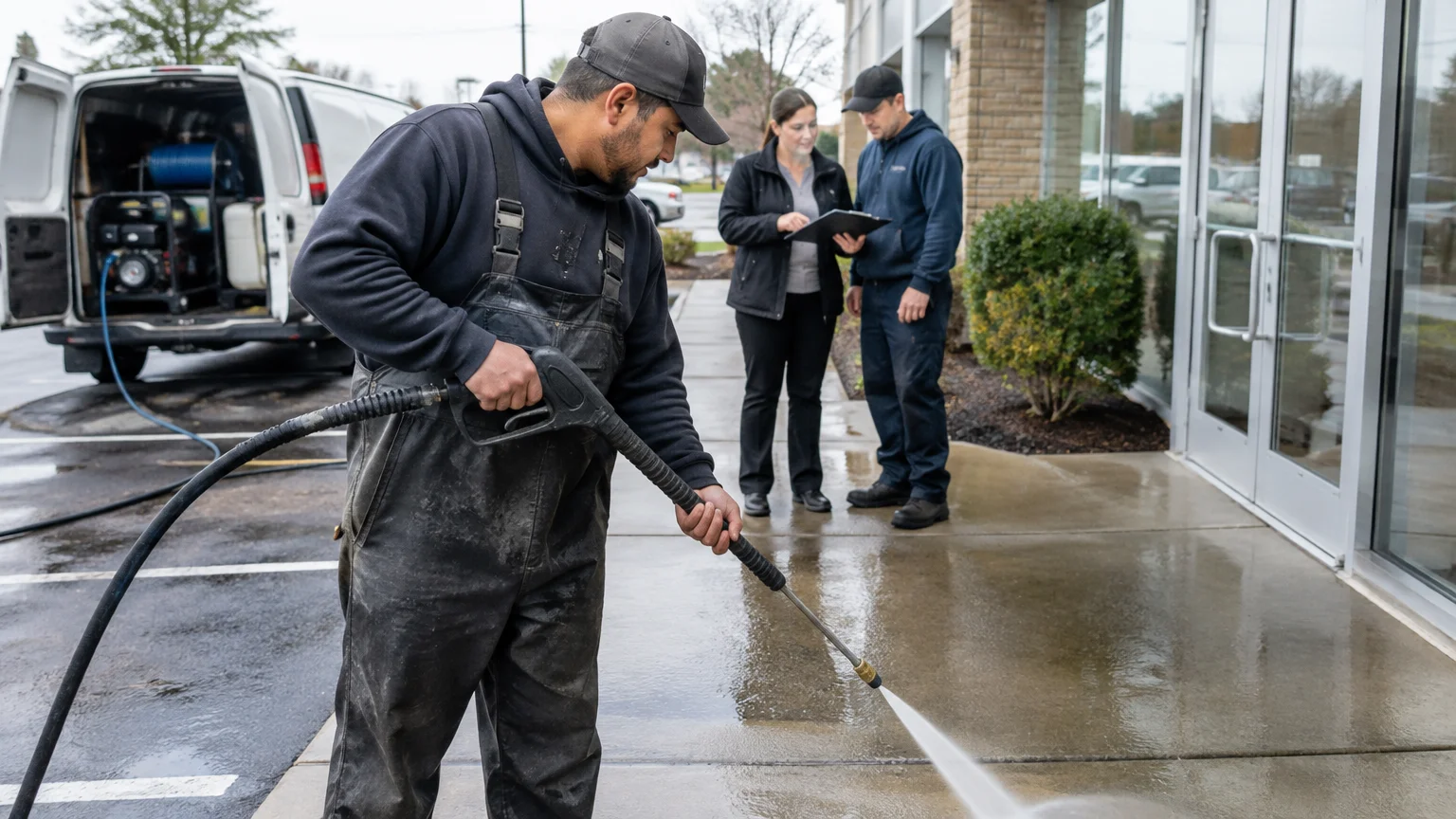
A pressure washing crew needs a clear work plan, safe access, and any needed water or power. If you are asking what does a pressure washing crew need, start by confirming which areas will be cleaned and clearing the work zone. Tell the crew about pets, delicate surfaces, and other safety concerns before arrival.
Table of Contents
- What does a pressure washing crew need before arriving?
- Does a pressure washing crew need access to water and power?
- Which areas of the property need to be accessible?
- How should you prepare your home or business for service?
- How long does a pressure washing appointment take?
- What should you expect while the crew is working?
- What should you check before the crew leaves?
- Frequently Asked Questions
What does a pressure washing crew need before arriving?
A crew needs to know which surfaces are part of the job and how to reach them. Sharing concerns ahead of time helps the team plan the right cleaning method. Pressure Washing Largo can review the work plan with Largo property owners before the visit.
What information should you confirm with the contractor?
Confirm which surfaces are included, such as siding, concrete, a patio, or a fence. Ask if the plan calls for pressure washing or a gentler wash. Soft washing uses low water pressure with cleaning solutions made for the surface. The best method depends on the material and the type of dirt or growth.
Tell the contractor about any known damage before work begins. This may include loose trim, cracked windows, peeling paint, old sealant, or past repairs. Point out outdoor outlets, water shutoffs, and places where water should not reach. Also mention plants, outdoor tools, and surfaces that may need extra care.
How can you prepare questions about the scope of work?
A clear work plan helps everyone know what the crew will clean. Ask which stains may remain, how runoff will be handled, and whether moving items is part of the plan. You can also ask who will walk around the property with you before work starts.
Be clear about the stains and surface types you want cleaned. For example, ask whether the crew will try to remove oil from a concrete driveway. Oil can soak into concrete, so washing may lighten a mark without removing it all. For composite decking, ask how the method will protect the boards and their finish.
Does a pressure washing crew need access to water and power?
Some crews need access to an outdoor water tap, but the setup can vary. Power needs also depend on the equipment and the job. Some machines have their own engines, while other tools may need electricity. Ask the contractor to confirm what the crew will need before the appointment.
When does the crew use your outdoor water supply?
Many crews connect a hose to an outdoor tap. A tap is the fixture where you attach a garden hose. The crew may need a clear path to it and room for hoses to reach the work area. Ask which tap they plan to use and whether it must stay clear during the job.
Tell the contractor if a tap has weak water flow, a leak, or a hard-to-find shutoff. If your property has more than one outdoor tap, explain where they are. Do not assume the crew will use a certain tap without checking first. The contractor can tell you if the equipment needs another setup.
What should you know about electrical outlets and equipment?
Ask if the crew needs an outdoor outlet. If it does, tell the contractor where the outlet is and whether it has a cover or known issue. Do not set up extension cords or change electrical equipment unless the contractor asks and explains how to do so safely.
Keep children and pets away from cords, hoses, and machines. Tell the crew about outlets near water or any damaged wires. If the crew does not need power, you do not need to prepare an outlet. A quick check before the appointment can settle this question and help keep the work area clear.
Which areas of the property need to be accessible?
The crew needs a safe path to every surface in the work plan. Clear paths let workers bring in hoses and tools while keeping belongings away from spray and rinse water. Walk around the property with the contractor or share access notes before the visit.
How should you clear vehicles, furniture, and belongings?
Move cars away from driveways, walkways, and any other areas in the work plan. Bring in patio chairs, toys, rugs, and small decorations. Move or cover items that could be harmed by water, cleaning products, or loose dirt. If a large item cannot be moved, point it out before work begins.
Keep gates, garage doors, and walkways open where the crew may pass. Clear the edges of the work area, not just the middle. For a patio or pool deck, bring cushions and small items indoors. For a fence, move items that rest against it so workers can reach the sides included in the job.
What gates, pets, or restricted areas should you discuss?
Tell the contractor how to enter and which gates must stay closed. Share any entry rules for a business, rental, or shared property. If the crew needs a key, alarm code, or other entry details, arrange them directly with the contractor before arrival. Keep private access details out of public notes.
Keep pets indoors or in a secure space while the crew works. Tell the contractor if an animal may be outside or a gate must stay shut. Mark areas the crew should avoid, such as garden beds, storage spaces, or steps that are loose. These details help the crew plan a safe route around the property.
How should you prepare your home or business for service?
Close windows and doors, move breakable items, and point out delicate surfaces. These simple steps can help keep water away from places that should stay dry. Ask the contractor what else to prepare for the planned cleaning.
Which windows, doors, and outdoor items should be secured?
Close windows, outside doors, and pet doors. Check that screens are in place, and tell the crew if a window does not close well. Bring in cushions, welcome mats, and small outdoor items that might move or get wet. Move grills or cover them only if the contractor says to do so.
For a business, tell staff about the work area and keep customer paths open. Move signs or portable displays that sit near the surface being cleaned. Share the work time with anyone who needs to enter the building. If people must use a nearby door, plan a safe route with the crew.
What should you do with plants and delicate surfaces?
Point out new plants, garden beds, and surfaces that may be sensitive to water or cleaning products. The crew can explain how it plans to protect them. Ask before placing a cover over plants or surfaces. Some covers can hold water or rub against leaves and finishes.
Tell the contractor about painted wood, old masonry, loose grout, or peeling coatings. These materials may need a gentler method or may not be right for washing. If you ask how to wash a house with vinyl siding, ask how the crew will keep water away from seams, windows, and vents. Close the windows and point out loose siding.
How long does a pressure washing appointment take?
The time depends on the size of the work area, the surfaces, access, and how much dirt has built up. After reviewing the work plan, the contractor can give you a helpful time window. A small walkway takes a different setup than a home exterior with many sides and access needs.
What can affect the service-day schedule?
The crew may need more time if the property has many surfaces, heavy dirt, hard-to-reach areas, or items to work around. A narrow gate or a long hose path can also change setup time. If the work plan changes after the crew arrives, ask how the change affects the visit before adding tasks.
You can help the day go well by clearing access and making sure someone can answer questions. If the property is a rental or business, choose one person to review the work plan. Keep the agreed work area open during the visit so the crew does not have to stop and move things.
How do weather and job scope change the timeline?
Rain, wind, or other unsafe conditions may change when washing can start. They may also affect whether some surfaces can be cleaned that day. The contractor decides if the weather makes the work unsafe or less useful. Ask how the crew will share schedule changes and make sure you can get updates.
The kind of work also affects the time needed. Siding, concrete, a deck, and a fence each need different setup and rinsing. Oil stains may need extra care, and some marks may remain. Ask what the planned service can reasonably clean instead of expecting every stain to disappear.
What should you expect while the crew is working?
A professional crew should look over the work area, set up its tools, and explain any safety limits. Homeowners and visitors should stay away from active work zones. If something differs from the agreed plan, speak with the crew lead before that area is cleaned.
How does a professional crew protect people and property?
The crew should choose a method that fits each surface and keep people away from spray, hoses, and machines. Workers may follow a set order to guide rinse water and avoid crossing areas that are already clean. Ask how the crew will protect nearby plants, doors, outlets, and outdoor items.
Workers may wear safety gear and mark the work area. Keep children, pets, and visitors away until the crew says it is safe to return. Do not touch the machine, hose fittings, or cleaning products. If a business stays open, use the route agreed on with the crew to avoid the work area.
What should you do if you notice a concern during service?
Tell the crew lead about a concern as soon as you notice it. Point to the exact spot and explain what seems wrong, such as water near a doorway or a finish that looks damaged. The crew can stop and check its method before it moves on.
Do not walk into the work area to inspect a wet surface. If you see a leak or another safety risk, tell the crew right away and keep others away from that spot. A clear talk gives the contractor a chance to check the issue during the job. Note any change you agree on so everyone knows what happens next.
What should you check before the crew leaves?
Walk through the work areas with the contractor before the crew leaves. Check that each planned surface was cleaned and ask about marks that look different after rinsing. Some surfaces look darker while wet, so the contractor can explain what may change as they dry.
How can you review completed work with the contractor?
Compare the finished areas with the plan you agreed on before work began. Look for missed spots, leftover dirt, or water where it should not be. Ask the crew lead about any stain that remains and whether it may need another kind of treatment. A clear review helps everyone finish the job with the same expectations.
For driveway cleaning, check the edges and areas that were blocked earlier. For a patio or pool deck, make sure the surface is ready before putting furniture back. If the crew washed siding, ask whether to check windows and nearby items for water. Tell the contractor about concerns before the crew packs up.
What questions should you ask about drying and aftercare?
Ask how long the surfaces may take to dry and when people can use them again. Drying time depends on shade, airflow, weather, and the surface. Follow the contractor’s advice about walking on the area, putting furniture back, or using a cleaned deck.
Ask if plants, outdoor fixtures, or nearby surfaces need care after the wash. If the crew used a cleaning product, ask whether the area needs another rinse or any simple care. Keep the work area clear until it is dry and safe. You do not need a professional for simple sweeping or routine upkeep, but ask before using a new cleaner or washing a delicate surface yourself.
Key takeaways
- Confirm the work plan, water source, power needs, and access before service day.
- Move vehicles and loose items, secure pets, and point out delicate surfaces.
- Ask how the crew will protect people, plants, and nearby property.
- Review the work and ask about drying and aftercare before the crew leaves.
Conclusion
A smooth service day starts with a clear plan and open paths. Pressure Washing Largo helps Largo property owners understand what to prepare and expect during pressure washing. Contact us to discuss your property and arrange the next step.
Frequently Asked Questions
Does a pressure washing crew bring its own water?
Some crews use an outdoor tap at the property, but equipment and job needs can differ. Ask which water source the crew plans to use and make sure the tap is easy to reach. Mention weak water flow, leaks, or a shutoff that may be hard to find.
Should someone stay home during pressure washing?
It helps to have someone available to answer questions about access, delicate areas, or changes to the work plan. Ask the contractor whether someone needs to stay for the whole visit. If no one will be home, agree on entry, gates, and how to share updates before service day.
Can pressure washing remove oil stains from a driveway?
Washing may lighten or remove some oil stains, but results depend on how deeply the oil has soaked into the concrete and how old the mark is. Ask what method the contractor plans to use and what result is likely. Do not add household cleaners without checking first.
Can a crew pressure wash a house with vinyl siding?
A crew can clean many vinyl-sided homes with a method that fits the siding and its condition. Point out loose panels, damaged seals, and windows that do not close well. Ask how the crew will keep water from getting into gaps and openings.
Can you pressure wash composite decking?
Composite decking may need a careful cleaning method. Strong pressure or the wrong tool can mark its surface. Tell the contractor what the deck is made of and share any care instructions. Ask how the planned method fits the deck and its condition.
If you are not sure what you are dealing with, it is worth having someone look at it before it turns into a bigger job. Get in touch with Pressure Washing Largo today and we will tell you where you stand.





