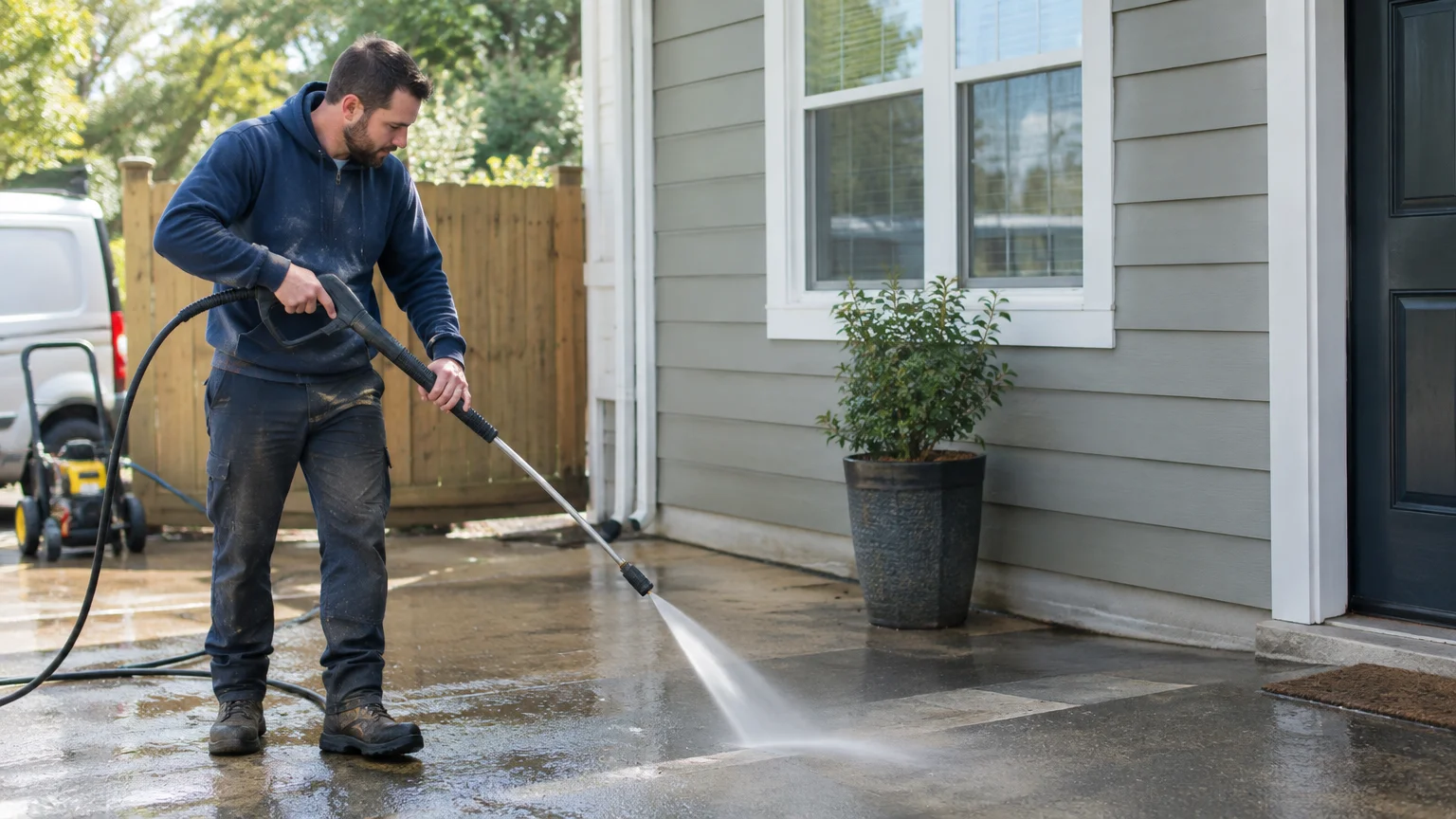
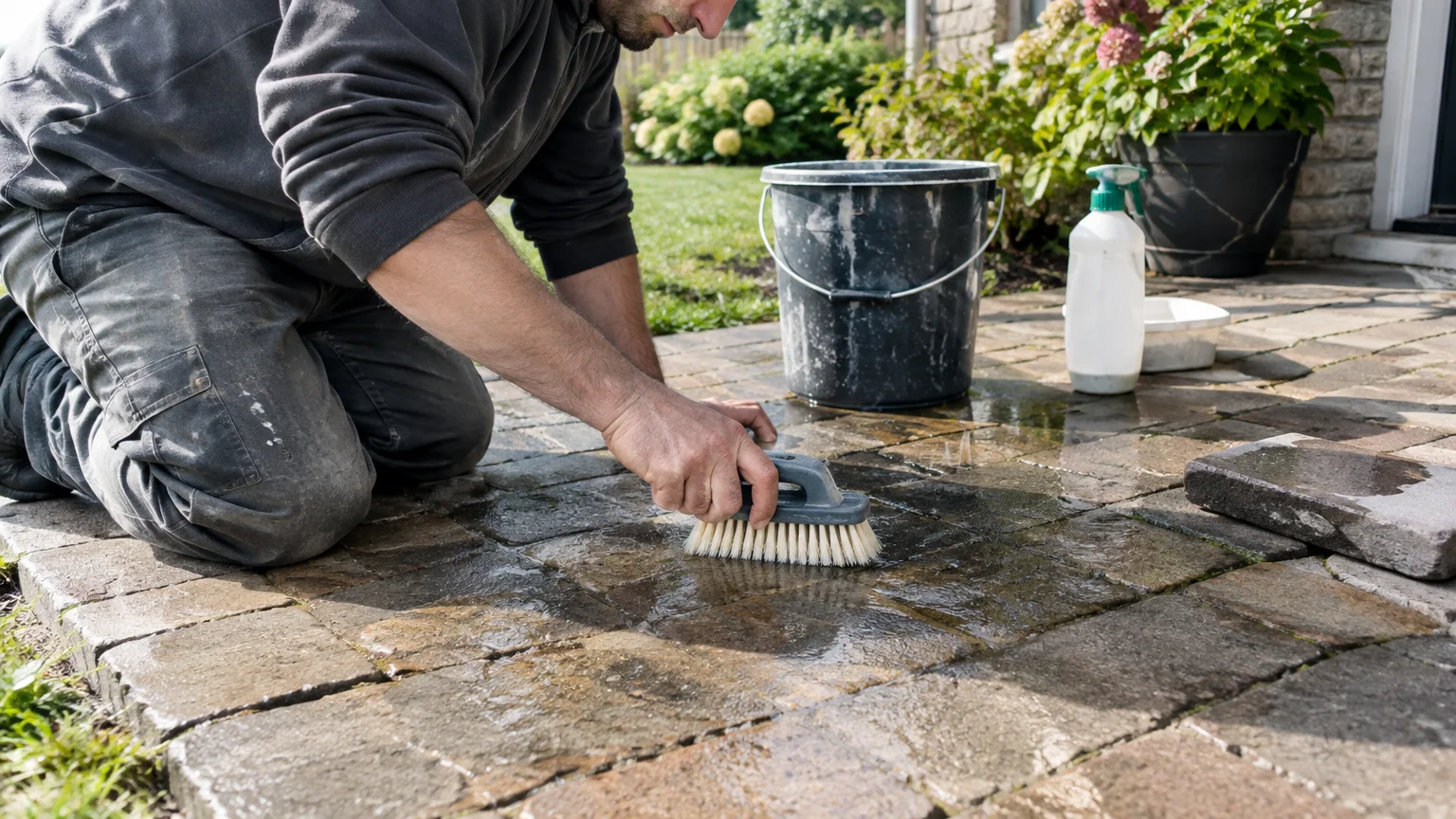
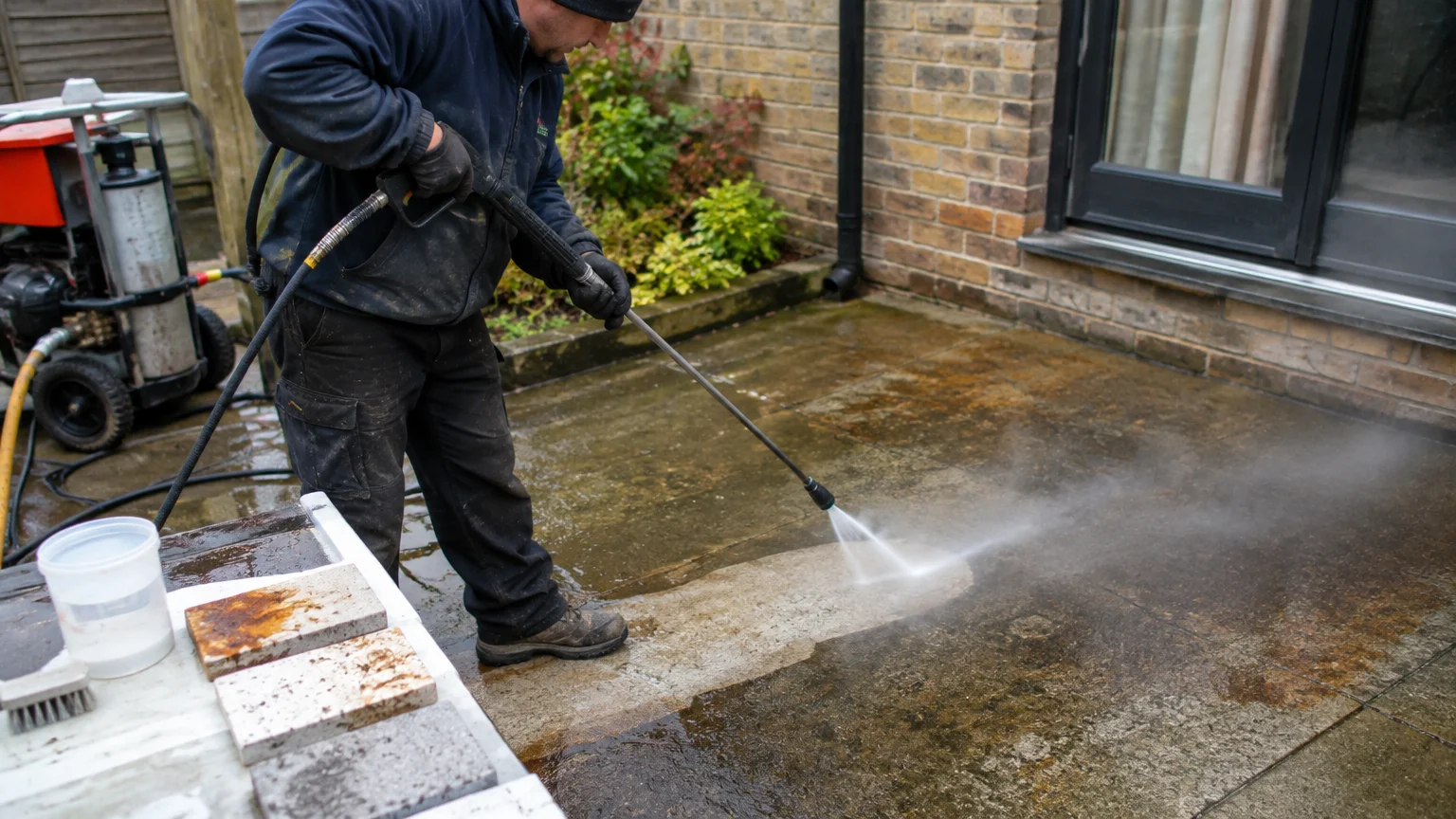
Hot water pressure washing works best when heat helps loosen grease, oil, gum, or thick grime. Cold water often removes dirt, dust, mud, and light outdoor stains well. The right choice depends on the surface, stain, detergent, pressure, and safety needs. Heat helps, but stronger pressure is not always better.
Table of Contents
- What is hot water pressure washing?
- When does hot water clean better than cold water?
- Why must pressure be matched to the surface?
- How do hot and cold water methods compare on common surfaces?
- Does hot water pressure washing remove stains more effectively?
- When is DIY pressure washing no longer sensible?
- How should you choose between hot water and cold water cleaning?
- Frequently Asked Questions
What is hot water pressure washing?
Hot water pressure washing uses heated water, a pump, and a spray wand. The heat softens some residue before the spray washes it away. Cold water pressure washing uses the same basic process without added heat.
How heated water changes the cleaning process
Heat can make grease and oil less sticky. It may also loosen wax, chewing gum, food waste, and some thick grime. This can reduce the need for hard scrubbing. The spray still needs enough pressure and water flow to carry the loosened dirt away.
Hot water does not replace good cleaning steps. A professional may first clear loose debris, apply the right detergent, wait, and then rinse. Dwell time means the time a cleaner stays wet on the surface before rinsing. This gives the product time to work.
Why pressure and temperature solve different problems
Temperature softens certain residues, while pressure provides physical cleaning force. A strong spray may remove loose dirt but leave oily film behind. Hot water may loosen that film, but too much pressure can harm paint, wood, mortar, or siding.
For homeowners, Pressure Washing Largo can help explain which method fits the surface. The same rule applies across Largo, including Downtown Largo and Harbor Bluffs. It also applies near Clearwater, Seminole, Belleair, and Pinellas Park. The stain, material, access, and runoff plan matter more than choosing the strongest setting.
When does hot water clean better than cold water?
Hot water often works better when a surface has grease, oil, gum, food residue, or heavy traffic film. Cold water is usually enough for loose dirt, pollen, mud, dust, and light organic growth. The method should match the soil, not just the way the stain looks.
Grease, oil, and other heat-sensitive residues
Parking areas, restaurant service spaces, dumpster pads, garages, and workshop floors can collect oily grime. Heat may soften this layer so detergent and water can remove it more fully. It may also help with gum on sidewalks and sticky residue near doors.
Heat does not make every mark disappear. Old oil may have soaked into porous concrete. Rust, paint, and mineral marks may need another treatment. A careful cleaner tests a small area first. Nearby plants, walls, drains, and doors should also be protected.
Situations where cold water is usually enough
Cold water often works well for house siding, brick, patios, fences, decks, and walkways. It is a good choice when the main problem is loose dirt or dust. It can also rinse away detergent after a soft wash. Soft washing uses low pressure and a cleaning solution instead of force alone.
Cold water may be safer for heat-sensitive finishes, delicate sealants, and some painted surfaces. It can also suit small home jobs without much grease. Homeowners should not assume hot water is always stronger or safer.
Why must pressure be matched to the surface?
Pressure must match the material because too much force can cause damage. Sound concrete may handle more pressure than vinyl siding or painted wood. The right method may use low pressure, a wide spray, more water flow, or a cleaning solution.
How surface material affects pressure selection
Hard concrete and some masonry can handle firm cleaning when the surface is sound. Older concrete, cracked joints, pavers, and brick need more care. Vinyl siding, stucco, wood, roof shingles, and painted surfaces usually need lower pressure and close control.
A homeowner asking what PSI pressure washer to use on siding should know that one setting does not fit every home. PSI means pounds per square inch. It describes the force placed on the surface. Nozzle angle, distance, water flow, and surface condition also affect the result.
What can happen when pressure is too high
Too much pressure can strip paint, cut wood fibers, or force water behind siding. It may damage mortar or leave visible lines. It can also spread dirty water over clean areas. On roofs, strong pressure may remove protective granules or shorten the life of the covering.
The safest plan starts with a small test area. The operator can then adjust distance, nozzle choice, pressure, temperature, and detergent. More force is not a substitute for good judgment.
How do hot and cold water methods compare on common surfaces?
Hot and cold water can both clean well when the method fits the surface and soil. The main difference is how heat handles oily or sticky buildup. The best choice also depends on whether the surface is sealed, painted, porous, old, cracked, or close to a waterway.
Concrete, driveways, and parking areas
Concrete driveways and parking areas often respond well to pressure washing. Cold water may remove mud, dust, algae, and loose grit. Hot water can help when tires, cooking waste, oil, or heavy traffic film leave a greasy layer.
A driveway may still show a dark mark after cleaning if oil has soaked below the surface. Pretreatment, dwell time, surface cleaning tools, and a controlled rinse may improve the result. A professional may also protect garage doors, landscaping, and nearby walkways. Proper driveway washing prep can make the work safer and cleaner.
Siding, decks, roofs, and painted surfaces
Siding often needs low-pressure cleaning and the right solution. It does not always need high heat or strong force. Vinyl siding can suffer damage when water gets behind its panels. Painted wood and older decks may shed finish when cleaned too hard.
Roofs usually need special care. Strong pressure can harm shingles. Heat may also affect some roof materials or sealants. Homeowners should never treat a roof like a driveway. Pool deck cleaning, fence cleaning services, and building washing services each need methods suited to their materials and surroundings.
Does hot water pressure washing remove stains more effectively?
Hot water pressure washing can remove some stains more effectively. This is most true when the stain contains oil, grease, wax, or sticky residue. Heat is less useful for rust, hard-water minerals, deep paint, or permanent color change. The stain should be identified before treatment.
The difference between stains, buildup, and organic growth
Buildup is material sitting on top of a surface. A stain has often changed or entered the surface itself. Organic growth includes algae, mildew, and moss. These may need a suitable cleaner and enough contact time. A hotter spray alone may not solve the problem.
For example, a green film on a patio may be organic growth. A black tire mark may contain rubber and oil. A white mark on brick may be efflorescence. Efflorescence is a mineral deposit left when water moves through masonry. Each problem needs a different plan.
Why detergent, dwell time, and agitation still matter
Detergent helps separate soil from a surface. Dwell time lets the cleaner work. Agitation means gentle brushing or the use of a surface cleaner to lift stubborn buildup. Heat can support these steps, but it cannot fix the wrong product or poor rinsing.
Cleaning success depends on the whole process, not one machine setting. A qualified cleaner also checks where wastewater will flow. Runoff should not carry oil, chemicals, or heavy sediment into places where it can cause harm.
When is DIY pressure washing no longer sensible?
DIY pressure washing can make sense for simple upkeep on durable, flat surfaces. A homeowner may sweep debris, rinse light dirt, clean small items, and follow the equipment maker’s directions. You may not need a professional for safe, simple cleaning that stays at ground level.
Professional help makes more sense when the surface is fragile, the stain is unknown, or the work creates safety and runoff concerns. This also applies when a job needs ladders, roof access, traffic control, or special protection.
Warning signs that a surface or stain needs professional judgment
A homeowner should pause before cleaning when any of these conditions apply:
- The surface is painted, cracked, soft, weathered, or hard to identify.
- Water could enter siding, vents, outlets, windows, or wall openings.
- The area has oil, chemical residue, mold, heavy rust, or unknown stains.
- The work requires ladders, roof access, traffic control, or special protection.
- Runoff could reach a storm drain, pool, garden, or neighboring property.
A professional may also help when an earlier cleaning attempt left stripes, marks, or damaged finish. This can help rental owners, property managers, and businesses that need a repeatable cleaning plan.
Equipment, safety, and runoff concerns
Pressure washers can cause cuts, eye injuries, slips, and electric shock. Operators need suitable shoes, eye protection, safe hose placement, and care around power sources. Never aim the spray at people, animals, windows, or electrical parts.
The equipment may also be too heavy or powerful for a small job. A trained team can choose the right nozzle, control overspray, and manage wastewater. Pressure Washing Largo serves Largo and can assess whether hot or cold cleaning is safer.
How should you choose between hot water and cold water cleaning?
The best choice starts with the surface and the material being removed. Hot water is useful for oily, greasy, or sticky buildup. Cold water often handles ordinary dirt and light outdoor growth. The safest plan uses only the heat and force needed for a clean result.
Questions to ask before selecting a cleaning method
Before starting, the property owner should consider:
- What is the surface made of, and is it sealed or painted?
- Is the problem dirt, oil, organic growth, rust, mineral buildup, or damage?
- Could water enter walls, fixtures, outlets, vents, or windows?
- Where will dirty water flow during rinsing?
- Can the work be done from the ground without unsafe climbing?
- Does the equipment allow control of heat, pressure, flow, and spray pattern?
A simple patio or driveway may suit careful homeowner cleaning. A roof, large building, commercial site, or unknown stain needs more planning. Pressure washing costs can vary because of size, access, surface condition, cleaning method, and urgency. The final cost is confirmed on a quote.
Key takeaways for planning the right pressure washing approach
- Hot water helps most with grease, oil, gum, and sticky grime.
- Cold water often handles dust, mud, pollen, and loose dirt.
- Pressure must match the surface, not just the stain.
- Detergent and dwell time can matter as much as heat.
- DIY works for simple, safe upkeep, but not every surface or stain.
Conclusion
Hot and cold water cleaning are useful for different problems. Hot water pressure washing can loosen oily or sticky soil. Cold water may be better for routine outdoor cleaning. Surface type, pressure, detergent, runoff, and operator safety should guide the choice. Pressure Washing Largo can help property owners review the right approach. Contact us to discuss the cleaning method that fits your property.
Frequently Asked Questions
Is hot water pressure washing better than cold water cleaning?
Neither method is best for every job. Hot water can work better on grease, oil, gum, and sticky traffic film. Cold water often handles dirt, dust, mud, and light buildup well. The surface, stain type, detergent, pressure, and runoff plan should guide the choice.
What PSI pressure washer is needed to clean siding?
Siding usually needs controlled, lower-pressure cleaning rather than the strongest setting. The right PSI depends on the siding material, age, condition, nozzle, distance, and water flow. A test area helps prevent damage. Vinyl, painted wood, stucco, and older siding may each need a different approach.
Can hot water pressure washing damage a house?
It can cause damage when heat, pressure, or spray direction does not suit the material. Water may enter behind siding, paint may peel, or wood may develop marks. Heat is not always the risk. Poor distance, nozzle choice, and surface judgment can also cause problems.
Does hot water remove algae and mildew better?
Not always. Algae and mildew often need a suitable cleaning solution and enough dwell time. Hot water may help in some cases, but strong pressure can spread growth or damage the surface. The safest method depends on the material, growth level, nearby plants, and wastewater controls.
How often should a house or business exterior be washed?
There is no single schedule for every property. Weather, shade, trees, traffic, nearby dust, surface type, and local moisture all affect buildup. A property may need cleaning when dirt, algae, or stains return. A busy commercial site may need a more regular maintenance plan.
If you are unsure what you are seeing, have the surface checked before the problem grows. Pressure Washing Largo can help explain the safest next step for your property.
If you are not sure what you are dealing with, it is worth having someone look at it before it turns into a bigger job. Get in touch with Pressure Washing Largo today and we will tell you where you stand.