Pressure washing solar panels is risky because strong spray can harm glass, seals, and nearby wires. Before cleaning, read the panel maker’s care guide and use only approved gentle methods. In Largo, dust, rain, trees, and birds can leave grime on panels, but not every mark needs cleaning.
Table of Contents
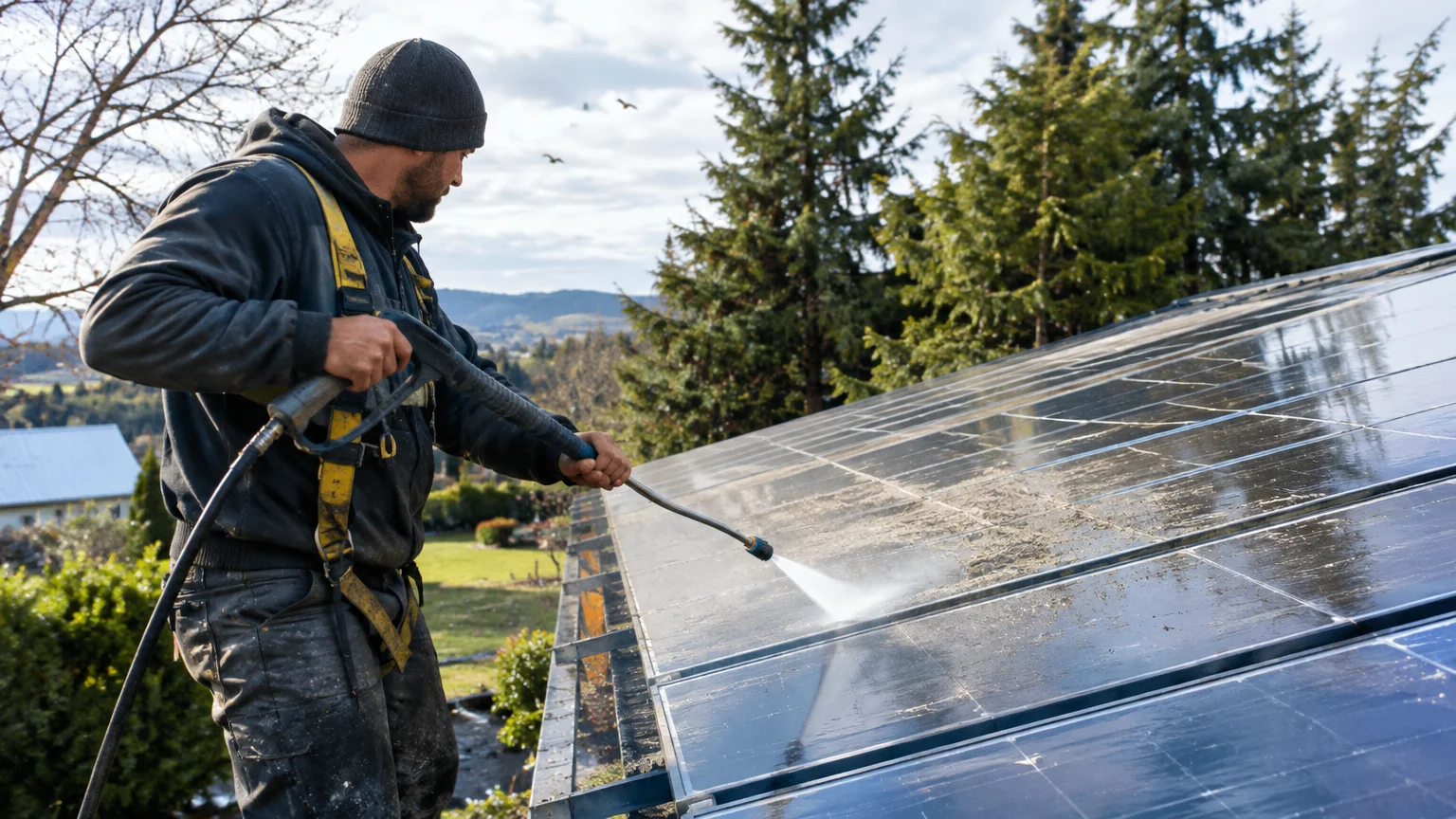
- Why is pressure washing the wrong tool for solar panels?
- What kinds of dirt and buildup affect solar panels?
- Can dirty solar panels reduce their performance?
- How can solar panels be cleaned safely?
- When should solar panels be cleaned?
- Should you clean solar panels yourself or hire a professional?
- How can you protect solar panels between cleanings?
- Frequently Asked Questions
Why is pressure washing the wrong tool for solar panels?
Pressure washing can drive water into panel edges and harm delicate parts. A strong spray may scratch the glass or weaken seals around the frame. Solar panels face rain and outdoor weather, but that does not make them safe for close, forceful spray. Start with the maker’s cleaning guide before choosing any tool.
How can high pressure cause damage?
A pressure washer sends water with far more force than a garden hose. Spraying close to a panel may harm its seals or push water into places that should stay dry. The spray could also damage wires, connectors, or other parts of the system. Damage may be hard to spot from the ground.
The glass can also get scratched by rough tools or grit caught beneath a brush. Even small marks can make the surface harder to clean later. Strong pressure does not make cleaning safer or more careful. It can turn a basic cleaning job into a repair issue.
Why should the maker’s guide come first?
Panel systems can have different care rules. The maker’s guide explains which tools and cleaning steps are safe. It may also say when the panels should be left alone. Pressure Washing Largo encourages Largo property owners to read those directions before cleaning.
A warranty is a maker’s promise to cover certain problems under stated rules. Cleaning against those rules may affect that protection. The guide may also name parts that only a trained worker should handle. If you cannot find the guide, ask the solar installer or panel maker what to do.
What kinds of dirt and buildup affect solar panels?
Panels can collect dust, pollen, bird droppings, leaves, and other outdoor grime. The kind and amount of dirt depend on where the system sits. A home near trees may gather more leaves and pollen than one in an open area. Nearby roads or work sites can also leave fine dust.
Which common marks may appear?
Light dust can settle on panels over time. Pollen may leave a yellow or green film during some seasons. Bird droppings can stick to one area and block light from reaching the cells below. Leaves and twigs may gather by the frame or on nearby roof areas.
Water can leave marks when it dries. Mineral deposits are pale spots or rings left behind by water with minerals in it. Hard scrubbing may scratch the glass, so follow the panel maker’s advice instead of using a rough pad.
Organic growth means plant-like material, such as moss or algae. It may grow on nearby roof surfaces, but it is not the same as dust on the panels. A ground-level look can help show where dirt has gathered. In Largo, nearby branches and shade can also affect the panels.
Do all stains need to be removed?
Not every spot needs cleaning. Rain may carry off loose dust, while stuck droppings or thick grime may stay in place. Cleaning too often adds risk without always helping the system. The panel guide can help you judge which buildup matters and what tools are allowed.
Avoid strong cleaners, paint removers, and household products unless the maker approves them. These products may leave a film or harm the panel surface. If a mark will not come off with a gentle method, ask a qualified provider instead of scraping it.
Can dirty solar panels reduce their performance?
Dirt can block some sunlight from reaching solar cells, especially when it covers a large area or stays there. The effect depends on the type and place of the dirt, as well as the panel setup. A few small marks do not always mean the system needs cleaning. Look at the full picture before taking action.
How can residue affect sunlight?
Solar cells use light to make power. A layer of grime can reduce the light that reaches them. A leaf or bird dropping can also shade one part of a panel. The effect can vary across the system, so one dirty spot does not explain every change in output.
Shade from a tree, chimney, or nearby building can also limit sunlight. That is not dirt on the glass, and cleaning will not fix it. Looking at the panels and the area around them can help you tell the difference.
Does lower output always mean the panels need cleaning?
No. Cloudy weather, shade, system settings, or equipment trouble can change output. A sudden drop may call for a system check, not a wash. Compare the system’s records over time and look for a pattern instead of reacting to one low reading.
If the system shows a warning or a lasting change, check the maker’s advice or ask the solar installer. Do not open electrical parts or test wires. Pressure Washing Largo can talk with property owners about exterior cleaning, but solar system faults should go to a qualified solar worker.
How can solar panels be cleaned safely?
Safe cleaning starts with the maker’s directions and a plan to avoid falls and electrical risks. If the guide allows cleaning, gentle water and a soft, non-scratch tool are safer than a pressure washer. Let panels cool before cleaning, and never step on them.
What gentle tools may be suitable?
A soft brush or sponge made for delicate surfaces may lift loose dirt. Use only tools and water methods allowed by the panel maker. A garden hose with a gentle flow may suit some systems, but follow the guide. Keep grit away from the tool because it can scratch the glass.
Do not spray exposed wires, connectors, or damaged areas. Do not pull cables or lift the panel frame. If water does not remove a mark, do not scrub harder. A trained cleaner can inspect the surface and choose a safer next step.
What should owners avoid?
Harsh cleaners, rough pads, metal scrapers, and strong spray can damage panels. Hot panels and cool water may cause a fast temperature change that stresses materials. Cleaning in direct heat can make water dry too quickly and leave marks. Follow the maker’s rules for timing and water use.
- Do not stand on a panel or rest tools against it.
- Do not use a pressure washer or a strong spray nozzle.
- Do not clean damaged panels or exposed electrical parts.
- Do not use chemicals unless the maker allows them.
These limits help prevent avoidable damage. If panels are hard to reach, the roof is steep, or the guide is unclear, stop and ask a qualified worker. Do not take a fall or electrical risk just to remove a stain.
When should solar panels be cleaned?
There is no one cleaning schedule for every solar system. Local weather, trees, birds, dust, and panel angle all affect how grime gathers. Some systems need little attention, while others collect dirt sooner. Use the maker’s guide and check the site before making a plan.
Which site conditions matter?
Panels near trees may collect leaves, pollen, or bird droppings. Dry, dusty weather can leave a film, while rain may wash away some loose dirt. Nearby building work or busy roads can add more dust. The panel angle also affects how water and debris move off the surface.
In Largo, watch how local weather and nearby trees affect your panels rather than setting a fixed cleaning plan. A look from the ground can reveal heavy grime or debris near the frame. You do not need to climb a ladder or touch the system to make this check.
What signs may make cleaning worthwhile?
A visible layer of grime, stuck droppings, or debris that remains after rain may need a closer look. A lasting change in system readings may also be a reason to check the panels. Still, other issues can change output, so cleaning should not be the first answer every time.
Read the system guide before arranging work. If panels are hard to reach or dirt will not lift gently, ask a trained cleaner to assess them. Regular visual checks can help you spot changes without washing the panels more often than needed.
Should you clean solar panels yourself or hire a professional?
A homeowner can safely check panels from the ground and do simple care allowed by the maker. A trained worker is the safer choice when panels sit on a roof, are hard to reach, or have unclear cleaning rules. Falls and contact with electrical parts can cause serious harm.
What can an owner safely do?
Look for shade, loose branches, visible dirt, and changes in system readings. Read the care guide and keep notes about what you see. If panels are reachable without climbing and the maker allows gentle cleaning, simple upkeep may be possible. You do not need to hire someone for every visual check.
Do not climb onto a roof or lean from a ladder to reach panels. Do not handle wires, connectors, or damaged equipment. These are not basic cleaning tasks. If the work needs roof access, special gear, or contact near electrical parts, leave it to trained workers.
What should a cleaning provider know?
Ask how the provider follows the panel maker’s rules and protects the system. A suitable provider should explain the tools and water method before work begins. They should also know when to stop and refer a problem to a solar technician. Cleaning skill alone does not mean someone can fix electrical equipment.
Pressure Washing Largo works with property owners and can discuss exterior cleaning questions. For solar faults, contact a qualified solar technician or installer. This keeps cleaning separate from electrical checks and repairs. Pressure washing costs can depend on the surface, access, and work involved, but a pressure washer is still not the right tool for panels.
House washing and soft washing are also different jobs from solar panel care. Soft washing uses low-pressure water and cleaning products for certain outside surfaces. That does not mean the method is approved for solar panels. Check the panel guide before using any cleaning service or method.
How can you protect solar panels between cleanings?
Simple checks can help you spot issues without risking damage. Watch visible debris and system records, but do not wash panels just because time has passed. Follow the care guide and clean only when there is a clear reason.
What checks are useful?
Look at the panels from a safe place on the ground. Note heavy grime, fallen branches, new shade, or visible damage. Check the system monitor for a lasting change, and compare it with normal readings rather than one cloudy day. If a warning appears, follow the maker’s support steps.
Keep trees and loose branches from causing avoidable shade, but hire help for trimming near a roof or power lines. Do not spray water toward wires or try to fix a loose part. A clear note about what changed can help a solar technician find the cause.
How can owners avoid extra buildup?
You cannot stop all dust, pollen, or bird activity. You can notice new shade or debris before it stays for a long time. Keep nearby roof drains and work areas tidy when they are safe to reach. Never change panel hardware or add a coating unless the maker approves it.
Key takeaways
- Strong pressure can harm panel glass, seals, and nearby parts.
- Read the maker’s cleaning guide before using tools or cleaners.
- Dirt can block sunlight, but lower output has other possible causes.
- Ground-level checks are safer than roof or ladder access.
- Ask a qualified worker when access or electrical safety is a concern.
Conclusion
Solar panels need care, but strong pressure is not a safe answer. Check them from the ground, read the maker’s guide, and watch system records. For hard-to-reach panels or stuck grime, Pressure Washing Largo can discuss exterior cleaning needs. Contact us to discuss solar panel cleaning with Pressure Washing Largo.
Frequently Asked Questions
Can rain clean solar panels?
Rain may wash away loose dust, but it may not remove stuck droppings or thick grime. The result depends on the panel angle and type of dirt. Read the maker’s care guide before doing more cleaning. Do not climb onto the roof to inspect panels after rain.
Can a pressure washer damage solar panels?
Yes. Strong spray may harm seals, scratch glass, or reach wires and connectors. The risk can depend on the washer, distance, and panel design, but pressure washing is not a safe default. Follow the maker’s instructions and use only approved cleaning methods.
Is it safe to clean solar panels with soap?
Use soap or another cleaner only if the panel maker says it is safe. Some products can leave a film or harm panel parts. A soft tool and gentle water may be enough for some dirt, but the guide should direct the method. Avoid rough pads and harsh chemicals.
How often should solar panels be cleaned?
The right timing depends on local weather, nearby trees, dust, birds, panel angle, and the maker’s advice. Some panels may need little cleaning, while others collect dirt sooner. Watch for visible grime and lasting changes in system records instead of following a fixed schedule without checking.
Should a homeowner clean panels on a roof?
A homeowner should not climb onto a roof or reach from a ladder to clean panels. Falls and contact with electrical parts can cause serious harm. A ground-level visual check is safer. For roof access, stuck dirt, or unclear instructions, ask a trained professional for help.
If you are not sure what you are dealing with, it is worth having someone look at it before it turns into a bigger job. Get in touch with Pressure Washing Largo today and we will tell you where you stand.





