To remove oil stains from concrete driveway surfaces, absorb fresh oil before it spreads. Older marks need a concrete-safe degreaser, gentle scrubbing, and careful rinsing. Pressure washing can help lift deep stains, but the right spray tip, water flow, and cleaning method help protect the concrete from damage.
Table of Contents
- What Is the Difference Between Fresh and Set-In Oil Stains?
- How Should You Prepare a Concrete Driveway for Oil Stain Removal?
- How Do You Remove Fresh Oil Stains From Concrete?
- How Do You Remove Set-In Oil Stains From Concrete?
- What Pressure Washing Method Is Safest for Oil-Stained Concrete?
- When Should You Hire a Professional to Clean an Oil-Stained Driveway?
- How Can You Prevent New Oil Stains on a Concrete Driveway?
What Is the Difference Between Fresh and Set-In Oil Stains?
Fresh oil stays near the top of the concrete. Set-in oil moves into the small pores below the surface. This difference changes the best cleaning method and the number of cleaning passes needed.
How stain age affects oil absorption
Fresh oil is easier to absorb because it has not spread far. A thick layer of clay absorbent, kitty litter, or spill material can pull much of it from the surface. Leave the material in place long enough to collect the oil. Then sweep it up with care.
Set-in oil often leaves a dark, uneven mark. Heat, rain, cars, and time can push oil deeper into the slab. Soap may clean the top while leaving a dark shadow below. A degreaser helps break down the oil. A poultice can draw some residue toward the surface.
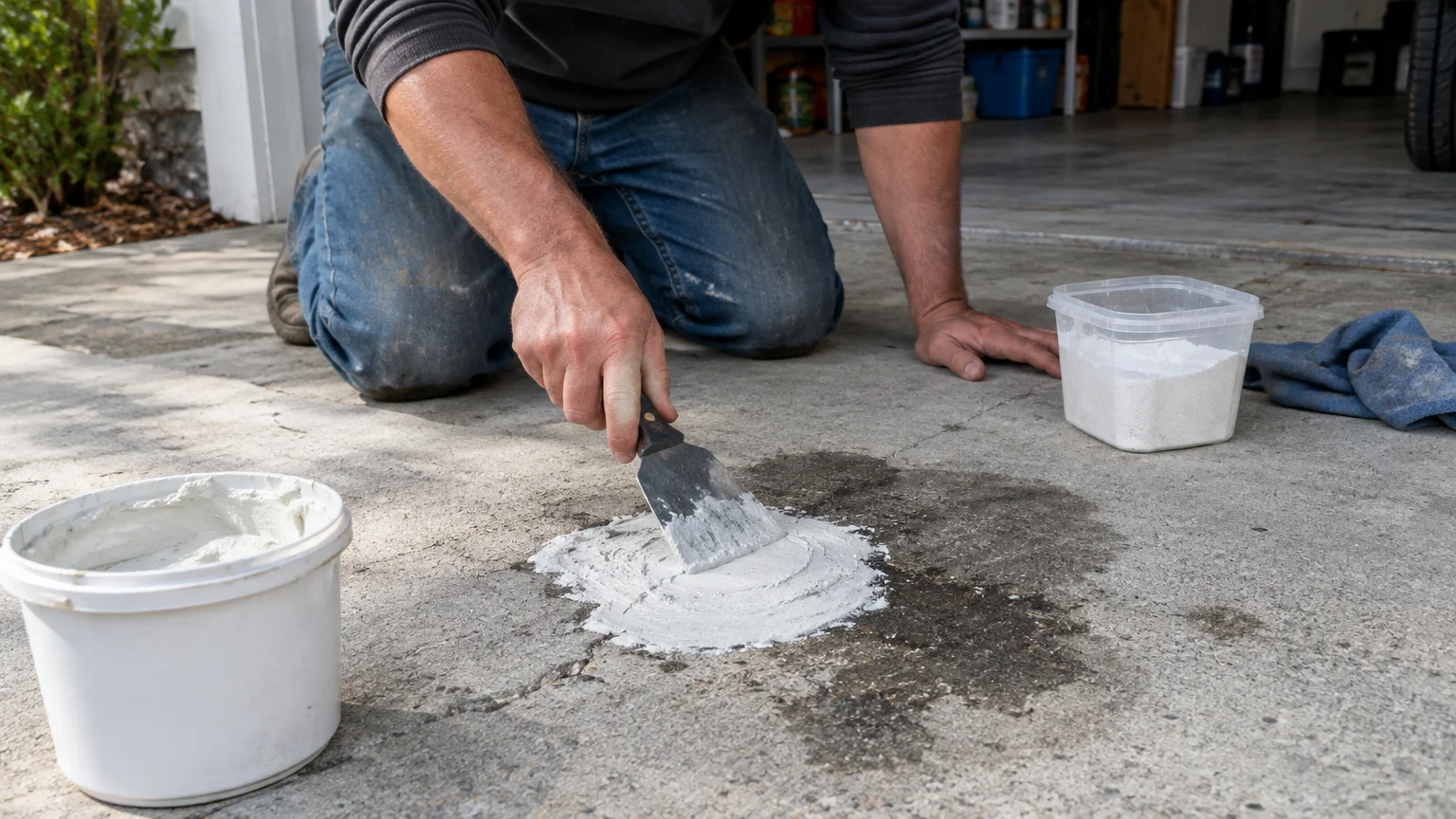
A poultice is a thick paste made from cleaner and absorbent powder. It sits over the stain and pulls oil into the paste as it dries.
How to assess the stain before cleaning
Check whether the concrete is smooth, painted, sealed, cracked, or worn. A dark mark may also contain tire rubber, rust, dirt, or algae. These materials react in different ways. The wrong cleaner can leave a light patch or harm the finish.
Pressure Washing Largo helps property owners choose a method that fits the stain and surface. Test a small hidden area before cleaning the whole driveway. This shows whether the cleaner changes the concrete color and whether rinsing removes the oil. Largo homeowners should also check where dirty water will flow before work begins.
How Should You Prepare a Concrete Driveway for Oil Stain Removal?
Good preparation makes oil stain removal safer and easier to control. Clear the driveway first. It should be dry when possible. Check nearby drains, plants, walls, garage doors, and painted surfaces before cleaning.
What tools and cleaning supplies do you need?
Fresh spills may need absorbent material, a stiff nylon brush, a dustpan, work gloves, and a bucket. Set-in stains may need a concrete-safe degreaser, a pump sprayer, a scrub brush, and a pressure washer with a suitable tip. A poultice needs absorbent powder mixed with cleaner into a thick paste.
Do not mix cleaning products. Some cleaners can react when mixed. Read each product label before use. Wear gloves and eye protection when the label says to do so. A cleaner made for concrete is safer than a harsh product chosen without checking the surface.
How can you protect nearby surfaces and landscaping?
Move loose soil, leaves, toys, and outdoor furniture away from the work area. Plants can have a breathable cover for a short time. Do not leave plants covered in hot weather. Keep runoff away from storm drains, ponds, and garden beds.
Sweep the cleaning area before adding water. This keeps grit from turning into thick dirty water. It also lowers the risk of spreading grime across the driveway. Pressure Washing Largo can help Largo property owners plan concrete cleaning when the weather allows steady drying and rinsing.
How Do You Remove Fresh Oil Stains From Concrete?
Treat fresh oil as soon as it is safe. The first goal is to absorb the spill. Do not start by spraying water across the stain. Water can move oil into a larger area.
Which absorbent materials work best?
Clay absorbent, commercial oil-dry products, and clean cat litter can work on fresh spills. Fine materials often touch more of the oil than large wood chips. Absorbent material cannot remove oil that has already soaked into the concrete.
Pour the material over the full spill. Press it gently into place, but do not rub it outward. Let it sit for the time suggested by the product. Sweep it into a container after it has collected the oil. Check the area again and repeat the step if the surface still looks wet.
What cleaning steps should you follow after absorbing the spill?
After loose oil is removed, apply a small amount of concrete-safe degreaser. Work it with a stiff nylon brush. Use short strokes that stay inside the stained area. Rinse with controlled water flow after the cleaner has had time to work.
A homeowner usually does not need a professional for a small, fresh spill. Use care and keep the runoff away from storm drains. Do not push dirty water across clean concrete. If a damaged vehicle caused the spill, repair the leak before cleaning the driveway again.
How Do You Remove Set-In Oil Stains From Concrete?
Set-in stains need time and repeated treatment. A degreaser can loosen the oil. Scrubbing and careful rinsing then help move it from the concrete pores. Deep marks may improve without disappearing completely.
When should you use a degreaser or poultice?
A degreaser works well when the stain is spread out or only moderately dark. Apply it to a small area. Let it sit for the time shown on the label. Keep the cleaner wet during this time. Do not let it dry into a film.
A poultice can help with a darker, older spot. Spread the paste over the stain and let it dry. Remove the dry material as directed. Deep oil may need more than one round because it does not always leave the slab at once.
How does pressure washing help lift embedded oil?
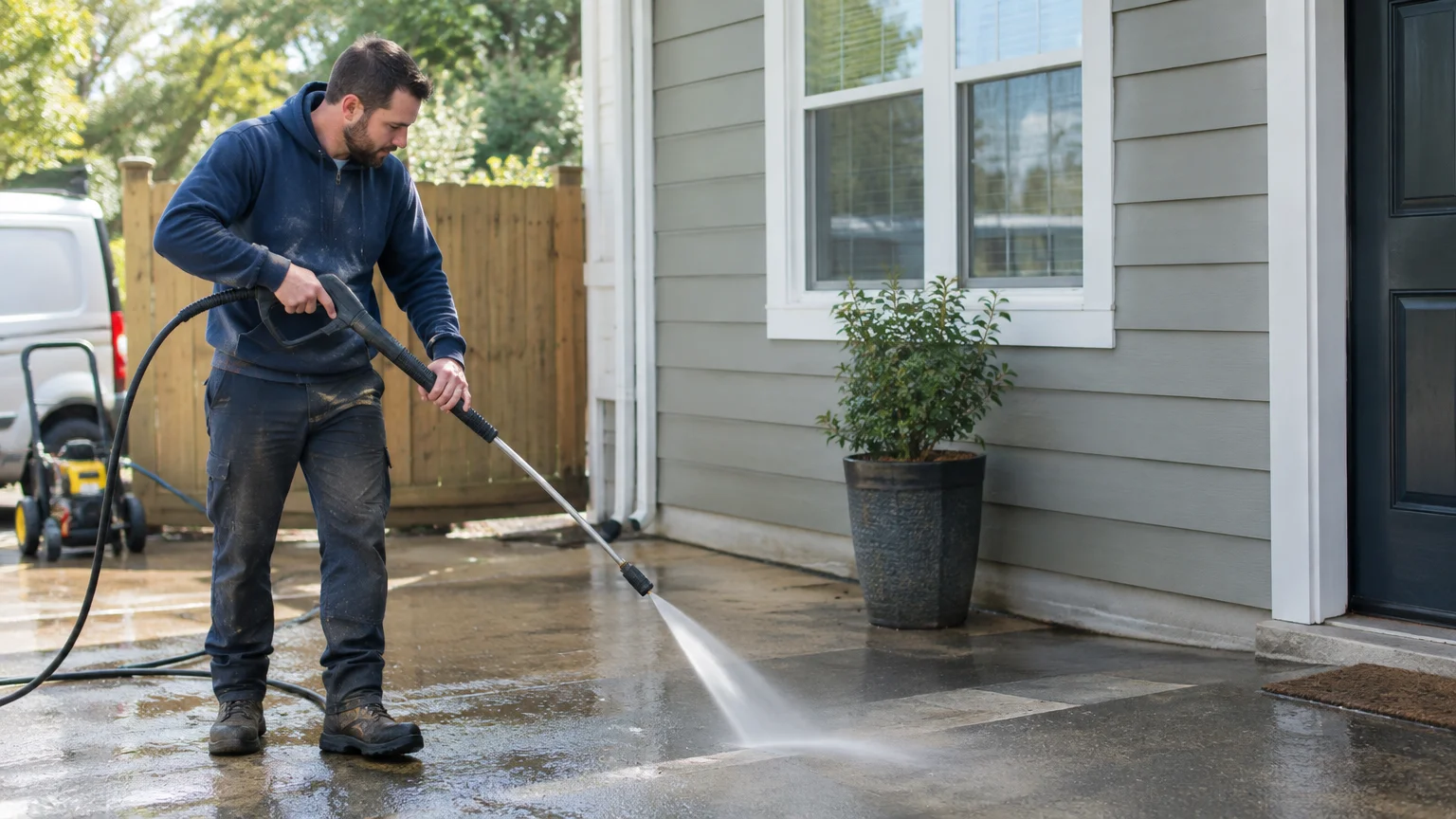
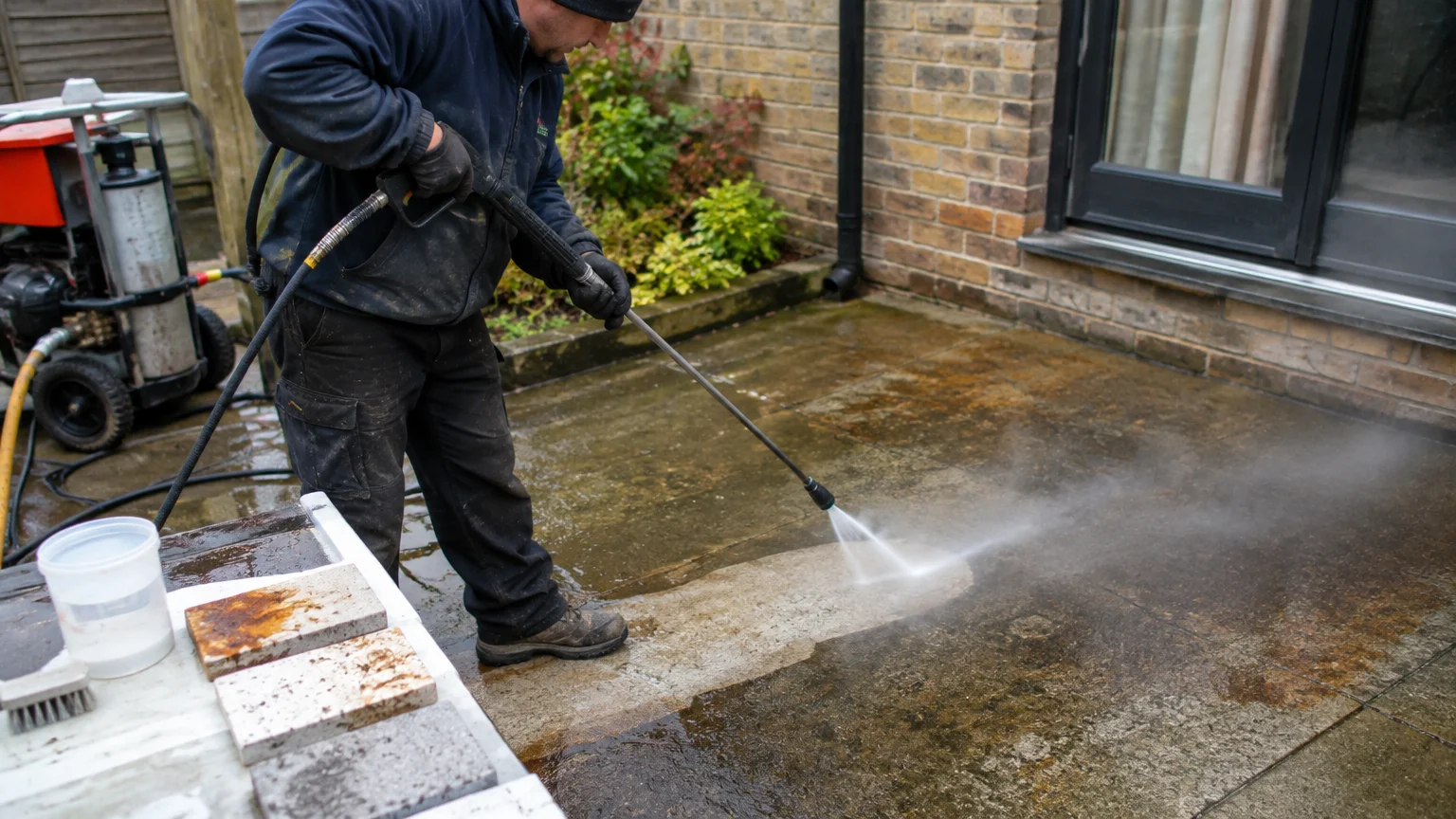
Pressure washing can remove loose oil, dirt, and cleaner residue. It works best after a degreaser has loosened the stain. Keep the wand moving. Start with a wide spray pattern in a hidden area.
Pressure alone may not remove deep oil. It can also push dirty water onto clean concrete. Large driveways, parking areas, or stains that return after cleaning may need professional Concrete Cleaning Services. Pressure Washing Largo can help assess the surface before treatment.
What Pressure Washing Method Is Safest for Oil-Stained Concrete?
The safest method uses the least pressure that cleans the surface well. Water flow, spray distance, cleaner choice, and concrete condition all matter. Maximum pressure is not always the best choice.
How much pressure and water flow should be used?
There is no single pressure setting for every driveway. Older concrete, weak joints, decorative finishes, and damaged slabs need a gentler method. Use a wide fan tip and steady movement. Test a small patch first to lower the risk of etching.
Do not hold the wand over one spot. A slow, even pattern cleans better than quick passes in random directions. A surface cleaner may help on broad, sound areas. Test it before using it across the full driveway.
Which mistakes can damage concrete or spread the stain?
Common mistakes include using a narrow tip too close to the surface, letting cleaner dry, skipping a test patch, and rinsing dirty water over clean areas. Damage may look like rough lines, bright marks, loose grit, or exposed aggregate.
Oil and water can move toward a garage, sidewalk, or street. Work from the cleanest edge toward the dirtiest area. Manage runoff as you go. Pressure washing is not the same as soft washing. Soft washing uses lower pressure and a cleaning solution for delicate surfaces. Concrete often needs controlled mechanical cleaning.
When Should You Hire a Professional to Clean an Oil-Stained Driveway?
A homeowner does not always need professional help. Small fresh spills can often be handled with sweeping, absorbent material, and careful spot cleaning. Larger or older stains need more planning.
Which stains and surface conditions need specialized treatment?
Professional help is useful when the stain is large, old, spreading, or near a storm drain. It is also wise when the driveway is cracked, painted, sealed, decorative, or worn. A professional can test the cleaner and change the method before treating the whole area.
Businesses, landlords, HOAs, and property managers may need help when several areas must look alike. Driveways, sidewalks, patios, and parking spaces can need different methods. Pressure Washing Largo serves many property types and can help decide whether stain removal is practical.
What should property owners expect from a professional cleaning process?
A careful process starts with a surface review and stain check. The cleaner may protect nearby areas, apply a suitable treatment, scrub the stain, use controlled pressure, and manage wastewater. Deep marks may improve greatly without fully disappearing.
The result depends on the stain, concrete age, weather, old sealers, and time spent in the slab. Ask what method will be used. Ask whether the team will test a small area first. The final cost is confirmed on a quote and depends on surface size, access, stain severity, and treatment needs.
How Can You Prevent New Oil Stains on a Concrete Driveway?
Prevention starts with finding leaks early. Clean small spills before they spread. Simple habits can protect the driveway and reduce the need for strong cleaning later.
What maintenance habits help prevent recurring spills?
Check vehicles for leaks, especially after repairs or long periods of parking. A drip pan can protect the concrete under a vehicle that needs service. Cover fresh spills with absorbent material instead of washing them toward the street.
Sweep the driveway often and check it after storms. Leaves and dirt can hide small oil spots. Sidewalk Cleaning and Patio Cleaning Services can also help keep nearby hard surfaces clear of grime and slippery buildup.
Should you seal a concrete driveway after stain removal?
Concrete sealing may slow how quickly oil enters the surface. It does not make concrete stain-proof. The slab should be clean and fully dry before sealing. The right sealer depends on the finish, weather exposure, and planned use.
A sealer may change the surface color. It can also make later repairs easier to notice. Check the product label and test a small area when possible. Good parking habits, quick spill cleanup, and regular cleaning still matter after sealing.
Key takeaways
- Absorb fresh oil before using water on the driveway.
- Use degreaser, scrubbing, or a poultice for set-in stains.
- Use controlled pressure and steady movement when washing concrete.
- A homeowner can often clean a small, fresh spill safely.
- Deep, large, or spreading stains may need professional treatment.
Frequently Asked Questions
Can dish soap remove oil from a concrete driveway?
Dish soap may help with a small, fresh mark. It may not remove deep oil. A concrete-safe degreaser usually works better for set-in stains. Test the cleaner first and rinse with care. Do not push dirty water into storm drains, garden beds, or clean parts of the driveway.
Will pressure washing remove every oil stain?
Pressure washing can remove loose oil, dirt, and cleaner residue. It may not erase oil that has soaked deep into concrete. Pre-treatment often matters more than pressure alone. Older stains may improve without disappearing fully, especially on porous, cracked, or discolored slabs.
What cleaner should be used on an oil-stained driveway?
A cleaner labeled for concrete and oil or grease is a good starting point. Match the product to the surface and follow the label. Stronger is not always better. A harsh cleaner can harm coatings, plants, or the concrete finish when used without care.
Can a homeowner clean a large oil spill?
A homeowner may handle a small spill with absorbent material and careful spot cleaning. A large spill is harder because runoff can spread quickly and reach drains. Professional help is safer when the spill is extensive, the concrete is damaged, or the leak source is not fixed.
Should concrete be sealed after oil stain removal?
Sealing may slow future oil absorption, but it does not prevent every stain. The concrete must be clean, dry, and suitable for the chosen product. A test patch can show how the sealer changes the color. Regular checks and quick spill cleanup remain important after sealing.
Conclusion
The best way to remove oil stains from concrete driveway surfaces depends on stain age, depth, and concrete condition. Fresh spills need quick absorption. Set-in marks need controlled treatment and patience. Pressure washing works best as part of a careful process, not as a replacement for preparation.
For difficult stains or large properties, Contact us to discuss concrete cleaning options. Pressure Washing Largo helps property owners make a practical plan for cleaner and safer outdoor surfaces.
If you are not sure what you are dealing with, it is worth having someone look at it before it turns into a bigger job. Get in touch with Pressure Washing Largo today and we will tell you where you stand.