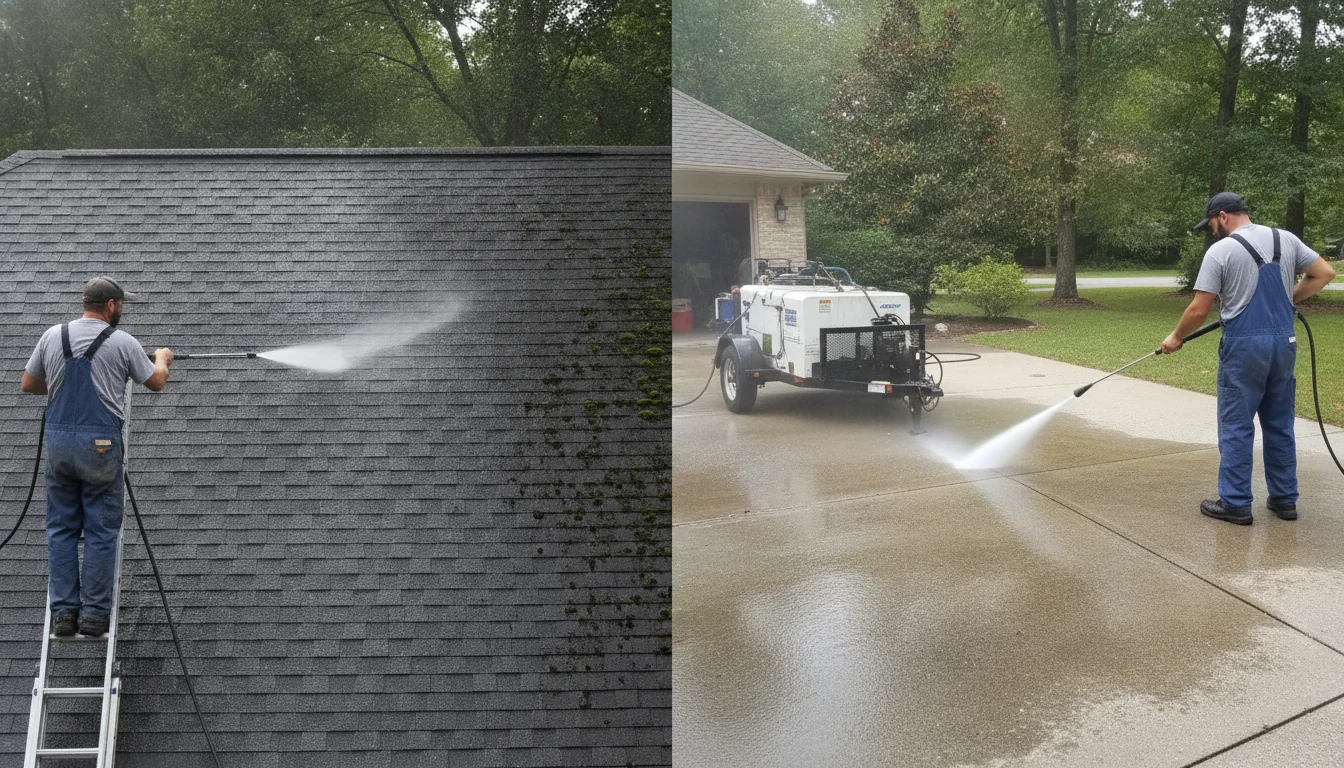
A quick way to choose between soft wash vs pressure wash is to match the method to the material and the mess. In short: soft washing uses low pressure with targeted detergents to kill organic growth, while pressure washing relies on higher pressure and mechanical force to lift grime—each has its place when cleaning a home’s exterior in Largo. Pressure Washing Largo helps homeowners decide by assessing surface type, soil level, and safety on site.
Key Takeaways
- Soft washing: low pressure (about 100–500 PSI) plus detergents for siding, stucco, and roofs.
- Pressure washing: higher PSI (around 1,500–3,000+ PSI) for durable flatwork like concrete and brick.
- Treating growth at the source lasts longer than rinsing alone and protects finishes.
- Plant protection, runoff control, and safety gear matter with either method.
That green film on the siding keeps coming back, the driveway looks tired, and the roof has dark streaks. You’re not alone in Largo. Homeowners often ask which approach is safer and more effective. Here’s a friendly, no-nonsense guide to soft wash vs pressure wash so you can choose with confidence.
Within the first minutes of any assessment, a pro decides based on surface type, soil level, and safety. In short: soft washing = low pressure + targeted detergents, and pressure washing = higher pressure + mechanical force. Each has a place when exterior house cleaning is done right. If you’re comparing options locally, Pressure Washing Largo can walk you through choices and timing.
1. Soft Wash vs Pressure Wash: What’s the Real Difference?
Soft washing uses specialized cleaners to break down organic growth, then rinses with low pressure, typically around 100–500 PSI delivered through wide fan tips or dedicated soft-wash systems. Solutions often include sodium hypochlorite (the active ingredient in many house washing solutions) plus surfactants to help them cling and dwell. If you want a gentle, finish-safe option, see Soft Washing Services in Largo | Gentle Exterior Cleaning.
Pressure washing relies on higher PSI—commonly 1,500–3,000+ PSI—using tighter tips (0–25 degrees) or a rotary nozzle to lift grime by force. Gallons per minute (GPM) also matter; higher flow moves soil faster, especially on flatwork. For hardscapes and durable masonry, Pressure Washing Services in Largo | Exterior Cleaning is often the right fit.
Best-fit surfaces:
- Soft wash: vinyl and fiber-cement siding, stucco, painted wood, composite trim, soffits, gutters, and most shingle roofs.
- Pressure wash: concrete driveways and sidewalks, pavers, brick patios, and some masonry where grout/mortar is sound.
2. Pros and Cons: Safety, Results, and Longevity
Soft washing targets algae, mildew, and bacteria at their source. Because the growth is neutralized, results often last longer on siding and roofs than a high-pressure rinse alone. It’s also gentler on finishes, reducing the chance of etching, oxidation smears, or water forced behind siding.
High-pressure cleaning shines on hard, durable surfaces like concrete where chewing gum, tire marks, and embedded dirt are the issue. Used improperly on homes, though, it can damage caulk lines, scar wood, and, on roofs, conflict with common shingle care recommendations that warn against high-pressure spraying.
Environmental and safety notes: Soft-wash mixes must be handled carefully. Pros pre-wet and cover plants, control runoff, and neutralize as needed. With either method, responsible wastewater management and protective gear keep people, pets, and landscaping safe.
3. Choosing the Right Method for Your Home
Match method to material and mess. Algae on vinyl or stucco calls for soft washing, which cleans pores without scarring the surface. Oxidation (a chalky film on older siding) is different; it may need a dedicated restoration process, and too much pressure can leave streaks. Oil stains on a driveway respond to pressure plus the right cleaner and dwell time.
When soft washing is smarter: delicate siding, painted trim, and roofs with organic staining. When pressure is appropriate: durable flatwork like concrete and brick where mechanical agitation helps. For mortar that’s sandy or crumbling, gentler techniques protect joints.
Expected project details: Time on site varies by size, access, and soil level. Preparation includes closing windows, removing outdoor cushions, covering exterior outlets, and protecting plants. Costs vary by home size, materials, contamination level, and scope of work.
4. DIY or Hire a Pro?
Most consumer machines focus on PSI, but GPM and the right nozzles, injectors, and detergents matter more than raw force. Common DIY mistakes include spraying upward into lap siding, standing too close to concrete (causing etching), and over- or under-mixing cleaners. Soft washing requires controlled application, dwell, and thorough rinsing.
Professionals protect landscaping with rinse shields, constant plant watering, and post-rinses. They also test small areas, adjust PSI on the fly, and choose chemistry tuned to algae, mildew, or rust. Ask contractors about surfaces included, their approach to each, plant protection steps, insurance, and what’s in the written estimate, including cleanup and timelines.
Simple maintenance stretches results: trim vegetation away from walls, keep gutters flowing, rinse pollen and dust from high-touch areas, and schedule periodic checks before growth takes hold.
Conclusion and Key takeaways
Choosing between methods isn’t about which is stronger; it’s about what’s safest and most effective for each surface. Pressure Washing Largo can assess your siding, masonry, and roof and recommend a plan that keeps finishes intact and algae away longer.
- Soft washing is best for siding, stucco, and roofs where low pressure and detergents do the work.
- Pressure washing fits concrete and brick hardscapes that tolerate higher PSI.
- Longevity improves when growth is treated at the source, not just rinsed.
- Protection of plants, pets, and finishes is non-negotiable—ask how it’s done.
Pressure Washing Largo serves homeowners and businesses across Largo. Contact us to arrange a careful assessment tailored to your property and schedule.
Frequently Asked Questions
Is soft washing safe for vinyl, stucco, and painted wood?
Yes—when done correctly. Soft washing uses low pressure and targeted cleaners to remove algae and mildew without scarring finishes or forcing water behind siding. Pros pre-wet plants, control runoff, and rinse thoroughly, making it a safe choice for delicate exterior house cleaning and routine house washing services.
Can you pressure wash a roof?
High pressure on asphalt shingles is widely discouraged because it can strip protective granules and shorten roof life. Soft washing with the right mix, low pressure, and careful rinsing is the recommended approach for organic roof staining. Always follow manufacturer guidance and choose a contractor who respects warranty considerations.
How do I find a reliable soft washing company near me?
Check recent reviews, confirm insurance, and ask about maximum PSI on siding, plant protection steps, and the cleaners used. A good estimate explains surfaces covered, methods per surface, and cleanup.





