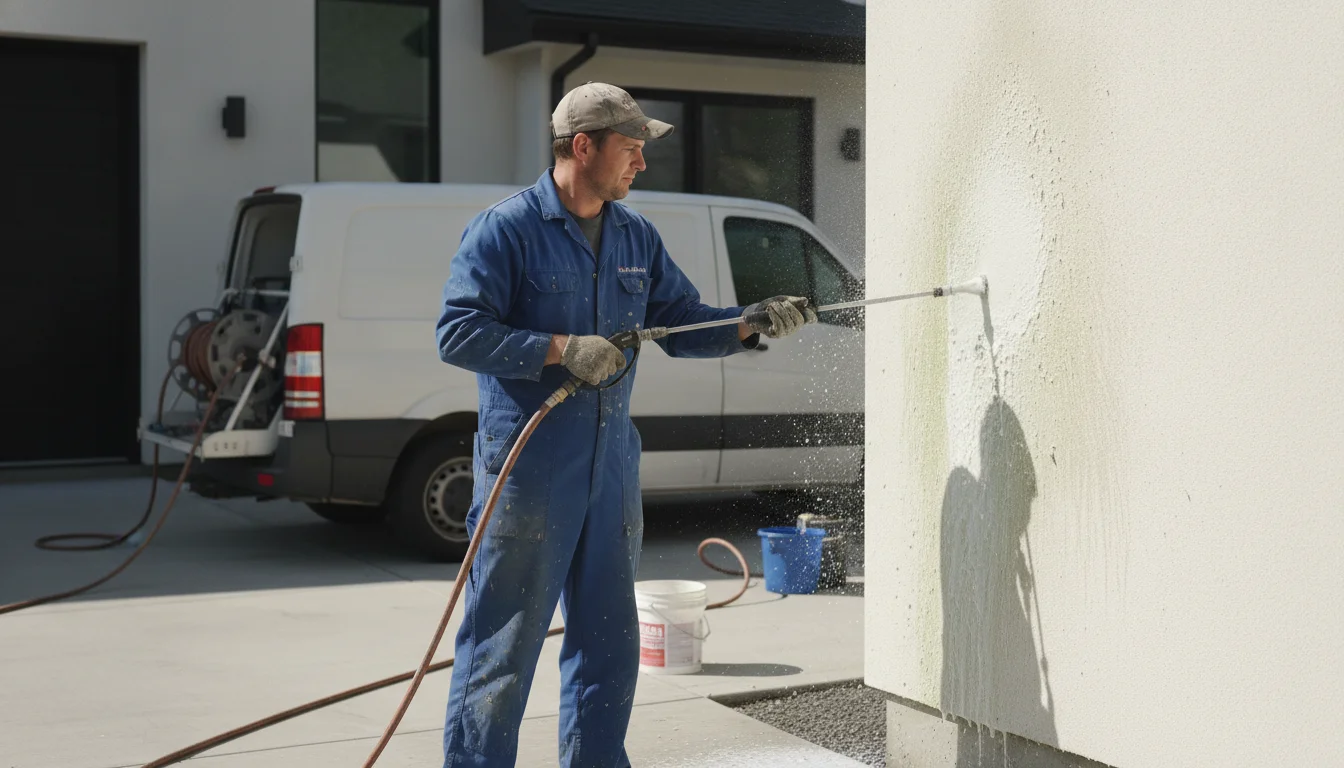
Soft washing stucco is a low-pressure cleaning method that uses a gentle solution to remove algae, mildew, and stains without damaging the finish. In Largo, this approach helps prevent water intrusion and etching on stucco, EIFS, brick, and painted masonry while keeping walls clean longer.
Dark streaks on stucco can sneak up fast. One week the wall looks fine; the next you notice green spots, black lines, and chalky marks. Many people reach for a pressure washer, but that force can break the finish. The safer fix is soft washing: low pressure and a targeted cleaning mix that removes growth and stains without harm—ideal for homes and businesses in Largo.
Pressure Washing Largo trains techs to treat stucco the right way. The team knows that pushing water into cracks causes costly issues. This guide shows how to clean stucco, EIFS (Exterior Insulation and Finish System), brick, and painted exteriors the safe way.
Soft Washing 101: What It Is and How It Protects Stucco
Soft washing uses low pressure and a cleaning mix to lift stains and kill organic growth. By contrast, pressure washing relies on high PSI to blast dirt off. In the soft wash vs traditional pressure washing comparison, soft washing does the work with chemistry and controlled flow, not force—making it the right match for stucco and similar finishes.
Stucco and EIFS are porous and thin at the surface. Painted masonry can also be fragile when the paint is old or chalky. High force can etch the face, drive water inside, and strip paint.
For delicate walls, keep rinse pressure low. A practical target is often 100–300 PSI at the surface, and typically under 500 PSI. Use a wide fan tip (40°–60°). Hold the wand back so the stream feels like a strong garden hose, not a cutting jet. When in doubt, test a small spot.
If you want help dialing in the right method for your whole exterior, look into Soft Washing Services or House Washing Services from a trusted local team.
Risks of High Pressure: Cracks, Water Intrusion, and Stains
High PSI can push water behind stucco and EIFS. That trapped moisture can swell, crack, or blister the finish and may feed mold inside wall layers.
Forceful cleaning can also etch the face coat, leaving rough scars. On painted walls, it may cause peeling. You might also see gray or black smears from oxidized paint, which often look worse after washing.
There’s another hidden issue: blasting instead of treating leaves root spores behind. Aggressive cleaning can make mold and mildew return faster because you didn’t kill the growth. Soft washing solves this by removing and sanitizing in one step.
The Safe Stucco Cleaning Process Step-by-Step
Work slow, protect the wall, and let the mix do the job.
- Pre-inspect the surface. Note cracks, soft spots, rust, and peeling paint. Test a small patch in a low spot. Rinse or cover plants and metals before you start.
- Choose detergents for organic growth. A mild sodium hypochlorite mix, diluted to the strength on the product label, with a surfactant helps cling and clean. Add an algaecide if needed. Always follow label directions.
- Apply the mix from bottom to top to reduce streaks. Keep flow gentle. Watch for drips and runs; brush lightly on stubborn areas.
- Let it dwell for 5–10 minutes out of direct sun. Don’t let it dry. Re-wet areas that start to dry so the mix keeps working.
- Rinse with low pressure using a 40°–60° tip, top down. Keep the nozzle back. The rinse should sheet off, not dig in.
- Post-rinse neutralizing. Rinse plants, windows, and metals again. Use a plant or bleach neutralizer where recommended. Do a final walk-around for touch-ups.
For large walls or tricky stains, a pro offering Soft Washing Services can clean faster and safer with the right pumps, tips, and cleaners.
Ongoing Care, Weather Timing, and When to Hire a Pro
Plan cleaning in mild weather with no hard rain in the forecast. Spring and fall often work well in Largo. Most homes do best with a gentle wash every 12–24 months, depending on shade, trees, sea breeze, and dust.
Spot-treat problem stains early. Rust often responds to an oxalic-based cleaner. Efflorescence (white salt) needs a light masonry-safe cleaner and a soft touch. Organic stains like algae respond well to a mild soft wash mix.
Red flags for professional help: very tall walls, loose or cracking stucco, heavy oxidation, leaks or past water intrusion, and deep rust or paint failure. Pressure Washing Largo brings ladders, safety gear, and low-pressure systems to handle these issues with care. They can also help with Pressure Washing Services or Building Washing Services where higher pressure is safe. While pressure washing costs vary by property size and condition, preventing damage with the correct method usually avoids bigger repair bills.
Frequently Asked Questions
### ### How is soft washing different from pressure washing on stucco?
Soft washing relies on low pressure and a targeted cleaner that kills algae, mildew, and mold. Pressure washing uses high PSI to force dirt off. On stucco and EIFS, high PSI can etch the face and push water inside. Soft washing cleans safely and helps the surface stay clean longer.
### ### What mix is safe for cleaning stucco?
A mild sodium hypochlorite solution, diluted per the product label, plus a surfactant is common for soft washing stucco. Pre-wet plants and metals, apply bottom-up, allow a short dwell time, then rinse gently. Follow product labels, and test a small area first to confirm safe results.
### ### Can I use a pressure washer if I stand far away?
Distance helps, but risk remains. Even from far back, a narrow tip or sudden closer pass can etch stucco or drive water behind the finish. Use a wide fan tip and very low pressure, or choose soft washing. When unsure, bring in a trained pro to avoid lasting damage.
Key Takeaways
- Soft washing protects stucco using low pressure and a gentle mix that kills growth.
- High pressure can etch finishes and force water inside, causing cracks and stains.
- Use wide fan tips (40°–60°) and test spots; aim for about 100–300 PSI at the surface.
- Apply, dwell 5–10 minutes, and rinse gently; neutralize plants and metals after.
- Call a pro for tall walls, existing damage, or stubborn stains to avoid repairs.
Conclusion
Clean stucco the safe way—with low pressure and the right mix—so walls last and look great. For safe, gentle service in Largo, Contact us.





