Wood deck cleaning should match the kind of wood and finish on your boards. Softwood can mark or splinter more easily, while hardwood may need a cleaner made for its surface. In Largo, start by checking the wood, then use gentle cleaning and a careful rinse to remove dirt without harming the deck.
A deck may look simple, but its boards can react in different ways to water and scrubbing. Some Largo homes have softwood, hardwood, or boards covered by an older finish. Each kind needs care that suits its surface. Pressure Washing Largo helps property owners think through those differences before choosing a cleaning method.
Table of Contents
- Why does wood type matter when cleaning a deck?
- How can you identify the wood on your deck?
- How should you prepare a wood deck for cleaning?
- What is the safest way to clean a softwood deck?
- How should you clean a hardwood deck?
- When should you use a pressure washer on a wood deck?
- What should you do after cleaning a wood deck?
- Frequently Asked Questions
- Key takeaways
Why does wood type matter when cleaning a deck?
Wood type matters because each kind of board can react differently to water and scrubbing. Soft boards can dent or become rough more easily. Dense hardwood may resist some marks, but its grain and finish still need care. Choosing a suitable method helps remove grime without harming the surface.
How softwood and hardwood differ in density and grain
Softwood often comes from evergreen trees, such as pine and cedar. Hardwood comes from broadleaf trees, such as ipe or mahogany. These names describe groups of trees. They do not tell you exactly how hard every board will feel. The kind of wood, its age, the weather, and past care all affect the surface.
Wood grain is the pattern made by the fibers in a board. Open or worn grain can hold dirt and moisture. A rough board may catch on a brush or cloth. Dense wood may soak up less water, but dirt can still stick to it or gather between boards.
What can happen when the cleaning method is too aggressive
Strong water pressure or hard scrubbing can leave marks, lift wood fibers, or strip a finish. Softwood may feel fuzzy or develop small splinters. On any deck, an old coating can come off in patches. Those areas may look uneven once they dry.
Start with the gentlest method that can do the job. Choose a cleaner made for the deck surface, follow its label, and test a hidden spot. Stop if the wood changes color, feels rough, or shows marks. Pressure Washing Largo can help Largo property owners check the wood before work begins.
How can you identify the wood on your deck?
Start by checking project papers, spare boards, or details from the original builder. If you cannot find those, look at the board color, grain, ends, and finish. These clues may help, but looks alone cannot always tell you the exact kind of wood.
Common softwoods used for decking
Pine, cedar, and redwood are common softwoods for outdoor decks. Treated pine may look green or brown when new, but weather can change its color. Cedar and redwood often have clear grain and warm color at first. Sun, dirt, and old coatings can hide these signs as the deck ages.
If you can reach a hidden spot or board end, look for a mark or label. You can also ask the builder if you know who installed the deck. Do not pull up a board just to find its name. When the type is still unclear, use a gentle method that is safe for the softest likely wood.
Hardwood clues, finishes, and signs of weathering
Some hardwood feels dense and has tight grain, but color is not proof. Stain, sealant, dirt, and sun can all change how a board looks. An old finish may cover the natural color and make the wood harder to identify.
Look for peeling coating, gray spots, dark marks, splinters, or worn edges. These signs can point to age or damage, but they do not prove the wood type. A simple check can help you see clear problems. If boards are badly worn or the wood is unknown, Deck Cleaning Services may help you choose a careful plan.
How should you prepare a wood deck for cleaning?
Before cleaning, move loose items, protect nearby plants, and check the boards for damage. This helps keep dirt off furniture and water out of damaged areas. It also makes it easier to reach the edges and corners as you clean.
Clear the surface and protect nearby plants and property
Move chairs, pots, rugs, and other loose items away from the deck. Sweep leaves and loose dirt off the boards and out of the gaps. Cover nearby items that could be harmed by cleaner. If the cleaner label says to wet plants first, rinse them with clean water before you begin.
Close doors and windows, and keep people and pets away from the work area. Follow the cleaner label for how to mix, use, and rinse it. Do not mix products unless their labels say it is safe. Test the cleaner on a hidden spot to see if it changes the wood’s color or feel.
Check for loose boards, damaged finish, and problem areas
Walk over the deck with care. Look for loose boards, raised nails or screws, soft spots, and splintered edges. Do not clean a board that feels unsafe. Secure loose parts first, or ask a qualified person to check damage that may make the deck unsafe to use.
Take note of peeling stain, dark marks, algae, and thick dirt. These areas may need more care, but stronger pressure is not always the answer. Check nearby siding, doors, and plants that may need protection. If a stain stays after gentle cleaning, do not use a harsh spot cleaner without reading its label.
What is the safest way to clean a softwood deck?
For softwood, use a wood-safe cleaner, a soft brush, and a gentle rinse. Clean small areas at a time and follow the product label. Begin by hand. A pressure washer is not needed for normal care when sweeping and light brushing can remove the dirt.
Choose a gentle cleaner and controlled rinsing method
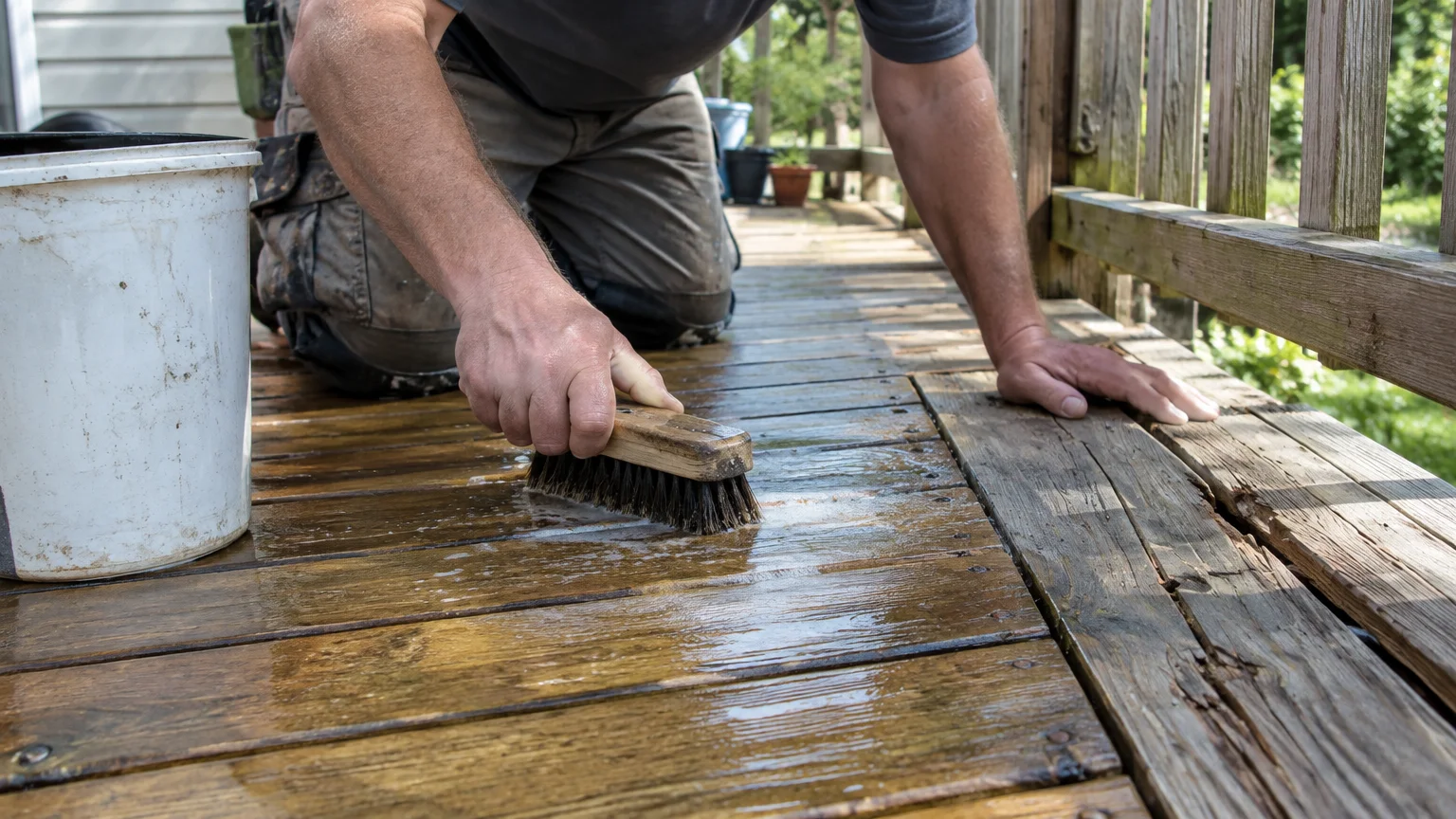
Pick a cleaner labeled for wood decks and the kind of dirt you need to remove. Use it as directed. Do not let it dry on the boards unless the label says that is part of the process. Use a soft brush along the grain, then rinse with a light, steady flow of water.
Clean from one end of the deck to the other. This helps keep dirty water from running over a clean area. Keep the rinse under control and do not aim it into gaps, doorways, or damaged wood. If a mark stays, stop and check the surface before trying more force.
Avoid raised grain, splintering, and surface marks
Softwood fibers can lift when you scrub too hard or use a strong water stream. Raised grain means the wood fibers stand up from the board. It can feel rough and catch on bare feet or fabric. Uneven cleaning can also leave lines that remain after the deck dries.
Use a soft-bristle brush and move it along the grain. Do not use a wire brush or scrape the boards with a sharp tool. Try a stronger cleaning step on a hidden spot first. Stop if the board turns fuzzy, starts to splinter, or changes color in a way that concerns you.
How should you clean a hardwood deck?
Clean hardwood based on its kind, finish, and current condition. Use a cleaner labeled for that wood and start with gentle hand washing. A dense board may respond differently from softwood, but the wrong cleaner or too much force can still leave marks or change its color.
Match the cleaning approach to the species and finish
Check the cleaner label for advice about the wood and any coating on the deck. A product made for bare wood may not suit stained or sealed boards. If you do not know the finish, test a hidden spot and let it dry before cleaning the whole deck.
Brush along the grain, use only the amount of cleaner shown on the label, and rinse without holding water in one place. Keep tools away from board edges that are worn or split. Stop if the finish begins to lift. A professional can help decide whether the deck needs cleaning, repair, or finish removal.
Remove grime without stripping the wood’s natural appearance
The goal is to remove dirt while keeping the boards sound and even. Do not attack every dark mark with a stronger chemical or harder scrubbing. Sun and age can change the wood’s color, so cleaning may not bring back its first shade.
For stuck dirt, let the approved cleaner sit for the time stated on its label. Brush gently, then rinse the whole area so no cleaner stays behind. Check the deck again after it dries. Wet wood can look darker than dry wood. If you want to keep the natural look, test each product before using it across the deck.
When should you use a pressure washer on a wood deck?
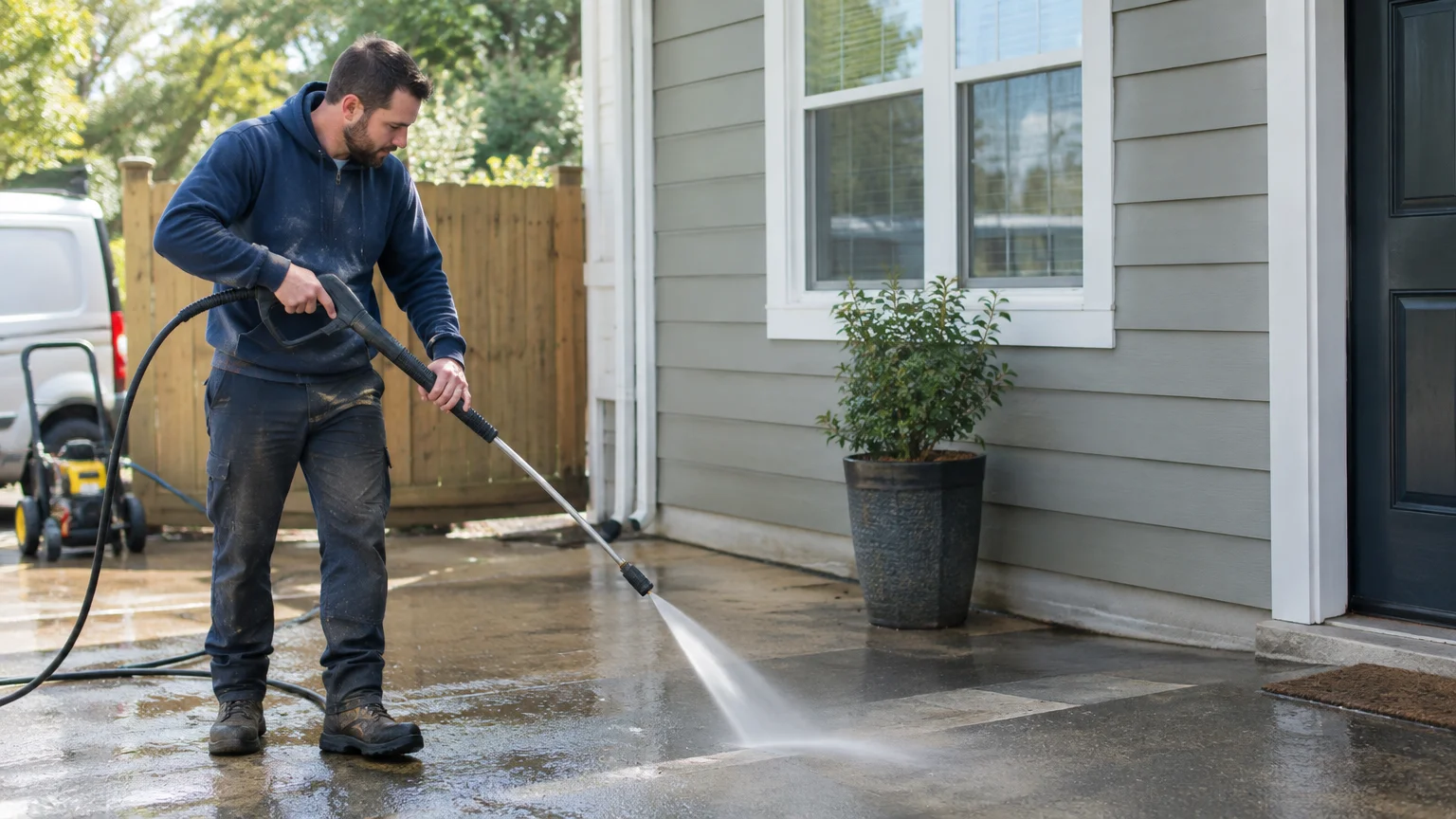
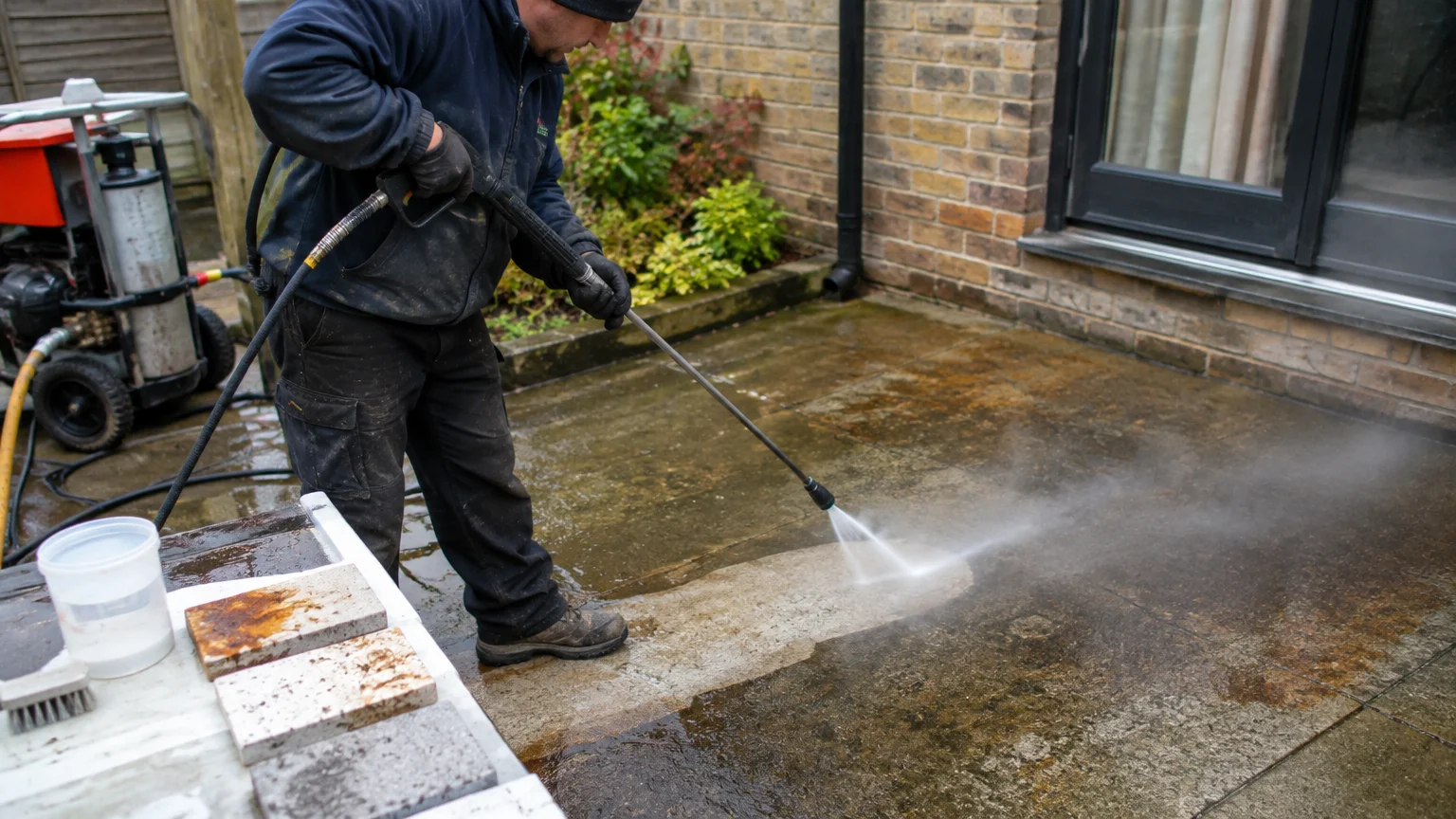
A pressure washer may help with heavy dirt, but it can harm wood if it is too close or too strong. Not every deck needs one. Hand cleaning is often safer for light dirt, worn boards, softwood, or a finish you cannot identify.
How to assess equipment, spray pattern, and operator control
Read the washer and cleaner directions before you begin. Use a wide spray and keep the wand moving across the boards. Test a hidden spot first. Watch for raised grain, lines, splinters, or color changes. Stop if you see any sign of damage.
Never aim the spray at people, pets, or nearby openings. Hold the wand firmly and do not spray straight into gaps or damaged wood. You should be able to guide the wand at all times. If the deck is high, slick, or hard to reach, do not put yourself at risk.
When hand cleaning or professional service is the safer choice
Hand cleaning works well for everyday dirt and small areas. A brush, suitable cleaner, and careful rinse can handle many simple jobs. You do not need a professional to sweep leaves, clear gaps, or gently wash sound boards if you can work safely and follow the label.
A professional may be a better choice when boards are fragile, the finish is failing, or gentle cleaning cannot clear deep grime. Help can also make sense when you do not know the wood type or cannot control the equipment safely. Deck Cleaning Services can help with a larger job. Pressure Washing Largo can discuss a method that fits your deck’s surface and condition.
What should you do after cleaning a wood deck?
Let the deck dry, then check it in good light before using a finish. Do not stain or seal damp wood. Follow the product directions for drying and surface care, since the needs can vary by product and weather.
Allow the deck to dry and inspect the results
When the boards are dry, look for leftover dirt, rough grain, missed edges, and loose hardware. Check from more than one angle, since changing light can make marks easier to see. Do not cover a damaged board with stain or sealer.
Put furniture back only when the deck is dry enough that it will not trap moisture. Keep the area clear if repairs or finish work are still needed. A second gentle wash may be safer than using more force on one stubborn mark. If the surface stays rough or uneven, get advice before sanding or coating it.
Prepare for staining or sealing and plan routine maintenance
Stain adds color, while sealer helps protect the wood. Some products do both. Read the label to learn how to prepare your boards. Before applying a coating, make sure the wood is clean, dry, and sound. Test the product in a hidden spot first.
Basic care can be easy. Sweep away leaves, clear the gaps, and clean spills before they sit. Check now and then for loose boards, worn finish, or new growth in damp spots. Gentle care can keep dirt from building up. A seasonal check can help you spot small problems before they become harder to handle.
Frequently Asked Questions
Can a pressure washer clean composite decking?
Yes, but follow the care guide from the deck maker. Composite boards can still get marks from a narrow spray or too much force. Start with a cleaner made for composite decking, a soft brush, and a gentle rinse. Test an unseen spot first, and stop if the surface changes.
How often should a wood deck be cleaned?
Clean the deck when dirt, leaves, or growth starts to build up, rather than using a fixed schedule. Shade, weather, nearby trees, and foot traffic all affect how fast it gets dirty in Largo. Sweeping often and cleaning spills soon can reduce the need for a deeper wash.
Can wood deck cleaning remove every dark stain?
No. Cleaning can remove many marks on the surface, but it may not fix changes caused by sun, old finishes, or damage inside the wood. Choose a deck-safe product and test it first. If a mark remains, stronger chemicals or pressure may do more harm than leaving the color as it is.
Should a deck be cleaned before staining?
Yes. The surface should be clean and prepared as the stain maker directs. Dirt and loose old finish can affect how the coating looks and holds. Let the wood dry as directed, then check it for damage. A small test area can help you see the final color.
Is professional cleaning safer for a worn deck?
It can be, especially if boards are soft, splintered, or covered with a failing finish. A professional can check the surface and choose a method for its condition. You can still sweep and gently clean a sound deck yourself when the work feels safe.
Key takeaways
- Identify the wood and finish before choosing a cleaner.
- Start with gentle hand cleaning and test a small hidden spot.
- Softwood can become rough or marked when cleaned too harshly.
- Use a pressure washer only when you can control it safely.
- Let the deck dry and check its condition before staining or sealing.
Conclusion
Safe wood deck cleaning begins with knowing what the boards can handle. Careful setup, gentle methods, and enough drying time help protect both softwood and hardwood. You can manage simple upkeep yourself when the deck is sound, but worn boards or an unknown finish may need expert care. Contact us to discuss a cleaning method for your deck with Pressure Washing Largo.
If you are not sure what you are dealing with, it is worth having someone look at it before it turns into a bigger job. Get in touch with Pressure Washing Largo today and we will tell you where you stand.