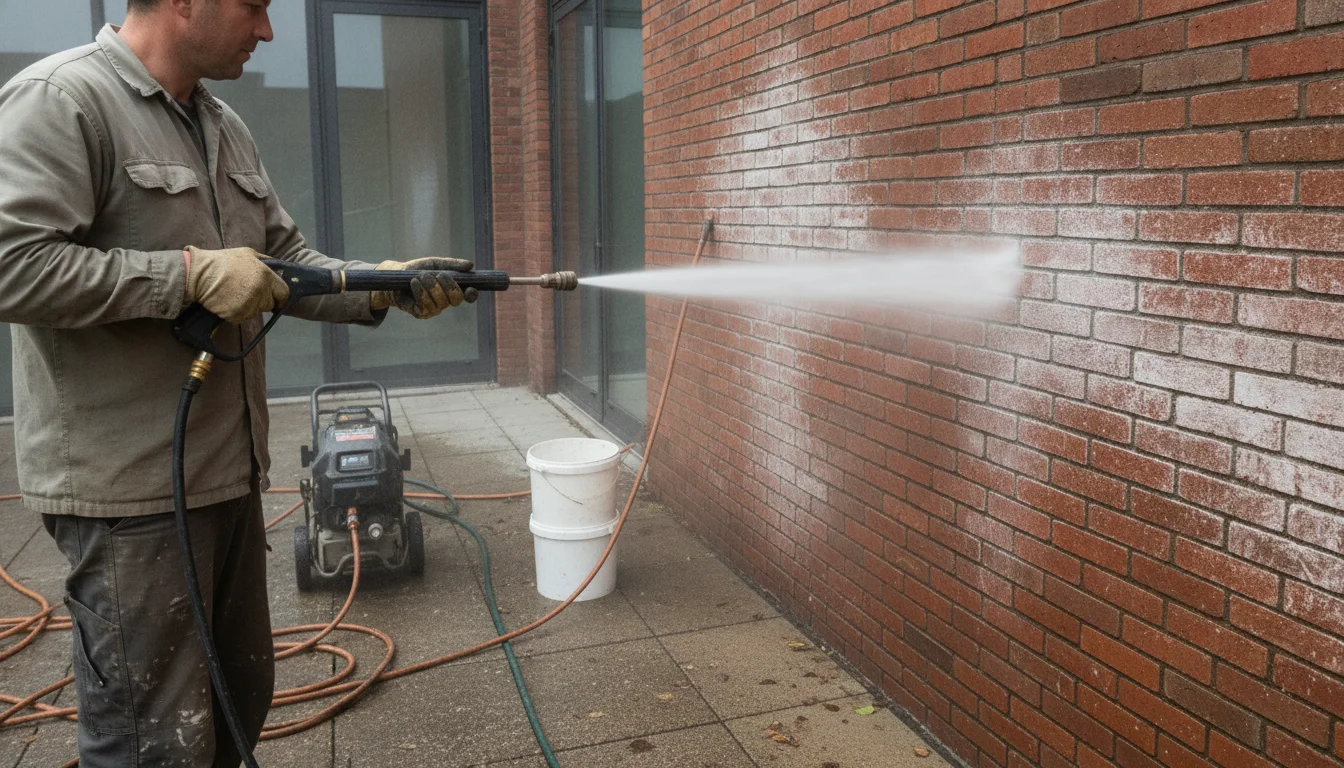
You spot white, chalky streaks on your steps or wall in Largo. You wipe it and it comes back after rain. That’s common, and it has a name. Efflorescence is a white, powdery salt that forms when water moves through brick, stucco, or mortar and dries on the surface. In short: cleaning can remove the existing deposits, but they will return unless the moisture pathway is corrected. This guide from Pressure Washing Largo explains what cleaning can fix, what it cannot, and how to stop it for good.
Executive summary: In Largo’s humidity and frequent summer storms, masonry often cycles wet-to-dry, carrying salts to the surface as efflorescence on brick. Use low-pressure cleaning and masonry-safe chemistry to clear it now, and address drainage, leaks, and ventilation so it doesn’t reappear.
Key Takeaways
- Efflorescence is salt left behind when water evaporates from masonry; it’s a symptom of moisture movement.
- Light deposits wash away; hard crusts need specialty cleaners and more dwell time—never high pressure.
- If moisture sources remain, stains return. Fix drainage, leaks, and vapor traps.
- Choose breathable sealers so walls can dry; sealing the wrong way can worsen salts.
Efflorescence on Brick and Stucco: Causes, Signs, and Risks
Efflorescence happens when water dissolves salts inside masonry. As that water moves to the surface and dries, the salts stay behind as a white film. Brick, block, mortar, and stucco all hold small amounts of these salts. New builds and damp walls show it most, especially in Largo after heavy rain followed by sun and wind.
You may see a light, dusty smear that wipes off, or a hard, crusty layer that clings in lines or patches. Streaks under sills, near downspouts, or at grade are clues. Persistent white stains can signal a bigger moisture issue, like leaks, poor grading, clogged gutters, or trapped vapor behind paint.
Left alone, salts can pull water in and keep walls wet. That can weaken mortar, make paint peel, and even flake brick faces over time. Catching the moisture source early protects the wall and limits future cleaning.
What Washing Will Remove—and What It Won’t
Light, loose powder often rinses away with a gentle wash. A mild cleaner helps lift it fast. Hard, crystalline crusts bond to pores and need a specialty cleaner and more dwell time. High pressure is not the answer. On stucco and soft mortar, strong pressure can gouge, etch, or force water deeper.
Even after a good clean, stains can return if moisture still pushes through the wall. When salts remain inside, new deposits form as the wall dries again. That is why washing is one step, and fixing water sources is the other.
Safe Cleaning Methods for Masonry and Painted Exteriors
Start with safety and care. Test a small, hidden spot first. Wear gloves and eye protection. Pre-wet plants and soil and cover delicate shrubs. Keep run-off away from storm drains where required; Pinellas County rules treat unnecessary discharge as an illicit release.
Common cleaner types:
- Detergent cleaners: Good for light powder. Gentle and safer for paint.
- Acid cleaners (masonry-grade): Break down salt crusts. Use low strength. Follow label. Rinse well.
- Specialty efflorescence removers: Often buffered acids. Designed to reduce etching and fumes.
Soft washing means low pressure water plus the right cleaner. It protects surfaces while the chemistry does the work. Here is a simple process:
- Pre-wet the wall so pores are damp but not dripping.
- Apply cleaner from the bottom up to avoid streaks.
- Let it dwell per label. Do not let it dry.
- Gently agitate with a soft brush on stubborn spots.
- Rinse from the top down with low pressure until clear.
If you use an acid cleaner, neutralize after the rinse with a mild alkaline rinse per label. Then do a post-clean check. Look for any etched spots, streaks you missed, or areas that need a second light pass. For larger buildings, consider Building Washing Services to scale this process safely in Largo. A local team like Pressure Washing Largo has the chemistry know-how, low-pressure tools, and the eye to spot hidden moisture paths.
Note: If the white haze is on painted masonry or vinyl siding, confirm what you’re seeing. True efflorescence forms in porous materials; oxidized paint on vinyl siding looks chalky but needs a different soft washing approach.
Keep Efflorescence from Coming Back
Cleaning helps today. Stopping water helps for the long run.
Fix common sources:
- Clear gutters and downspouts; extend them away from the wall.
- Improve grading so water flows away, not toward the house.
- Adjust sprinklers so they do not wet walls.
- Seal small leaks at sills, caps, and joints.
Let new masonry cure. Fresh mortar needs several weeks to cure before sealing, so follow the sealer maker's guidance. Manage vapor behind painted walls with vents and breathable coatings. On brick, repoint weak joints, check flashing, and keep weep holes open so walls can drain.
Use sealers with care. Pick breathable, vapor-permeable sealers on masonry so moisture inside can escape. Trapped water can make salts worse. When in doubt, ask about Brick Cleaning Services for product guidance.
Know when to call a pro. Thick crusts, historic brick, painted stucco, or tall walls need trained help. Pressure Washing Largo works across Largo every week to clean safely and solve water issues.
Frequently Asked Questions
Will pressure washing remove the white stains on my brick?
Gentle washing with the right cleaner can remove light deposits. Hard crusts often need a masonry-safe acid or specialty remover. Avoid high pressure on brick, mortar, and stucco, as it can damage the surface and drive water deeper. Fixing moisture is key to keeping stains away. If you need a hand, Pressure Washing Services can be tailored for delicate masonry.
Is efflorescence harmful to my home?
The salts are not toxic, but they point to water in the wall. Ongoing moisture can weaken mortar, peel paint, and cause brick to flake. Treat the stain and the water source to protect the wall and reduce future cleaning needs.
How do I stop the stains from coming back?
Remove the current deposits, then remove the water path. Clear gutters, fix leaks, adjust irrigation, and improve drainage. Use breathable sealers on masonry. Let new mortar cure before sealing. When the wall stays dry inside, efflorescence usually stops.
Can it show up on concrete paths or drives?
Yes, similar white haze can appear on concrete. Light deposits may rinse off; persistent crusts need a targeted cleaner. Driveway Cleaning Services can address residue on flatwork while protecting nearby landscaping.
Key Takeaways
- Efflorescence is white salt left by water moving through masonry.
- Soft washing and the right cleaner remove deposits without damage.
- High pressure can harm stucco and mortar and is not needed.
- Fix leaks, grading, and drainage to prevent stains from returning.
- Breathing walls and proper curing help stop repeat problems.
Conclusion
Efflorescence responds best to low pressure, smart chemistry, and real moisture fixes. House Washing Services and Brick Cleaning Services can help with both the clean and the cause throughout Largo. Pressure Washing Largo is ready to assess, clean, and guide long-term prevention. Contact us.
Related Articles
- Driveway Washing Prep Checklist: What to Move, Treat, and Protect First in Largo
- What Is Soft Washing? Gentle House Washing in Largo | Pressure Washing Largo
- Soft Washing Cedar Siding: Safer Than Pressure Washing in Largo
- Pressure Washing vs Power Washing
- Window Cleaning Service: What Pros Include, How It Works





