Window screen cleaning is safest when screens are removed gently, brushed with mild soap, rinsed with care, and dried fully before they go back. Soft tools help protect mesh, seals, and frames. High pressure, harsh cleaners, and rough scrubbing may stretch the mesh or harm its coating.
Clean screens let fresh air enter with less dust, pollen, and outdoor debris. Clean tracks also help windows slide with less strain. These simple steps can help homes, rentals, storefronts, and offices look better and avoid small window problems.
Table of Contents
- What Is the Safest Way to Clean Window Screens?
- How Do You Clean Window Screens Without Damaging the Mesh?
- Can You Wash Window Screens With a Pressure Washer?
- How Should You Clean Window Tracks and Sills?
- How Often Should Window Screens and Tracks Be Cleaned?
- What Mistakes Can Damage Window Screens During Cleaning?
- Should Window Screen Cleaning Be Combined With Window Washing?
- Frequently Asked Questions
What Is the Safest Way to Clean Window Screens?
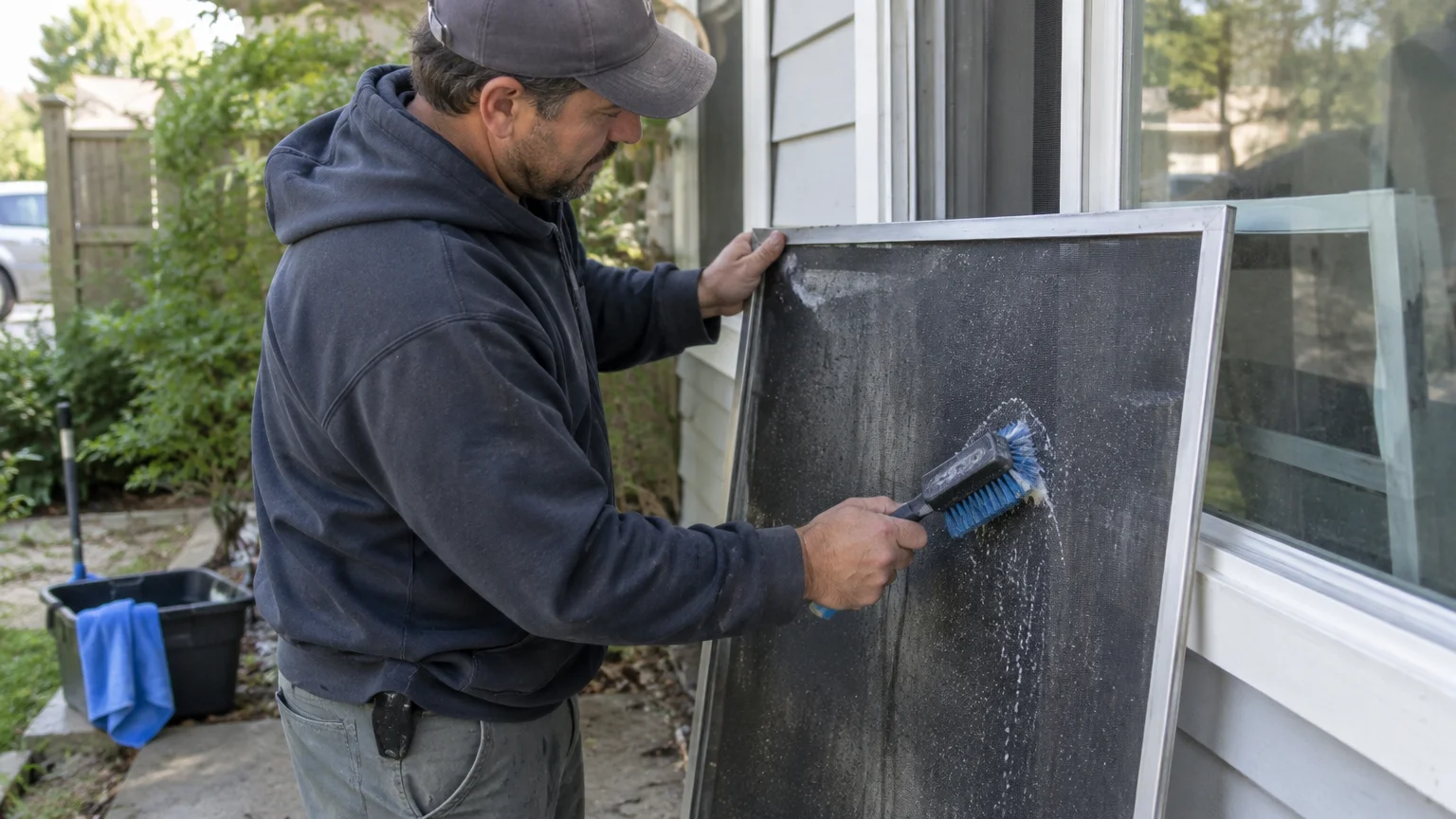
The safest method is to remove each screen, place it on a clean flat surface, and use a soft brush with mild soapy water. This keeps cleaner away from the glass and lets you reach both sides. It also makes loose mesh, bent corners, and broken seals easier to find.
Screens are often light, but their frames may bend. Before removal, check how the screen fits in the window. Many screens use small tabs, springs, or latches. Release these parts gently instead of pulling on the mesh.
How to remove screens without bending the frame
Open the window enough to reach the screen safely. Look for tabs near the sides or bottom. Hold the frame with both hands, release the tabs, and tilt the screen as its design allows. If it feels stuck, stop rather than force it.
Place the screen on a towel, clean drop cloth, or smooth work surface. Grass, gravel, and rough concrete can catch the mesh. A quick photo before removal can help you put the screen back correctly.
Which tools and cleaning solutions are safe for mesh?
Good tools include a soft nylon brush, a vacuum with a brush head, a bucket, mild dish soap, clean water, and soft towels. A low-pressure garden hose can rinse away loose soap. Move the brush lightly across the mesh instead of pressing down.
Avoid bleach, solvent cleaners, abrasive powders, and stiff wire brushes. These products can harm mesh, coatings, and frame finishes. Test a small area first if the screen has an older finish or unknown material. Pressure Washing Largo can help Largo homeowners choose a safe method for the screen and frame.
How Do You Clean Window Screens Without Damaging the Mesh?
Gentle window screen cleaning starts with dry dust removal and ends with a full rinse and careful drying. Remove dry debris before adding water. Otherwise, dirt may turn into a paste and spread over the mesh and frame.
This method works for many aluminum, fiberglass, and coated screens. Still, check each screen before cleaning. Brittle mesh, loose corners, and deep tears may need repair or replacement instead of heavy scrubbing.
A gentle step-by-step screen cleaning method
- Inspect the screen. Look for tears, loose spline, bent corners, and weak frame joints.
- Remove dry dust. Use a soft vacuum brush or hand brush on both sides.
- Mix mild soap and water. Keep the mix light so it rinses away easily.
- Brush with little pressure. Work in small sections from top to bottom.
- Rinse both sides. Use a gentle stream that does not push the mesh inward.
- Dry before reinstalling. Stand the screen upright or lay it on a clean towel.
The spline is the narrow cord that holds mesh in the frame channel. It may loosen when a brush catches its edge. Follow the frame with the brush instead of digging into the corners.
How to rinse, dry, and inspect screens
Rinse until no soap remains. Leftover cleaner can attract dust and leave a dull film. Do not use a tight, strong water stream, since it may stretch older mesh.
After rinsing, let the screen dry in a clean, shaded place. Hot sun may make some materials warm and flexible. Before putting it back, check for pollen, trapped dirt, and loose spline. The frame should sit squarely without pressure.
In Largo, seasonal pollen and dry dust may collect quickly on screens. Careful service from Pressure Washing Largo can help protect the parts while keeping the work neat and orderly.
Can You Wash Window Screens With a Pressure Washer?
Most window screens should not be cleaned with a standard pressure washer. Its narrow spray may stretch mesh, push it from the frame, or tear weak spots. It can also force water into tracks, seals, and nearby wall materials.
Pressure washing can suit strong exterior surfaces, but screens need a softer method. Spray angle, distance, nozzle type, and water pressure all change the risk. Damage can happen even when the spray looks small.
Why high pressure can stretch or tear screen mesh
Mesh uses many thin strands that cross and support each other. A focused spray can move those strands out of shape. Old fiberglass screens may become brittle, while aluminum mesh may crease or bend.
The frame can suffer too. Water may enter corners, push out spline, or loosen a frame joint. If the screen stays installed, spray may carry dirt into the track. That can make the window harder to open and close.
High pressure is also a poor choice for delicate glass and trim. A safer plan is to remove the screen and clean it away from the window. For building exteriors, a trained worker may choose soft washing or controlled low-pressure rinsing instead.
When soft-brush or low-pressure washing is more appropriate
A soft brush works well for dust, pollen, and light grime. A gentle hose rinse can remove soap after brushing. For commercial work, a pure-water rinse may help reduce spots on nearby glass. Pure water has minerals removed, so it leaves fewer marks as it dries.
Homeowners do not need a professional for simple, ground-level cleaning when screens are easy to remove and in good shape. Professional help makes more sense when screens are high, fragile, hard to reach, or part of a large property. The same care applies to storefronts, rentals, and shared buildings.
How Should You Clean Window Tracks and Sills?
Clean tracks and sills by removing loose debris first. Then wipe the remaining soil with controlled moisture. Tracks collect dust, pet hair, pollen, sand, and small leaves. If this material stays in place, rollers may drag and windows may not close well.
A track is the channel that guides a sliding window. A sill is the lower ledge that supports the window and helps move water away. Both may include rollers, seals, drainage holes, and small moving parts.
How to vacuum and flush loose debris from tracks
Use a vacuum with a narrow tool to remove dry dirt. A soft detailing brush can loosen material in corners while the vacuum collects it. This is safer than pushing debris deeper into the channel with a wet cloth.
After vacuuming, wipe flat areas with a damp cloth. Heavy buildup may need a small amount of mild soap and water. Do not pour water into the track. Use a wet vacuum or towel to remove extra moisture when needed.
Some tracks have weep holes. These small openings let water drain outside. Keep them clear, but do not force a sharp object deep inside. A soft brush or gentle flush is safer.
Ways to protect rollers, weep holes, seals, and frames
Do not scrub rollers with hard tools. Do not pull, cut, or soak seals with harsh chemicals. Painted and finished frames need a cleaner that matches the surface.
After cleaning, the window should move smoothly without grinding or sticking. Use lubricant only when the window maker allows it. Some products collect dust. If the window still binds, the cause may be a worn roller, bent track, or frame problem.
Window and Gutter Cleaning may fit into a larger property care visit. Each surface still needs the right method. Roofs, walls, glass, and tracks should not all receive the same spray or cleaner.
How Often Should Window Screens and Tracks Be Cleaned?
Most homes benefit from screen and track cleaning during regular seasonal upkeep. More frequent care may help when dust, pollen, pets, or nearby work add debris. There is no single schedule for every property. Timing depends on the local setting and how fast dirt returns.
Screens may look dull after a dry spell or heavy pollen season. Tracks may need care sooner because dirt can affect window movement. Businesses may also clean more often when fingerprints, road dust, or customer traffic affect the glass and frames.
Signs that screens and tracks need attention
Common signs include:
- Dust or pollen that blocks clear airflow through the mesh
- Dark lines, grit, or plant debris inside the track
- A window that drags, sticks, or makes a rough sound
- Water that sits on the sill instead of draining away
- A screen that looks gray, stained, loose, or partly blocked
- Small tears, bent corners, or spline that no longer fits tightly
Pets can add hair and dander. Trees can add seeds and pollen. Homes near busy roads may collect more fine dust. Nearby construction can add grit that should be removed before it scratches glass or finishes.
How weather and property use affect timing
Wet weather can leave mud in tracks. Dry weather can send fine dust into the mesh. Coastal air, strong sun, and storms may also affect frame finishes over time. In areas with heavy pollen, cleaning after the main pollen period may help.
A rental turnover calls for a close look at screens, tracks, and sills. Storefronts may need a regular plan that matches foot traffic and road dust. Pressure Washing Largo serves Largo and nearby communities, including Downtown Largo, Harbor Bluffs, Clearwater, Seminole, Belleair, and Pinellas Park.
What Mistakes Can Damage Window Screens During Cleaning?
The most common mistakes are using too much force, picking a harsh cleaner, and reinstalling a screen before it dries. These errors can turn a simple task into a repair problem. A slow inspection helps prevent most damage.
Do not clean a loose screen while it remains in a window opening. The frame may fall, twist, or strike the glass. Remove the screen first when the design allows it.
Common problems with harsh chemicals, abrasive tools, and excess water
Avoid these habits:
- Scrubbing mesh with a stiff brush or rough sponge
- Spraying bleach or solvent cleaner without checking the material
- Using a narrow pressure-washer stream on the screen
- Pulling on mesh, spline, tabs, or frame corners
- Letting dirty water collect inside tracks and weep holes
- Reinstalling a wet screen against a damp frame
Rinse soap away fully. A cleaner that is safe for glass may not be safe for mesh, rubber seals, paint, or coated metal. Follow product directions, especially on older windows.
When a screen needs repair or replacement instead of cleaning
Cleaning will not fix torn mesh, a badly bent frame, or missing spline. A small loose section may need repair. A large tear may call for new mesh. If the frame is not square, replacement may be safer.
A homeowner can often replace a small screen on the ground with patience and the right tools. High screens, unusual shapes, storm windows, and fragile frames are better handled by someone with proper equipment. This helps avoid falls, glass damage, or a poor seal.
Should Window Screen Cleaning Be Combined With Window Washing?
Yes, combining screen cleaning with window washing can give better results. Dust is removed from the parts around the glass. A useful order is to clean screens first, clear tracks next, wash frames and glass, and then check nearby areas for runoff or missed soil.
The order may change when a property has heavy exterior dirt. A professional may wash outside walls first, let runoff clear, and then finish the windows. The key is to keep dirty water from drying on clean glass or pushing debris back into tracks.
The best sequence for glass, frames, screens, tracks, and exterior washing
A practical sequence is:
- Inspect glass, frames, screens, tracks, sills, and nearby surfaces.
- Remove screens and clean them on a protected surface.
- Vacuum loose dirt from tracks and sills.
- Clean frames and tracks with controlled moisture.
- Wash interior or exterior glass with suitable tools.
- Rinse nearby surfaces and check for drips, spots, or trapped debris.
- Reinstall dry screens and test window movement.
For exterior work, the method should match the surface. Soft Washing Services can suit delicate siding and other areas that should not receive strong pressure. Glass and screens still need separate care. Related work such as driveway cleaning, concrete cleaning, deck cleaning, and fence cleaning also requires the right tools for each surface.
Key takeaways for cleaner, smoother-operating windows
- Use soft tools. A brush, mild soap, and gentle rinse are usually enough.
- Remove screens with care. Do not pull on mesh or force stuck tabs.
- Keep pressure low. High pressure can stretch mesh and harm seals.
- Clean tracks when dry debris is loose. Vacuum before adding water.
- Check for damage. Tears and bent frames may need repair or replacement.
Conclusion
Good window screen cleaning protects more than appearance. It helps keep airflow clear, supports smooth window movement, and removes dirt before it settles in seals and tracks. Homeowners can handle simple ground-level work when screens are sound. Larger, higher, or fragile systems need trained care.
For a careful local option Pressure Washing Largo can help property owners with screens, tracks, glass, and related exterior cleaning. Contact us to arrange window care that suits the property.
Frequently Asked Questions
Can I clean window screens while they are still installed?
A light vacuum may remove surface dust while a screen stays installed. Wet cleaning is safer after removal because water and dirt can enter the track. If the screen is high, stuck, or fragile, do not force it. Ask for professional help instead.
What soap is best for window screens?
Mild dish soap mixed with water is suitable for many screen materials. Keep the mix light and rinse it away fully. Strong bleach, solvents, and abrasive cleaners may harm mesh, paint, seals, or frame finishes. Test a small area on older screens.
Why does my window still stick after cleaning the track?
Dirt may not be the only cause. A worn roller, bent track, damaged seal, or frame issue can also make a window stick. If gentle vacuuming and wiping do not help, have the window checked instead of forcing it. Extra force may damage the frame or glass.
Can a pressure washer clean screens safely?
A standard pressure washer is usually too strong for window screens. Its spray may stretch mesh, loosen spline, or drive water into tracks and seals. A soft brush and gentle rinse are safer. Exterior walls may need low-pressure care, but screens should be treated separately.
How do I know if a screen needs replacement?
Replacement may be needed when mesh has a large tear, the frame is badly bent, or the spline will not stay in place. Small loose areas may be repairable. A screen that no longer fits squarely should not be forced into the window. It may fall or damage the frame.
If you are unsure what you are dealing with, have the screen checked before the problem grows. A careful review can help show whether cleaning, repair, or replacement is the right next step.
If you are not sure what you are dealing with, it is worth having someone look at it before it turns into a bigger job. Get in touch with Pressure Washing Largo today and we will tell you where you stand.





