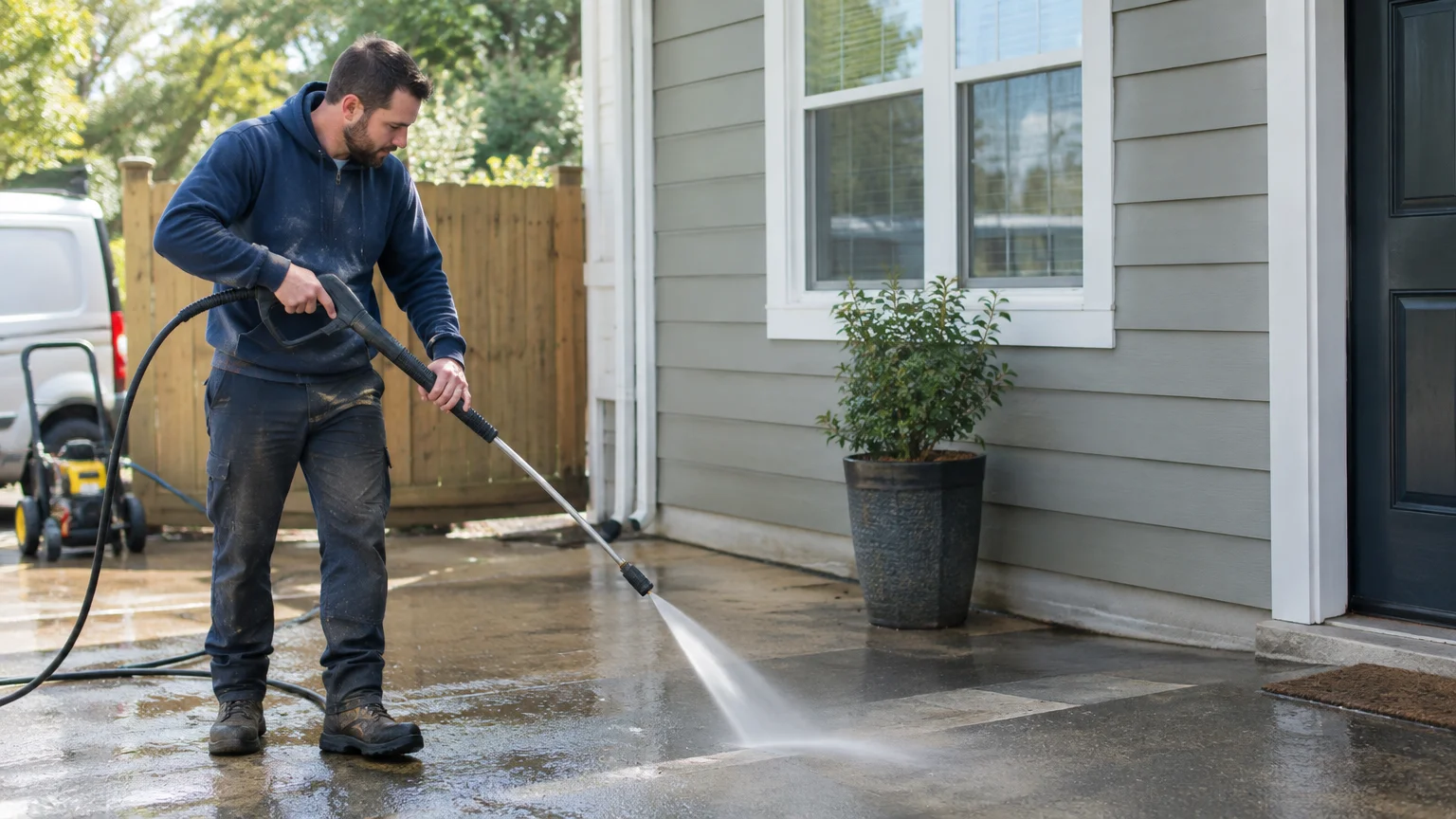
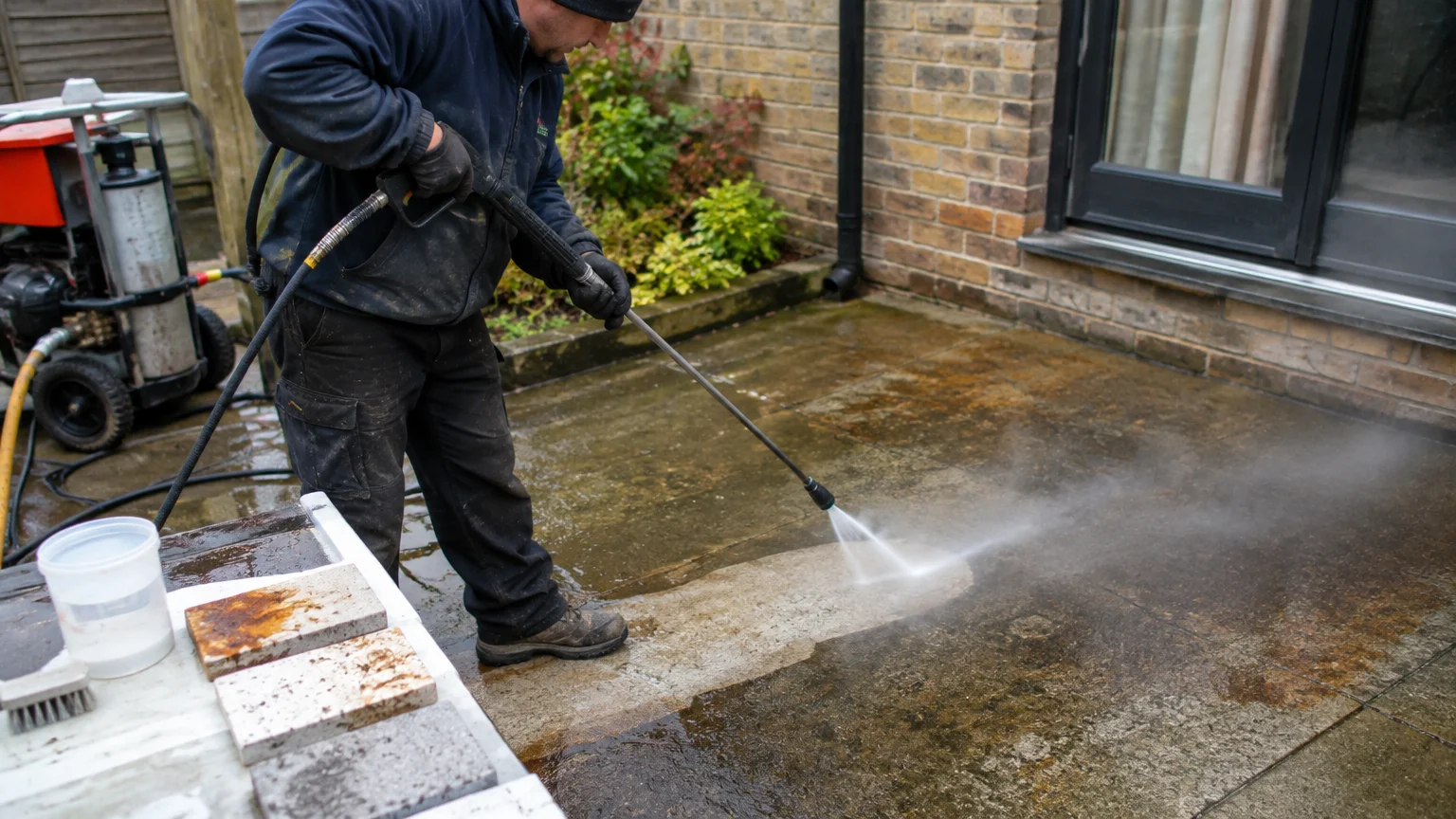
An insured pressure washing company can help protect property owners from some covered injuries and damage claims. A license shows that the business meets a stated local rule. A bond may cover certain broken duties. Before booking, verify each claim, review the work plan, and confirm that coverage is active.
Paperwork matters, but it is only one part of a safe hiring choice. The company should also explain its cleaning method, protect plants and surfaces, control dirty water, and provide a clear written scope. Pressure Washing Largo can help property owners know which questions to ask before work starts.
Table of Contents
- What does it mean for a pressure washing company to be licensed?
- What does insurance cover during pressure washing?
- What does it mean when a pressure washing company is bonded?
- Does every pressure washing company need the same credentials?
- How should you verify a pressure washing company’s credentials?
- What questions should you ask an insured pressure washing company?
- What warning signs should you look for before hiring a pressure washer?
- What should a written pressure washing estimate include?
- What happens on the day a pressure washing company cleans your property?
- How do you choose the right pressure washing contractor for your property?
- Frequently Asked Questions
What does it mean for a pressure washing company to be licensed?
A license means a government office has allowed a business or worker to do certain work. The rules are not the same in every part of the United States. Some areas license pressure washing businesses. Others require a general business license, contractor registration, or local tax registration.
A license does not prove that every job will be done well. It mainly shows that the company completed a required registration or approval step. You should still ask about insurance, training, experience, cleaning methods, and written service details.
Which licenses or registrations may apply to pressure washing contractors?
Rules may come from a state, county, city, or other local office. A business may need general registration, a contractor license, an environmental permit, or permission tied to wastewater. The rules can change with the surface, building type, and cleaning products used.
A company working at a large business site may need more documents. A property manager may ask for vendor registration, safety papers, or proof of training. These needs are separate from the basic registration required to run a business.
How can you verify a company’s license before booking?
Ask for the license name, number, issuing office, and end date. Then check the issuing agency’s official website or contact that office. The business name on the record should match the name shown on the proposal or agreement.
A careful contractor should answer these questions clearly. A missing license does not always mean the work is illegal because rules differ by place. Still, unclear answers deserve more checking before service begins in Largo or nearby areas such as Downtown Largo and Harbor Bluffs.
What does insurance cover during pressure washing?
Insurance may help with certain covered claims from accidental damage or injuries. An insured pressure washing company should explain its policy types and provide current proof from its insurer or agent. Coverage has limits and exclusions, so insurance does not mean every problem will be paid.
Pressure washing can affect siding, paint, windows, screens, lights, pavers, wood, plants, and nearby cars. Water can also enter openings or carry dirt into drains. A careful contractor checks these risks and chooses a method that fits each surface.
What does general liability insurance protect against?
General liability insurance may respond to certain claims for bodily injury or property damage. A covered claim could involve damage to siding or a visitor slipping because of work conditions. The policy wording decides whether the claim is covered.
Ask to see a certificate of insurance. This certificate is useful proof, but it is not the full policy. You may also ask if the policy is active for the planned date and if the business name matches the company doing the work.
Why does workers’ compensation coverage matter on your property?
Workers’ compensation may help with job-related injuries to eligible employees. State law and policy rules control how it works. Without proper coverage, a serious injury can create confusion about medical bills or lost wages.
Ask how the company handles employees and subcontractors. A written answer helps on larger homes, apartments, offices, hotels, and business sites. The company should also explain how it controls wet areas, hoses, ladders, traffic, and electrical risks.
What does it mean when a pressure washing company is bonded?
A bond is a financial promise between a contractor, a surety company, and a protected party. A surety company is a business that backs the promise. If the contractor breaks a covered duty, a claim may be possible under the bond terms. A bond is not the same as insurance.
Bond types differ. A license bond may support a licensing rule. A performance bond may relate to a set contract. A payment bond may cover certain payment duties on larger jobs. Most home cleaning work does not have the same bond rules as public or large commercial work.
How is a bond different from business insurance?
Insurance moves certain covered risks from the business to an insurer. A bond is more like a promise that the contractor will meet a stated duty. If a surety pays a valid bond claim, the contractor may need to repay the surety.
Do not treat the word bonded as proof of better work. Check it along with the written scope, safety plan, references, and insurance. A bond may protect a government office or another party instead of the homeowner.
What can a bond potentially cover if a contractor fails to meet obligations?
A bond may address a failure listed in the bond agreement. Examples include breaking a licensing rule or failing to meet a defined contract duty. The customer must follow the claim steps and provide records that support the issue.
A bond does not replace a careful agreement. It may not cover normal dissatisfaction, excluded damage, or work outside the written scope. Ask who is protected, which duties are covered, and how a claim must be filed.
Does every pressure washing company need the same credentials?
No. Credential needs depend on location, business structure, job type, building size, and cleaning method. A small home job may have different rules from work at a hotel, shopping center, apartment community, or industrial site.
Pressure washing also means more than high water pressure. Soft washing uses lower pressure and cleaning solutions made for the surface and soil. A contractor may need extra training when using chemicals, working near roads, handling wastewater, or cleaning at height.
How do requirements vary by location and type of work?
A city may require business registration even when the state does not require a special pressure washing license. Local stormwater rules may control where wash water can go. Historic buildings, shared spaces, and public sidewalks may need added approval or safety steps.
Ask which rules apply to the exact property. A contractor working in Largo may know local needs, but you should still confirm important rules with the proper agency. Florida rules should not be assumed to match rules in another state.
What additional credentials may matter for commercial properties?
Commercial owners may request safety plans, proof of insurance, worker training records, chemical information, traffic controls, and vendor forms. A site may also require background checks or special work hours. These steps help manage risk while the crew works.
Hotels, offices, and stores may need plans that limit disruption. The contractor should explain how workers will protect doors, guests, tenants, signs, displays, and nearby cars. The same care helps investors preparing a rental home between tenants.
How should you verify a pressure washing company’s credentials?
The best method is to check documents with the agency or insurer that issued them. Do not rely only on a logo, online badge, or claim that the company is covered. The business name, address, policy dates, license details, and job type should fit together.
Request documents before work begins and keep them with the written agreement. Some private information may be removed from a certificate, but the main facts should remain clear. Pressure Washing Largo should face the same basic checks as any other pressure washing contractor serving Largo.
Which documents should you request before work begins?
Useful documents may include a business license or registration, a certificate of insurance, a bond certificate when needed, and a written scope of work. Commercial customers may also request safety plans, chemical information, or proof that subcontractors are covered.
Ask who issued each document and whether it applies to the business doing the work. A certificate for one legal company may not cover another company with a similar name. The proposal, insurance record, and payment instructions should show the same contracting party.
How can you check whether coverage is current and authentic?
Contact the insurance agent through details from an independently checked source. Ask if coverage is active, if its limits fit the work, and if the contractor is the insured business. The agent may not share every policy detail.
Check license records through the issuing agency. Pause if a contractor refuses normal checks, sends changed papers, or pushes you to approve work quickly. Good records make a hiring choice easier.
What questions should you ask an insured pressure washing company?
A good contractor should welcome clear questions. Ask who will do the work, which surfaces are included, what method will be used, and how the property will be protected. The answers should be clear enough for another person to understand the plan.
The focus should be safe results, not the highest pressure setting. Strong spray can harm wood, mortar, paint, vinyl, screens, and trim. The right method depends on the material, soil, age, condition, and nearby plants.
What should you ask about equipment, cleaning methods, and property protection?
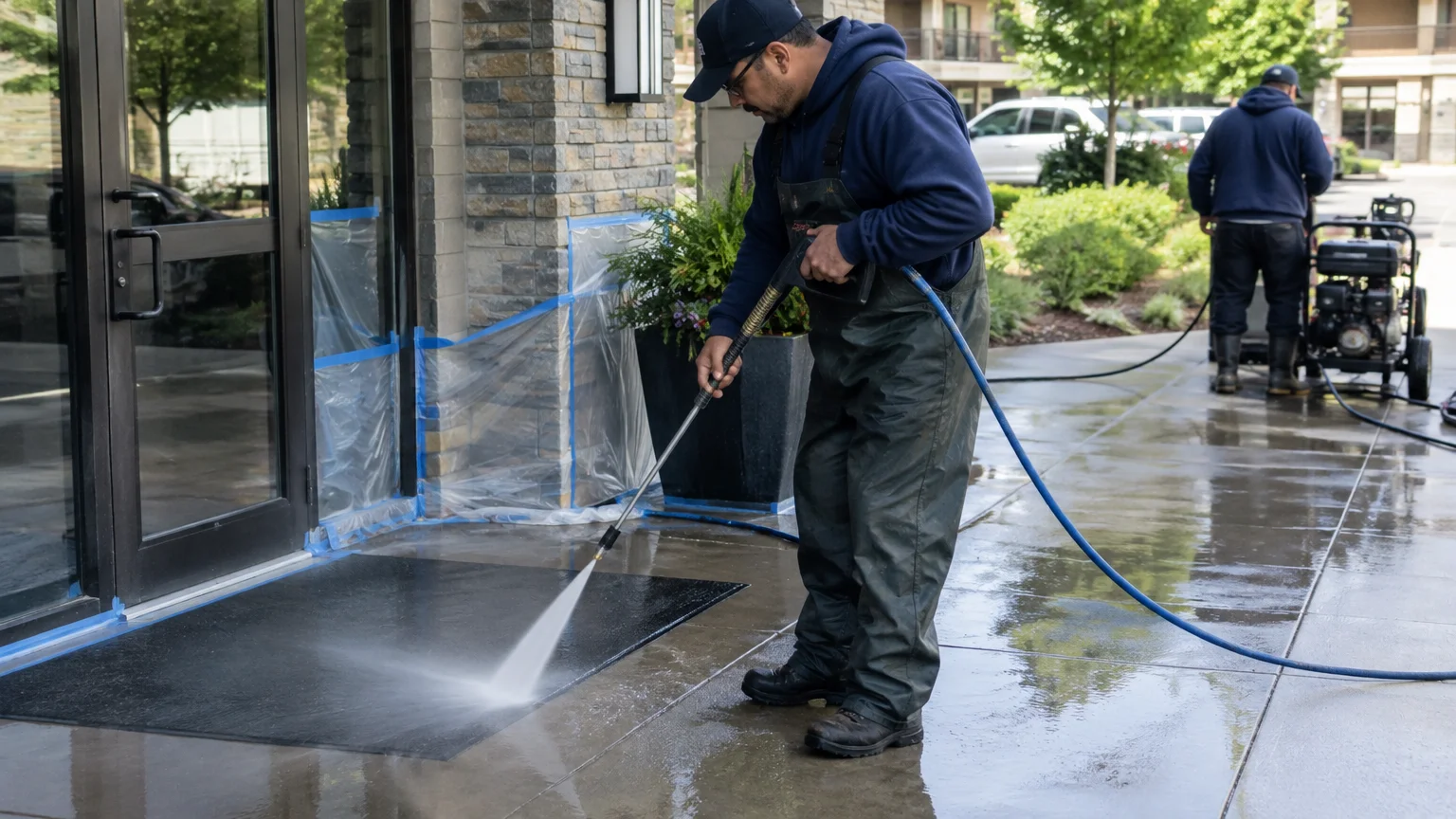
Ask if the contractor plans to use pressure washing, soft washing, hot water, cleaning agents, or more than one method. The contractor should explain why that method fits the surface. It should also explain how workers will protect windows, doors, outlets, plants, furniture, and vehicles.
A homeowner may safely handle light dust, loose leaves, and simple upkeep when the surface is sound. Professional help is safer when work involves height, strong products, fragile materials, heavy oil stains, roof areas, or unknown damage.
How should a contractor explain risks to surfaces, plants, and drainage?
The contractor should point out fragile areas before work starts. It should discuss runoff, drains, outdoor outlets, loose paint, cracks, and plants that water or products could harm. The plan should include steps for collecting or directing wastewater when local rules require it.
Questions about composite decks, painted siding, and oil-stained concrete are useful. A careful contractor will not promise that every stain will disappear. It should explain likely results, limits, drying time, and any work you must do first.
What warning signs should you look for before hiring a pressure washer?
Warning signs include vague papers, an unclear business identity, no insurance proof, and pressure to approve work right away. Another concern is a contractor that uses the same method for every surface. Each property needs a plan based on its materials and condition.
Be careful when a company makes broad promises without seeing the site. Pressure washing may improve a stain without removing it fully. A professional should explain limits instead of promising perfect results every time.
Which communication and documentation problems deserve caution?
Unanswered questions, mismatched names, expired documents, and missing service details deserve attention. The contractor should explain who handles plants, gates, pets, outdoor items, access, and damage found before work. These details reduce confusion later.
Keep messages, documents, and the approved scope together. If the plan changes, the change should be written down before work continues. Clear communication matters for homes, rental units, offices, and shared properties.
Why are vague service descriptions or pressure-only promises concerning?
A vague description may hide which walls, steps, patios, fences, or driveways are included. It may leave out preparation, rinsing, stain treatment, plant protection, and cleanup. A pressure-only promise ignores that some surfaces need low-pressure cleaning.
A good description names the areas, method, access limits, and finish standard. It should state whether the work includes Patio Cleaning Services, Driveway Cleaning Services, Building Washing Services, or another service. The names should match what you want cleaned.
What should a written pressure washing estimate include?
A written estimate should list the property areas, cleaning method, preparation, protection steps, finish standard, and exclusions. It should identify the contractor and explain what happens if hidden damage or unsafe access is found. Read it before approving the work.
The final cost should be confirmed in the written quote after the job is reviewed. Pressure washing costs can change with surface size, access, soil, stain type, preparation, urgency, and protection needs. Similar jobs may differ when one property has delicate materials or hard access.
Which surfaces, services, and preparation tasks should be listed?
The document should name each area, such as siding, concrete, brick, a deck, fence, patio, or parking area. It should say whether stain treatment, rinsing, moving furniture, gutter-edge work, or debris removal is included. It should also assign preparation tasks to you or the contractor.
Check whether nearby items must be moved. The contractor should note water access, gates, pets, tenant notices, and parking limits. Business sites may need a schedule that protects customers and workers.
How should exclusions, potential extra work, and completion standards be described?
Exclusions should be easy to read. They may include rust, deep oil marks, failed paint, damaged wood, fragile sealants, repairs, or blocked areas. The contractor should explain what may happen if a surface cannot safely receive the planned treatment.
The finish standard should describe what you will see after the area dries. It should not promise that every mark will vanish. If added work is needed, the contractor should get approval before changing the scope.
What happens on the day a pressure washing company cleans your property?
The service day should start with a site check and work-plan review. The crew should confirm the areas, find fragile items, protect plants and openings, and discuss access. Workers should manage hoses, wet surfaces, equipment, and runoff during the job.
You do not need to operate professional equipment. Keep children and pets away from the work area and provide agreed access. A tenant or property manager should share rules about doors, quiet hours, and parking.
How should the contractor prepare and protect the work area?
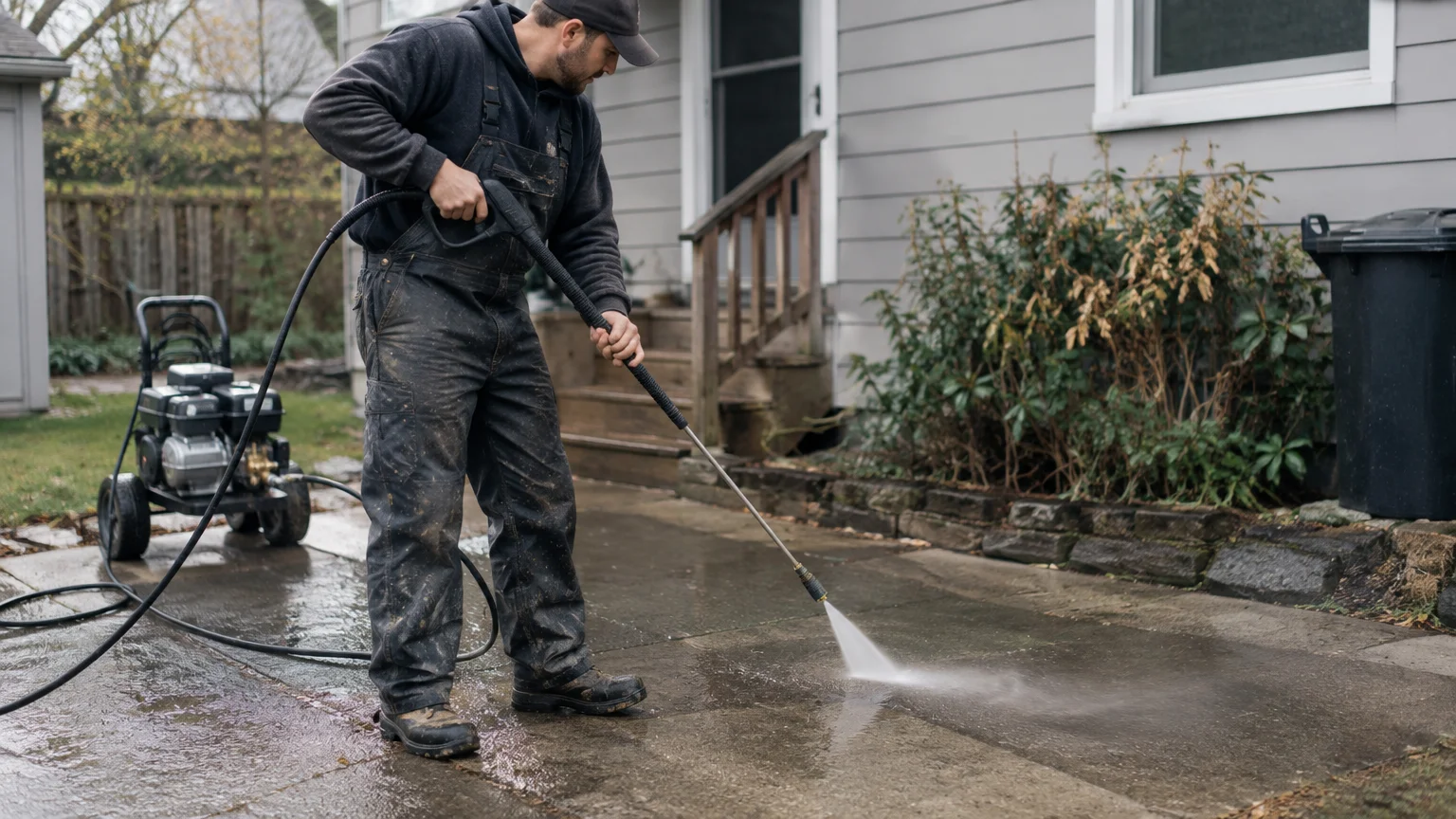
Preparation may include moving outdoor items, covering fixtures, securing windows and doors, shielding plants, and marking fragile surfaces. The crew should use a method that fits the material instead of using the same force everywhere.
The contractor should check water flow and drainage. Dirty water, cleaning products, and loose debris should be managed under local rules. Workers should control walkways and warn people about slippery areas.
What should you inspect after the cleaning is complete?
Walk the property with the crew when possible. Check the listed areas, edges, steps, gates, windows, plants, fixtures, and items moved for access. Wait for some surfaces to dry before judging the results.
Note concerns quickly and compare them with the written scope. A reliable contractor should explain what happened and whether a safe touch-up is possible. The final walk-through should also confirm that hoses, covers, debris, and equipment are gone.
How do you choose the right pressure washing contractor for your property?
The right contractor has valid credentials, current insurance, clear communication, a suitable method, and a detailed written scope. No single label proves that a company is the best choice. Compare how each contractor answers questions about safety and property care.
A local company may understand conditions in Largo, but local knowledge should support verification. Pressure Washing Largo can help property owners review options for homes and businesses in the Largo area. The same review works for driveways, buildings, patios, fences, and other outdoor surfaces.
How should you compare credentials, communication, scope, and professionalism?
You can compare contractors by checking:
- Current license or registration details that match the business name
- Insurance proof that covers the planned work and remains active
- Bond information when a bond applies to the project or local rule
- A surface-specific method that explains pressure, products, and protection
- A written scope with areas, exclusions, preparation, and finish standards
- Clear answers about workers, subcontractors, drainage, and access
The strongest choice is often the contractor that explains risks and limits clearly. A company that asks about the property before suggesting a method is showing care. Avoid choosing only because of a fast reply or bold promise.
What should you confirm before approving the work?
Before approval, confirm the contracting business, work areas, method, schedule, access plan, protection steps, written quote, and document status. You should also know who to contact if a concern appears after cleaning.
For a property in Largo, ask whether the contractor follows local water and safety rules. Keep the approved documents until the work is complete and follow-up issues are settled.
Key Takeaways
- A license shows that a business meets a stated government rule.
- Insurance may address certain covered injury or property damage claims.
- A bond differs from insurance and covers only defined duties.
- Customers should verify documents with the issuing agency or insurer.
- A clear scope and surface-specific method matter as much as credentials.
Frequently Asked Questions
Does an insured pressure washing company guarantee that damage will never happen?
No. Insurance does not prevent damage and does not cover every claim. It may respond to certain covered losses under the policy terms. The contractor should inspect the property, use the right method, protect fragile areas, and explain risks before work begins.
Is pressure washing safe for composite decking?
It can be safe when the contractor follows the maker’s care guidance and uses a suitable method. Too much force or poor technique can harm the surface. Ask about pressure, products, spray distance, rinsing, and testing a hidden area first.
How should oil stains on a concrete driveway be treated?
Oil stains may need a cleaner made for the stain, time for the product to work, and controlled rinsing. Older stains may not disappear fully. The contractor should inspect the concrete and explain the likely result before cleaning.
How often should a house be power washed?
There is no single schedule for every home. Weather, shade, trees, moisture, surface type, and visible buildup all affect timing. Homeowners can handle light debris and simple upkeep, but professional help is safer for tall walls, delicate siding, heavy growth, or unknown damage.
What pressure washer strength is needed for siding?
The safest setting depends on the siding, its condition, the nozzle, spray distance, and cleaning product. More pressure is not always better. Vinyl, painted surfaces, and older siding can be harmed by strong spray. The contractor should choose a method after checking the surface.
Conclusion
Licensed, insured, and bonded describe different forms of protection. A license relates to government rules. Insurance relates to covered risks. A bond relates to defined duties. Verify each claim and read the written scope before allowing work on your property.
A careful pressure washing contractor also explains surface risks, drainage, plant protection, equipment, and finish standards. For homeowners, managers, investors, and business owners in Largo, this review can make hiring clearer and safer.
Contact us to discuss pressure washing service with Pressure Washing Largo and review the next steps.