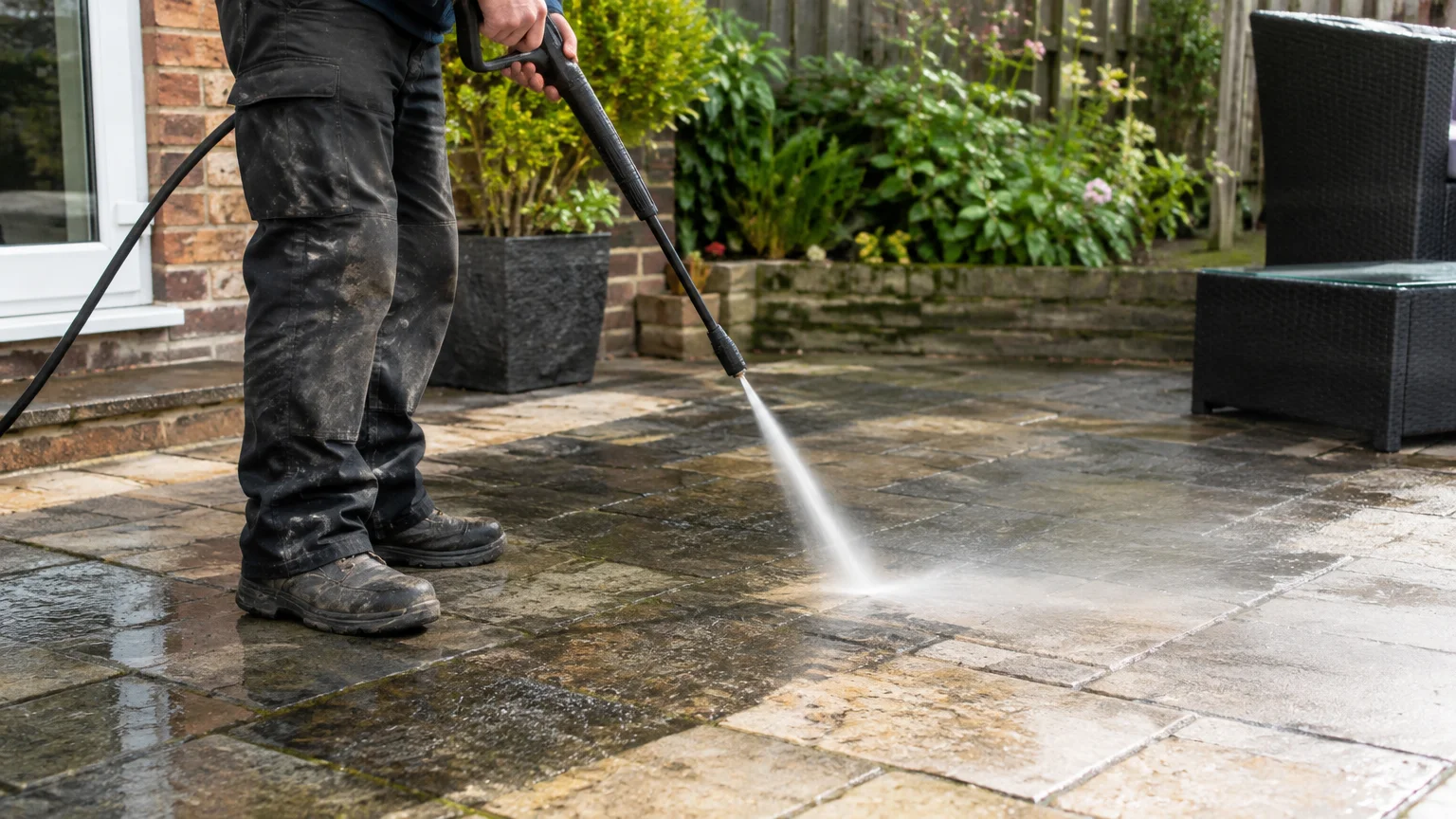
Patio power washing should match the patio material, surface condition, and type of buildup. Pavers need care around joint sand, stamped concrete may have a sealer, and natural stone can etch under harsh cleaning. The right method removes dirt while helping protect the patio’s texture, color, and finish.
A patio may look clean from across the yard but still hold algae in joints, oil in pores, and dirt under furniture. Pressure Washing Largo helps property owners choose a cleaning plan that fits the surface. Each patio in Largo may need a different mix of pressure, cleaner, and rinse water.
Table of Contents
- How does patio power washing differ by surface material?
- How are concrete pavers cleaned without causing damage?
- What is the safest way to clean stamped concrete?
- How should natural stone patios be pressure washed?
- Can patio power washing remove oil stains, algae, and other marks?
- How should a patio be prepared before professional cleaning?
- How often should patios and hardscapes be cleaned?
- Frequently Asked Questions
How does patio power washing differ by surface material?
Patio power washing differs because pavers, stamped concrete, and natural stone react to water pressure in different ways. A method that works on plain concrete may loosen paver sand, strip a sealer, or mark soft stone.
A professional first checks the material, age, finish, and condition. The cleaner also looks for cracks, loose pieces, faded color, old coatings, and low spots where water may collect. These details help set the pressure, spray tip, cleaner, and rinse method.
Why pavers, stamped concrete, and natural stone need different methods
Concrete pavers are separate units with joints between them. Dirt and algae often gather in those joints. Strong water can remove joint sand or move a loose paver. Stamped concrete is one slab, but its pattern and color may depend on a sealer. Natural stone has different levels of hardness and porosity, so some types mark more easily.
Porosity means how much water a material can absorb. A porous surface may hold stains deeper and need a slower, gentler cleaning process. A dense surface may release loose dirt more easily.
How surface condition affects the cleaning plan
A newer patio with light dust may need simple washing. An older patio with moss, oil, failed sealer, or uneven joints needs more care. Cracks and loose sections should be noted before washing because water will not repair those problems.
The same care applies across Largo, including Downtown Largo, Harbor Bluffs, Clearwater, Seminole, Belleair, Pinellas Park, and nearby areas. Shade, trees, sprinklers, and foot traffic can change how fast buildup returns. Pressure Washing Largo can help a property owner choose between routine washing and deeper surface care.
How are concrete pavers cleaned without causing damage?
Concrete pavers are cleaned by removing dirt and organic growth while limiting water impact on the joints. The safest process uses a controlled spray, a suitable cleaner, and careful rinsing instead of the highest pressure.
Pavers should be checked before washing. A cleaner may look for shifting, cracked edges, low spots, missing sand, and old polymeric joint material. Polymeric sand is joint sand mixed with binders that harden when wet. It can still be damaged by poor washing.
Removing dirt, algae, moss, and organic buildup from joints
Algae and moss often grow where shade keeps joints damp. A cleaner may apply a surface-safe solution first to loosen organic growth. This reduces the need for hard pressure. The spray should move across the surface in a steady pattern, not stay in one place.
Heavy growth may need more than one cleaning step. Roots and packed dirt can remain below the surface even after the patio looks better. The final rinse should move dirty water toward safe drainage without washing soil into the joints.
Protecting joint sand and checking for shifting or cracked pavers
A homeowner can sweep loose leaves and dirt from pavers before service. They should not force water into every joint with a narrow tip. That can wash away support material and leave gaps where weeds may grow.
After cleaning, the joints should be checked again. Some patios may need new sand or separate joint repair. Cleaning does not fix a sinking base, broken paver, or drainage issue. Those needs should be explained before added work begins.
What is the safest way to clean stamped concrete?
The safest way to clean stamped concrete is to use moderate pressure, a suitable cleaner, and care around the pattern and sealer. The goal is to remove dirt without cutting into the surface or lifting its finish.
Stamped concrete is made to look like brick, stone, slate, or another pattern. Its grooves can hold dirt and algae. A careless spray may leave bright lines, strip weak sealer, or make one section look unlike the rest.
Preserving the pattern, sealer, and decorative finish
A cleaner should check whether the sealer is present, worn, cloudy, peeling, or missing. A sealer is a protective coating placed over concrete. It can help protect color and make cleaning easier, but it does not last forever.
The cleaner should test a small hidden area first. This shows how the surface reacts before the full patio is washed. A wide fan spray is often safer than a narrow jet because it spreads force over more area.
Why pressure strength and cleaning solutions matter
More pressure does not always mean better cleaning. Too much force can expose rough areas, remove color, or leave lines in the pattern. The right cleaner may loosen grime so the rinse can work with less force.
Homeowners can rinse light dust with a garden hose and use a product labeled for decorative concrete. They should not mix cleaners or use harsh chemicals without reading the label. If the sealer is damaged or the finish looks uneven, Pressure Washing Largo can assess the surface first. This helps Pressure Washing Largo choose a method based on the actual finish.
How should natural stone patios be pressure washed?
Natural stone patios should be washed with a method that fits the stone’s hardness, porosity, and finish. A gentle test area matters because pressure, heat, and chemicals can leave marks that are hard to reverse.
Natural stone includes flagstone, slate, limestone, sandstone, and other quarried surfaces. These materials are not all alike. Some absorb water quickly, while others have softer layers or a finish that can change under strong cleaning.
Identifying porous stone and vulnerable surface finishes
A porous stone may darken when wet and hold stains below the surface. A softer stone may show scratches or a dull patch after harsh treatment. A sealed stone may have a coating that needs a cleaner approved for that finish.
The joints also matter. Mortar, sand, soil, and plant growth can react differently to water. A cleaner should protect nearby walls, plants, metal items, and wood before rinsing.
Cleaning algae, stains, and buildup without etching the stone
Etching is a dull or rough mark caused when a surface reacts to an unsuitable chemical or abrasive action. It may not disappear through more washing. Acidic products should not be used on unknown stone without clear product guidance.
A homeowner can sweep the patio, remove leaves, and rinse light soil. A professional may use a stone-safe cleaner and a controlled rinse for deeper buildup. If a stain has entered the stone, cleaning may improve it without removing it fully. Expectations should be set before work starts.
Can patio power washing remove oil stains, algae, and other marks?
Patio power washing can remove loose dirt, algae, mildew, and some surface stains. Oil, rust, leaf tannins, and old discoloration may need pretreatment or more than one step because each stain reacts differently.
Algae and mildew often respond well when a suitable cleaner loosens them before rinsing. Oil can soak into concrete and pavers, so pressure alone may spread the mark. Rust may need a product made for rust on that exact surface.
Which stains respond to pressure washing and pretreatment
Pretreatment means applying a cleaner before pressure washing. It gives the product time to loosen organic matter or surface grime. The product must match the material, since a cleaner safe for plain concrete may harm stone or a decorative finish.
Common marks include:
- Green algae on shaded pavers and concrete
- Black mildew along damp patio edges
- Oil spots near grills, vehicles, or outdoor equipment
- Leaf stains below trees and plant containers
- Dirt trapped in textured concrete patterns
A small test area can show whether a stain sits on the surface or deeper inside. Results may also vary between fresh and old marks.
Why some discoloration may require additional restoration
Some stains change the surface instead of simply covering it. Sun fading, sealer failure, rust damage, and deep oil marks may remain after cleaning. Paver color can also vary because of age, wear, and past repairs.
Cleaning is one part of patio care. Sealing, joint repair, stain treatment, or replacement may be separate needs. A clear inspection helps the owner understand what washing can and cannot do.
How should a patio be prepared before professional cleaning?
A patio should be cleared of furniture, toys, planters, rugs, loose decorations, and small items before professional cleaning. Homeowners and property managers should also point out fragile surfaces, outdoor outlets, drainage paths, and known stains.
Preparation protects belongings and gives the cleaner full access to the surface. It also makes cracks, loose pavers, and heavy growth easier to see.
What homeowners and property managers should clear or protect
Furniture should be moved away when possible. Large items that cannot move should be discussed before work starts. Doors and windows should stay closed, and pets should remain away until the surface is safe and dry.
The owner should mention irrigation heads, outdoor lights, electrical items, delicate plants, and fresh paint. A cleaner may cover or shield items that could be affected by spray or runoff.
How drainage, nearby plants, furniture, and outdoor fixtures affect the work
Water should have a safe path away from doors, garages, basements, and neighboring areas. Soil can wash into low spots, and cleaning solution can affect plants if runoff is not managed. A property manager should check whether shared areas or tenant spaces need notice before work begins.
The service area can include homes, rental properties, patios, pool decks, and common areas in the Largo area. After preparation, the cleaner can work more evenly and spot problems that need attention before washing.
How often should patios and hardscapes be cleaned?
Most patios need cleaning when buildup becomes visible, slippery, stained, or hard to remove with simple upkeep. The right schedule depends on shade, moisture, trees, foot traffic, drainage, pets, and the patio material.
A sunny, well-drained patio may stay cleaner longer than one under trees. Areas near pools, sprinklers, gardens, and wooded lots often collect organic debris faster. A hotel, apartment community, or busy business property may need closer checks because more people use the surface.
Signs that a patio needs professional attention
A patio may need deeper cleaning when regular sweeping and gentle rinsing no longer help. Look for these signs:
- Slippery green or dark growth after rain
- Oil or food marks that remain after normal cleaning
- Dirt packed into textured areas and joints
- Water that drains poorly or carries heavy soil
- Pavers that look uneven after buildup is removed
A homeowner does not always need a professional for light dust or loose leaves. Safe sweeping, quick spill cleanup, and careful plant trimming can help between services. Professional help makes more sense when the surface is large, stained, delicate, slippery, or hard to reach safely.
How maintenance can help protect pavers, concrete, and stone
Regular sweeping keeps grit from grinding into the surface. Owners should clean spills soon, keep gutters and downspouts from washing soil onto the patio, and watch for standing water. They should also avoid harsh chemicals that are not approved for the material.
Pressure Washing Largo can help homeowners and property managers plan patio cleaning around the surface and its condition. The best schedule comes from inspection, not an automatic promise that every patio needs the same service.
Key takeaways
- Pavers, stamped concrete, and natural stone need different cleaning methods.
- Controlled pressure and surface-safe cleaners help limit damage.
- Joint sand, sealers, stains, drainage, and nearby plants need careful attention.
- Homeowners can handle sweeping and light upkeep, but deep buildup may need professional help.
- The final cleaning plan should match the patio material and its condition.
Conclusion
Patio power washing works best when the method fits the material. Pavers need care around joints, stamped concrete needs protection for its pattern and sealer, and natural stone needs a gentle process that avoids etching. Careful preparation and simple upkeep can help each surface stay cleaner longer.
Contact us to arrange patio cleaning with Pressure Washing Largo for a home or property.
Frequently Asked Questions
Can patio power washing damage pavers?
It can if the pressure removes joint sand, shifts loose pavers, or forces water below damaged areas. A controlled spray and surface-safe cleaner reduce that risk. The patio should be checked for cracks, movement, and weak joints first. Repairs or new joint material may be needed after cleaning.
Is pressure washing safe for stamped concrete?
It can be safe when the cleaner uses suitable pressure, a wide spray, and a product made for decorative concrete. A weak or peeling sealer needs special care. Testing a hidden area first helps show whether the pattern, color, and coating respond well.
Can oil stains be removed from a patio?
Some oil stains improve with pretreatment and careful washing, especially when they are fresh or near the surface. Older oil may have soaked into concrete or pavers. Cleaning may reduce the mark without removing every trace. The material and stain age affect the likely result.
What should a homeowner use to clean a stone patio?
A homeowner should use a cleaner labeled for the specific stone and follow its directions. Unknown stone should be tested in a hidden area first. Harsh acids, abrasive tools, and strong pressure can dull or etch some stone. Sweeping and gentle rinsing are safer for light dirt.
How often should a patio be cleaned?
A patio should be cleaned when algae, stains, slippery growth, or packed dirt appears. Shade, rain, trees, drainage, and foot traffic affect how quickly buildup returns. Light sweeping and spill cleanup can happen as needed. Deeper cleaning should follow the surface condition rather than a fixed calendar.
A careful look before cleaning can help prevent damage and set clear expectations. Pressure Washing Largo can explain which patio power washing method fits the material and the buildup.
If you are not sure what you are dealing with, it is worth having someone look at it before it turns into a bigger job. Get in touch with Pressure Washing Largo today and we will tell you where you stand.





