Pressure cleaning tennis court surfaces helps HOAs remove dirt, algae, mildew, and other buildup from shared courts. A safe plan checks the court coating, uses the right cleaning method, protects nearby areas, and allows enough time for drying. This keeps courts cleaner, safer, and ready for resident use.
Table of Contents
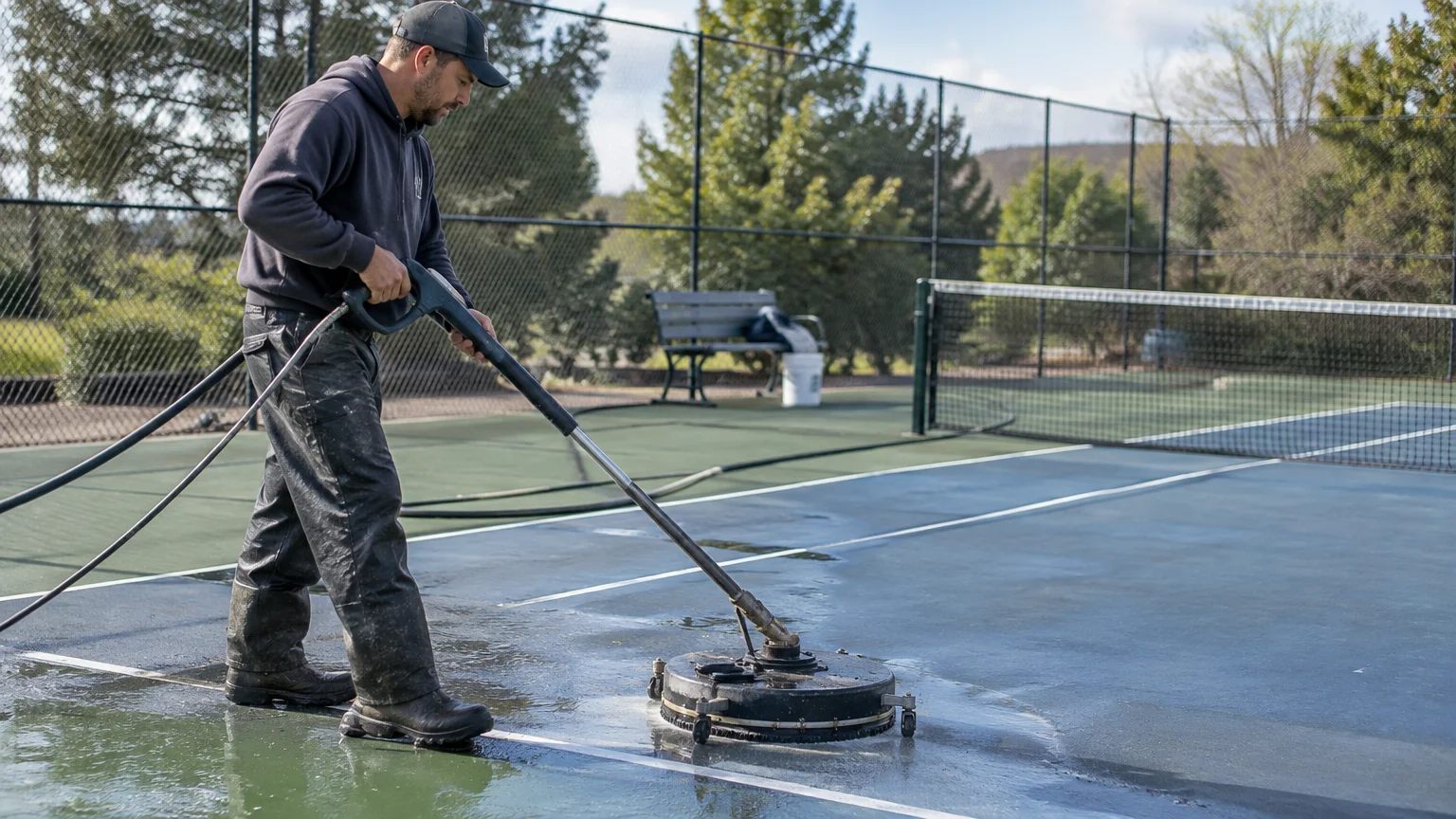
- Why Does Pressure Cleaning a Tennis Court Matter for an HOA?
- What Types of HOA Surfaces Need Professional Pressure Cleaning?
- How Often Should an HOA Schedule Pressure Cleaning?
- How Is Pressure Cleaning a Tennis Court Performed Safely?
- What Should Property Managers Consider Before Cleaning Shared Amenities?
- How Can HOAs Maintain Cleaner Courts and Common Areas Between Services?
- What Should an HOA Look for in a Commercial Pressure Washing Provider?
- Frequently Asked Questions
Why Does Pressure Cleaning a Tennis Court Matter for an HOA?
Pressure cleaning matters because tennis courts collect dirt, leaves, pollen, algae, and other plant matter. These materials can change how the court looks and feels. Algae and mildew may also make wet areas slick. Regular cleaning helps keep the court ready for play and easier to check.
A tennis court coating is the colored layer placed over the court surface. It helps protect the pavement and creates an even playing area. Strong pressure, harsh products, or a worn coating can cause damage. The cleaning method must match the court material and its condition.
How Dirt, Algae, and Organic Growth Affect Court Safety
Dirt can settle into small spaces in the court surface. Leaves and pollen can hold moisture in shaded areas. When algae or mildew grows, it may create slick spots after rain or irrigation. Cracks, loose coating, and standing water can make these issues worse.
An HOA does not need to wait until the whole court looks dirty. Managers can watch for green or dark patches, slow drainage, slick edges, and buildup near fences. These signs may mean the court needs a closer look. Cleaning does not replace repairs when the surface has cracks or other damage.
The same concern applies to basketball courts and pickleball areas. Players need clear lines, good traction, and surfaces without loose debris. Pressure washing should support these needs instead of being treated as a quick rinse.
How Clean Shared Surfaces Support Appearance and Resident Use
Clean courts and amenity areas make a community feel cared for. Residents are more likely to use spaces that look ready and well kept. Clean surfaces also help managers spot trip hazards, damaged coatings, broken fixtures, and drainage problems sooner.
In Largo, weather and shade can affect how fast courts collect grime. Pressure Washing Largo can help property managers review shared areas and plan the work around resident use. In Largo, a clear plan also helps the HOA explain closures and maintenance work.
What Types of HOA Surfaces Need Professional Pressure Cleaning?
HOAs often need more than tennis court cleaning. Shared communities may have courts, sidewalks, pool decks, playgrounds, parking areas, entrances, and outdoor seating. Each surface may need a different pressure level, cleaner, and rinse method.
Professional cleaning can help when an area is large, busy, hard to reach, or close to sensitive plants. It also helps when algae, stains, gum, grease, or old buildup cannot be removed by sweeping. A provider should review each material before work starts.
Tennis Courts, Basketball Courts, and Pickleball Areas
Court surfaces may include acrylic coatings, painted lines, asphalt, or concrete. Acrylic coatings need careful cleaning because strong pressure can cause peeling, fading, or marks. Court lines also need protection during the work.
A careful provider checks for loose coating, cracks, patching, puddles, and poor drainage. The crew may use a low-pressure method with a suitable cleaner instead of relying on force. The goal is to remove buildup while keeping the court even and intact.
Pickleball areas can have similar needs, especially when courts share fencing or sit near homes. Basketball courts may collect rubber marks, food spills, and dust near hoops. The best method depends on the surface, the buildup, and the court’s age.
Playgrounds, Pool Decks, Sidewalks, and Amenity Spaces
Playgrounds need careful work around equipment, fall surfaces, drains, and hardware. A provider should not leave slick cleaner residue or push dirty water into play areas. The space should be dry and checked before residents return.
Pool decks can collect sunscreen, algae, leaves, and mineral residue. Deck Cleaning should be planned with pool staff or community managers. The work area may need barriers, signs, and a rinse plan that keeps runoff away from the pool.
Sidewalks, patios, outdoor kitchens, and covered seating areas also need care. Commercial Pressure Washing can help with larger shared areas, while Building Exterior Cleaning may help around entrances and clubhouses. The service plan should list each surface instead of treating the property as one material.
How Often Should an HOA Schedule Pressure Cleaning?
An HOA should schedule pressure cleaning when buildup affects appearance, safety, drainage, or use. There is no single schedule for every community. A shaded court near trees may need care sooner than a sunny court with good drainage. A busy community may also need more frequent checks.
Property managers should use inspections to guide the schedule. A quick review after storms, wet seasons, or large events can reveal new buildup. Cleaning can then be planned before the surface becomes harder to restore.
Factors That Affect a Shared-Surface Cleaning Schedule
Several conditions affect how often an HOA needs service:
- Shade from trees or buildings that keeps surfaces damp.
- Leaves, pollen, soil, and other debris that collect near edges.
- Heavy resident use, sports events, and community gatherings.
- Poor drainage that leaves water standing after rain.
- Nearby irrigation, pools, gardens, or sprinklers.
- Local weather that brings long periods of rain or humidity.
A court does not need cleaning only because a calendar date has arrived. It needs cleaning when inspection results support the work. A written log can note surface color, slick areas, debris, stains, drainage, and visible damage.
Seasonal Conditions and High-Traffic Considerations
Spring may bring pollen and plant debris. Summer can bring heavy use, pool traffic, and spilled drinks. Fall may add leaves and damp plant matter. Winter plans should account for wet surfaces, low use, and local weather.
Hotels, apartments, and large communities may need a different plan than a small HOA. Managers can schedule work around tournaments, pool openings, resident events, and landscaping. A clear closure window keeps residents away from wet surfaces and reduces confusion.
How often should a hotel be pressure washed? The answer depends on foot traffic, building materials, weather, and visible buildup. These same factors guide an HOA plan. Regular inspections are more useful than copying a schedule from another property.
How Is Pressure Cleaning a Tennis Court Performed Safely?
Safe pressure cleaning starts with a surface review, not a machine setting. The provider should identify the court coating, check for damage, and look at nearby drains, fences, plants, and buildings. The method should remove buildup without cutting into the surface.
Pressure washing uses pressurized water to remove dirt and growth. Soft washing uses lower pressure with a cleaning solution. The best choice depends on the court material and buildup. A trained provider may use a gentle cleaner with controlled water pressure.
Surface Assessment, Detergent Selection, and Water Pressure
Before cleaning, the provider should inspect the court for loose paint, cracks, patch repairs, worn lines, and raised edges. A small test area can show how the coating reacts. When possible, the test should be done in a less visible spot.
The question, what psi pressure washer do I need to clean siding, has no safe answer without knowing the siding type and condition. The same rule applies to courts. What psi to wash vinyl siding or a court surface requires a material check first. More pressure is not always better.
A suitable detergent can loosen algae, mildew, and soil before rinsing. The cleaner should be safe for the surface and used as its label says. It should also be kept away from people, pets, drains, plants, and water features when needed.
Protecting Court Coatings, Lines, Fencing, and Nearby Landscaping
The provider should protect court lines, fence bases, benches, gates, lights, and nearby planting beds. Plants may need covers or a clean-water rinse. Gates should be secured, and loose items should be moved before work begins.
Dirty water should not be pushed across a clean area or toward a pool. Drainage paths should be checked before the first rinse. After cleaning, the court should be checked for remaining buildup, coating damage, standing water, and slick residue.
A homeowner may safely sweep leaves, remove small loose items, and report spills. A property manager may also place signs and close access. Professional help is better for large courts, chemical use, pressure equipment, unknown coatings, or work near residents and sensitive areas.
What Should Property Managers Consider Before Cleaning Shared Amenities?
Property managers should plan access, communication, water control, and safety before the crew arrives. A short written plan can prevent blocked gates, resident complaints, and damage to nearby areas. It also gives the provider useful details about the property.
The plan should identify each surface, the work window, nearby water sources, drainage points, resident paths, and areas that must stay open. Managers should also share details about repairs, weak coatings, irrigation, and special events.
Resident Communication, Access Control, and Scheduling
Residents should receive clear notice about areas that will close and when they may reopen. Signs can direct people to other courts, sidewalks, entrances, or amenities. Staff should keep children, pets, and residents away from equipment and wet surfaces.
Access control matters in gated communities. The provider may need keys, gate codes, parking access, or an escort. Managers should confirm these details before service day. They should also plan for deliveries, trash pickup, pool staff, and emergency paths.
Cleaning can often fit around low-use periods, but the best time depends on the community. The schedule should allow time for rinsing, drying, inspection, and follow-up. A rushed reopening can create safety concerns.
Drainage, Water Runoff, and Protecting Adjacent Areas
Water runoff can carry soil, detergent, oil, and loose debris. Before work begins, the provider should identify where water will flow. Managers should point out storm drains, pool edges, ponds, gardens, garage entries, and low areas.
The crew may need barriers, drain covers, collection tools, or controlled rinsing. The right step depends on the surface and site conditions. Runoff should be managed so it does not spread dirt or harm landscaping.
Parking Lot Pressure Washing may help near entrances and shared parking areas, but it should be coordinated with court cleaning. A clean court beside a dirty walkway may still leave residents tracking grime back onto the playing area. A site-wide plan can address connected surfaces in a sensible order.
How Can HOAs Maintain Cleaner Courts and Common Areas Between Services?
HOAs can keep shared areas cleaner with simple checks and quick action. Staff do not need special equipment for every task. Sweeping, removing leaves, reporting spills, and keeping drains clear can help prevent buildup.
Routine care does not replace professional cleaning. It helps the HOA find problems sooner and reduces the amount of material that settles into the surface. A simple inspection record can also help the board plan maintenance.
Routine Inspections and Early Signs of Surface Buildup
A manager or maintenance team can check courts and amenities during regular property walks. They should look for dark patches, green growth, standing water, leaf piles, loose coating, clogged drains, and slick edges. They should also note areas that stay wet after nearby irrigation runs.
Early signs are easier to address than widespread buildup. Small spills may be cleaned by trained staff with the right product and safety steps. Large stains, widespread growth, unknown chemicals, and damaged coatings should be left to a qualified provider.
Common-area checks should also include benches, fence lines, stairs, ramps, and paths. Residents may report problems that staff miss during a quick visit. A clear reporting process helps the HOA respond before a small issue affects many users.
Coordinating Cleaning With Repairs, Landscaping, and Events
Cleaning should be planned with court repairs, line painting, seal work, tree trimming, and irrigation changes. Pressure cleaning before repairs may remove dirt that hides cracks. Cleaning after repairs may damage new materials if done too soon.
Landscaping can also affect results. Tree trimming may reduce leaf buildup, while a sprinkler change may stop repeated wet spots. Event planning matters too. Courts should be cleaned before a major event only when there is enough time for drying and inspection.
The HOA can keep one shared calendar for cleaning, repairs, landscaping, pool work, and resident events. This reduces conflicts and helps each contractor understand what happens before and after the visit.
What Should an HOA Look for in a Commercial Pressure Washing Provider?
An HOA should choose a provider that understands coated courts, public access, runoff, and shared property needs. The right provider should ask about the surface before suggesting a method. A general equipment operator may not have the same experience with sports coatings and amenity areas.
Pressure Washing Largo serves property owners who need clear plans for shared outdoor surfaces. In Largo, a local team can review weather, access, landscaping, and the mix of court and amenity materials before work starts.
Experience With Courts, Playgrounds, and Shared Community Surfaces
A qualified provider should explain how the crew protects court lines, coatings, playground areas, pool decks, plants, and nearby buildings. The provider should also discuss test areas, water control, drying time, and site checks.
Property managers can ask whether the team has cleaned similar surfaces. They can ask how the provider handles slick growth, runoff, resident access, and damaged coatings. Clear answers are more useful than a promise that one pressure setting works everywhere.
The provider should carry suitable safety equipment and follow product labels. Staff should know how to work around people, pets, vehicles, gates, drains, and community facilities. Commercial Pressure Washing experience can help when several surface types need service during one visit.
Planning Recurring Maintenance Around Residents and Property Operations
Recurring maintenance should be based on inspection results and property needs. The plan may include courts, sidewalks, pool decks, playground borders, entrances, and other shared spaces. It should state what will be cleaned, what access is needed, and how closures will be handled.
A good provider keeps communication simple. The manager should know when the crew will arrive, which areas will close, what conditions may change the schedule, and when the final inspection is done. The provider should also identify damage that cleaning cannot fix.
Key Takeaways
- Inspect first: Court coatings, cracks, drainage, and nearby areas guide the cleaning method.
- Use controlled cleaning: More water pressure is not always safer or more useful.
- Plan access: Notices, signs, gates, and drying time help protect residents.
- Watch connected areas: Courts, sidewalks, pool decks, and landscaping can affect one another.
- Choose experience: A provider should understand sports surfaces and HOA operations.
Conclusion
Clean courts and shared amenities support safer use, better appearance, and easier property care. HOAs can get better results by combining routine inspections with careful professional cleaning. The plan should match the surface, weather, resident schedule, drainage, and condition of the property.
Contact us to plan pressure cleaning for courts and shared HOA surfaces with Pressure Washing Largo.
Frequently Asked Questions
How often should an HOA clean a tennis court?
An HOA should inspect its courts often and schedule cleaning when dirt, algae, mildew, stains, or slick areas appear. Shade, rain, irrigation, trees, and player traffic affect the timing. A written inspection log helps managers find patterns and plan work before buildup spreads.
Can a pressure washer damage a tennis court?
Yes. Excess pressure, a poor nozzle choice, harsh cleaners, or cleaning over loose coating can damage a tennis court. A provider should inspect the surface and test a small area first. Controlled pressure and a suitable cleaner are usually safer than the strongest available setting.
What psi pressure washer should be used on siding near an HOA court?
There is no single safe setting for every siding type. Vinyl, wood, fiber cement, and painted surfaces can react differently to pressure and water. The operator should check the material, condition, height, and nearby landscaping before choosing a method. The same careful approach applies to court surfaces.
Can an HOA clean playgrounds and pool decks on the same day?
It can, if the work plan allows safe access, runoff control, and enough drying time. Playground equipment, fall surfaces, pool edges, and court coatings may need different methods. Managers should close each area during cleaning and reopen it only after a final safety check.
Does pressure cleaning remove court cracks and surface damage?
No. Cleaning removes surface buildup but does not repair cracks, failed coating, poor drainage, or damaged pavement. Cleaning may make these problems easier to see. An HOA should document damage and arrange the right repair before returning the area to regular use.
If you are unsure what you are dealing with, have the surface checked before the issue grows. Pressure Washing Largo can help review the cleaning needs for shared courts and nearby areas.
If you are not sure what you are dealing with, it is worth having someone look at it before it turns into a bigger job. Get in touch with Pressure Washing Largo today and we will tell you where you stand.





